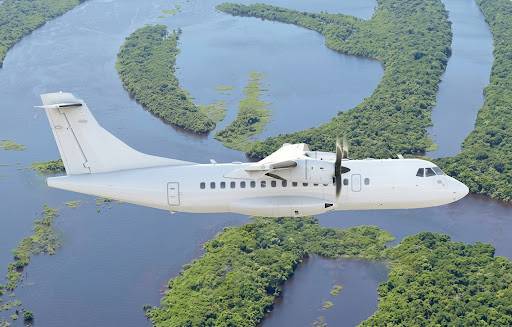
The morning of Monday, 5 October began like any other in the coastal belt of Ondo state, until word spread that a Nigerian air force ATR-42 had gone down near Igbokoda with 25 passengers and seven crew members on board. Within hours, the routine rhythm of this riverine community — fishing, petty trade, transport along the creeks — gave way to sirens, anxious crowds and a deepening sense of uncertainty that is now rippling well beyond the crash site. The immediate consequences are being felt not only by the families of the 32 people on board, but by traders, boat operators and residents whose livelihoods depend on movement through and around the area.
What residents and businesses are facing right now
The aircraft was on what the air force described as a routine flight between Benin City and Lagos when air traffic controllers lost radio contact at about 9:13 a.m. The plane was later confirmed to have crashed close to a naval facility in the Igbokoda area. For a local economy built on small-scale commerce, water transport and farming, the sudden arrival of military personnel, emergency vehicles and federal officials has disrupted normal activity. Roads leading to the crash zone have been restricted, and creeks that normally carry canoes and small boats are now part of a tightly controlled search area.
For families whose relatives are among the 32 people listed on the manifest, the wait has become the hardest part of the day. No official list of names has been released, and no definitive death toll has been confirmed, leaving households across Ondo and beyond in a state of suspended grief. Community leaders have urged calm, but the vacuum of verified information has been filled by rumours — including early claims that a helicopter had crashed before the air force clarified that it was an ATR-42.
Why the rescue effort is so difficult
The terrain around Igbokoda is swampy and tidal, with scattered settlements and few motorable roads. Debris was reportedly spotted near a waterway, which complicates access for heavy equipment and slows the movement of rescue teams. The Nigerian Air Force is leading the operation alongside local authorities and emergency agencies, but the environment itself is an obstacle. For communities in the area, this raises a practical concern: if emergency response is this hard in a known crash zone, how prepared is the system for future incidents in the same corridor?
Locating the wreckage quickly was a crucial first step. The next phase — identifying victims, accounting for survivors and securing the site — will determine how quickly the region can return to some semblance of normalcy. Every hour that passes without clarity prolongs the economic standstill for those whose daily income depends on free movement through the area.
The questions hanging over Nigeria’s military air fleet
No official cause has been given. The loss of radar contact and the silence on the radio are the only confirmed elements of the timeline. Investigators will need to examine flight data, the technical condition of the aircraft, communications with controllers and weather conditions at the time of the flight. The plane, identified by tail number NGR 931, was part of a fleet regularly used for transport, surveillance and support missions.
That the aircraft was on a routine assignment makes the crash harder to dismiss as an isolated incident. It inevitably draws attention to maintenance schedules, spare parts availability and the broader operational readiness of Nigeria’s military aviation. For citizens, the stakes are not abstract: military aircraft also support internal security operations, disaster response and the transport of personnel and supplies in regions where road access is limited. A weakened air fleet has consequences that reach far beyond the armed forces.
What this means for the wider economy and public trust
Beyond the immediate tragedy, the crash feeds into a broader anxiety about transportation safety in Nigeria. The Benin City–Lagos corridor is one of the country’s busiest, and any interruption or perceived risk along that route affects business confidence. Although this was a military flight, public perception does not always make that distinction. When an aircraft goes down in a populated region, the knock-on effects include reduced travel, higher insurance scrutiny and pressure on authorities to demonstrate that airspace oversight is working.
For the people of Igbokoda, the priority is simple: answers about the 32 people on board and reassurance that the skies above them are safe. Until the investigation delivers those answers, the community remains in a holding pattern — grieving, waiting, and counting the cost of a morning that changed everything.