Algeria’s multisector delegation to the Benin Deal Room 2026, held in Cotonou from 16 to 18 September, is more than a diplomatic gesture — it is a test of whether African economic integration can deliver real benefits to citizens and businesses. Pharmaceuticals, energy, infrastructure and state-owned enterprises dominated the agenda. But the gathering also laid bare a harsh economic reality: the Niger-Benin border remains shut, forcing traders and companies to absorb higher costs, longer delays and lost opportunities across West Africa.
Cotonou becomes a marketplace for African capital
For three days, Cotonou hosted a deal-making platform for investors eyeing Benin’s growth prospects. Organised under the auspices of the Beninese government, the Benin Deal Room 2026 brought together institutional investors, development finance institutions, project sponsors, strategic companies and public officials around a pipeline of more than twenty projects.
Financing needs were announced at between $2 billion and $3 billion, spanning agro-industry, manufacturing, infrastructure, logistics and energy. The objective was not a traditional economic forum but a direct match between capital and projects deemed mature enough to close.
That logic explains Algeria’s participation. A multisector national delegation — including representatives from pharmaceuticals, energy and renewables, plus executives from public groups such as Saidal and SAIEG, a Sonelgaz subsidiary — took part in the proceedings.
For Algiers, the stakes go beyond protocol. The goal is to identify markets, forge industrial alliances and build partnerships capable of anchoring Algerian firms in West Africa for the long term.
From political diplomacy to commercial deal-making
This shift reflects a broader evolution in Algeria’s Africa policy. After years of prioritising political, diplomatic and security cooperation, Algiers is now pushing the economic dimension of its continental presence.
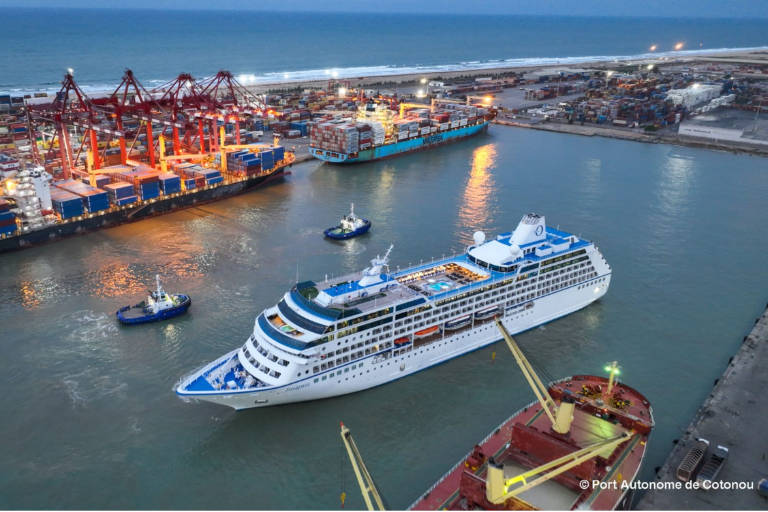
Benin’s context is well suited to that push. The country aims to accelerate industrialisation and leverage its geographic position — notably through the port of Cotonou and the Glo-Djigbé industrial zone — to develop local processing, logistics and regional value chains.
For Algerian firms, this momentum opens doors in several areas.
Pharmaceuticals is a first axis. Algeria’s accumulated know-how in drug manufacturing can extend into West Africa through exports, distribution and, eventually, local production and technology transfers.
Electricity is another strategic sector. The expertise of Sonelgaz and its subsidiaries in generation, transmission, distribution and energy solutions can meet the needs of a continent facing a severe energy access deficit. Renewables also offer wide scope for cooperation, especially in Sahelian territories where solar power can be a major electrification lever.
The challenge is to move from a classic commercial relationship — selling Algerian products to African buyers — to a more ambitious model: producing, investing, training and transferring skills in Africa.
The Niger paradox: cooperation without circulation
That ambition collides with a geopolitical reality that goes beyond Algiers-Cotonou ties.
Niger is one of Algeria’s strategic partners today. The two countries have deepened cooperation on security, transport and energy. In June 2026, Algeria launched construction on its section of the Trans-Saharan Gas Pipeline, a project meant to link Nigeria to Europe via Niger and Algeria.
In August, energy cooperation advanced further with the start of drilling on the Kafra oil block in northern Niger by Sonatrach, in the presence of the Algerian and Nigerien prime ministers. The project is presented as a potential catalyst for road infrastructure, logistics, energy and trade between southern Algeria and the Agadez region.
On security, Algiers even provided military support to Niger in August 2026 at the request of authorities in Niamey.
Yet a few hundred kilometres to the west, the border between Niger and Benin remains closed.
That closure, rooted in the crisis triggered by the July 2023 coup, stands as one of the main contradictions of regional integration. Talks between Cotonou and Niamey in 2026 yielded progress on security, transit and some economic and legal aspects, but no firm reopening timetable had been confirmed by late September.
For Niamey, security concerns remain central. But the situation carries an economic cost: goods destined for Niger from the port of Cotonou must take alternative routes, adding time and expense.
A closed border at the heart of an integration ambition
The Niger-Benin case raises a fundamental question: can South-South cooperation truly work without fluid borders, transport and trade?
The paradox is all the more striking because Benin and Niger have every interest in preserving economic ties. Cotonou has historically been a key maritime outlet for landlocked West African hinterland countries. For Niger, access to Beninese port infrastructure is an important supply lifeline.
The border closure turns a bilateral problem into a regional issue. It weakens logistics chains, raises transport costs and reduces companies’ ability to plan markets across multiple countries.
For Algeria, which seeks to expand trade with Africa, this is a warning. Geographic diversification of exports cannot be separated from building secure, functional corridors.
Algeria has a major asset: its geographic depth. Developing trans-Saharan routes, the Algiers-Lagos highway and the Trans-Saharan Gas Pipeline can help bring North Africa closer to West Africa. But these infrastructures will only deliver their full effect if they operate in a regional environment that allows regular movement of goods, capital and skills.
Toward a new generation of South-South partnerships
Algeria’s presence at the Benin Deal Room 2026 takes on a wider significance. It signals a desire to build African cooperation based less on declarations and more on identifiable projects, investments and shared economic interests.
That is probably where the real challenge of South-South cooperation lies. It is no longer just about African countries trading more with one another, but about jointly building African value chains: producing medicines in Africa, developing electrical equipment in Africa, processing raw materials on the continent, financing African infrastructure and creating African jobs.
Benin wants to attract capital. Algeria seeks new markets and aims to leverage its industrial capacity. Niger holds considerable energy and mining resources and occupies a strategic space between North and West Africa. These interests could complement one another.
But economic complementarity requires a precondition: political trust.
The gradual reopening of borders, especially between Niger and Benin, would be more than a bilateral gesture. It would send a signal in favour of an Africa capable of overcoming political divisions to prioritise common economic interests.
Algeria at its African crossroads
By taking part in the Cotonou gathering, Algiers appears to have chosen to stop treating the African market as a natural extension of its exports and instead as a strategic space for investment and partnership.
The challenge now is to turn contacts made in Deal Rooms into contracts, industrial footprints and lasting projects.
Benin can be a gateway. Niger can be a strategic corridor. The Sahel can become a space of complementarities. But without circulation, interconnected infrastructure and political stability, ambitions will remain fragmented.
The message from Cotonou is twofold: Africa now attracts African capital itself; the remaining question is whether borders will become the limits of that new ambition.