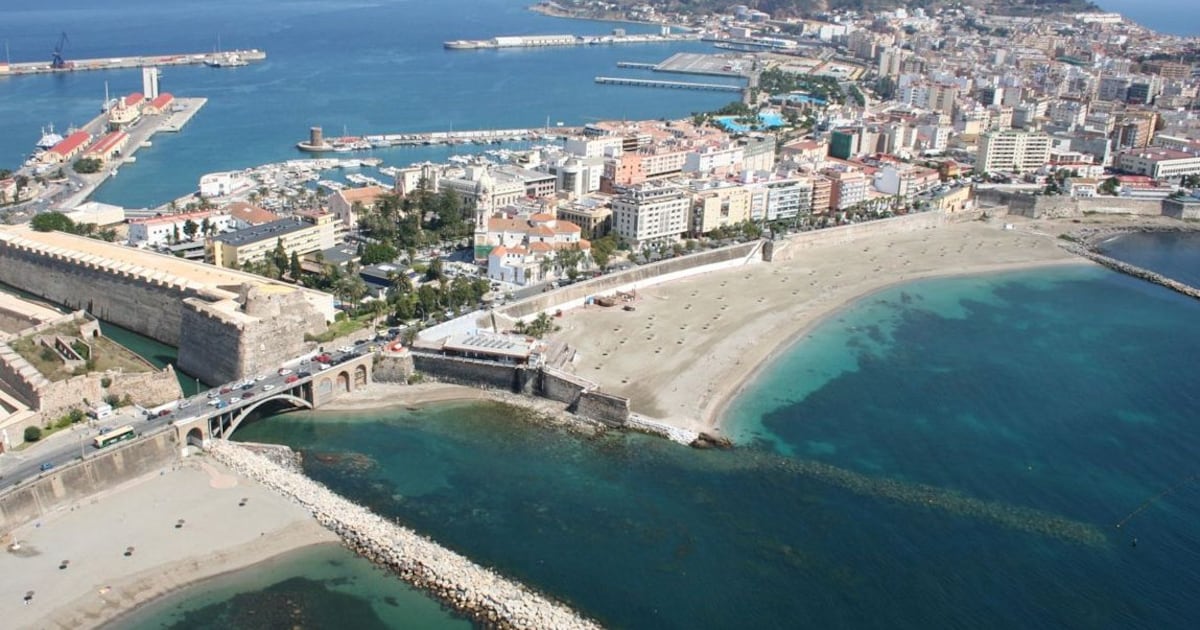
Intelligence reports highlight Morocco’s pivotal role in safeguarding the Spanish enclave of Ceuta from terrorist plots. Official Spanish security assessments emphasize that without Morocco’s proactive intelligence-sharing and border security measures, the city could have faced multiple catastrophic attacks in recent years.
Investigations reveal a disturbing trend: terrorist networks have increasingly relied on illicit funds from smuggling and drug trafficking to recruit and radicalize individuals, particularly targeting disaffected youth in Ceuta. Moroccan security agencies have been instrumental in dismantling these financial pipelines, cutting off the lifeblood of extremist operations before they can take root.
Ceuta’s strategic location as a gateway from North Africa to Europe has made it a prime target for international jihadist factions. Just last week, a coordinated security operation in the city center led to the arrest of several operatives linked to these groups, underscoring the persistent threat level. Security officials warn that the enclave’s proximity to Morocco amplifies the risk, requiring constant vigilance and cross-border collaboration.
Recent counterterrorism operations in Ceuta have exposed a more insidious threat than traditional cell-based networks: digital jihadism. Extremist groups now leverage encrypted communications, online propaganda, and crowdfunding to expand their reach, making detection and disruption far more complex. Spanish authorities confirm this shift, noting that cyber-enabled terrorism demands innovative countermeasures beyond conventional policing.
Between 2012 and mid-2026, Spanish Interior Ministry data shows 458 counterterrorism operations across Spain, resulting in 816 arrests tied to jihadist activities. Within Ceuta alone, 19 operations led to 40 detentions during this period. In the first half of 2026, Spain recorded 37 operations, netting 68 suspects—a clear indicator of the ongoing threat and the effectiveness of joint security efforts.
These successes are not accidental but the direct result of seamless intelligence cooperation with Morocco. Moroccan security forces maintain round-the-clock monitoring of known extremist networks, sharing real-time threat assessments with their Spanish counterparts. Their efforts have been pivotal in preventing Ceuta from becoming a staging ground for attacks across Europe.