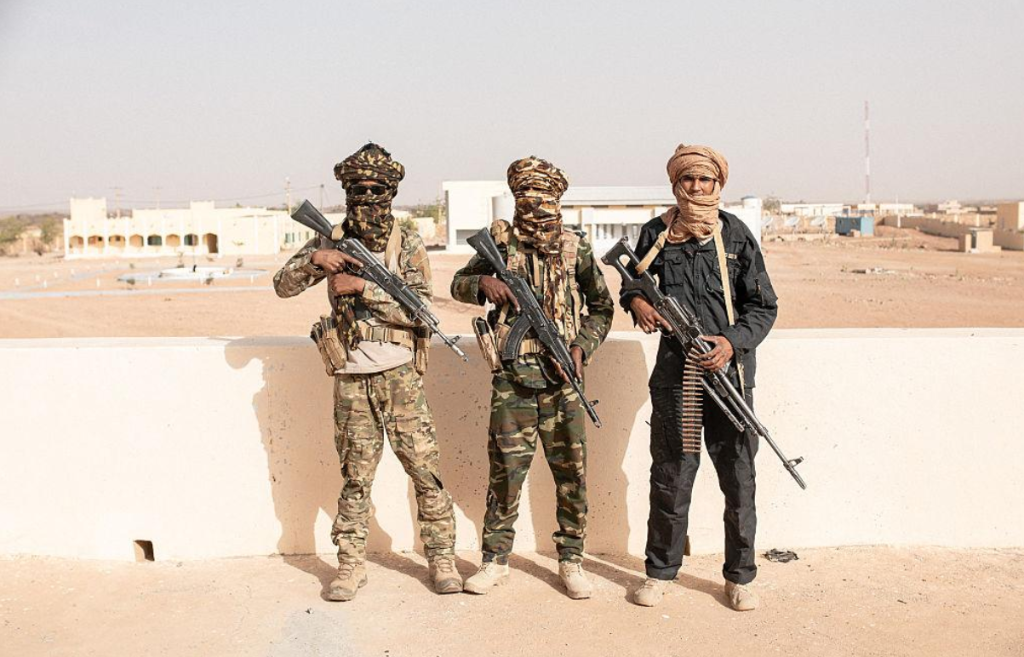
The Sahel’s shifting power dynamics are reaching a critical juncture as insurgent factions recalibrate their survival strategies. In this volatile landscape, where internal conflicts merge with geopolitical rivalries, the Malian Azawad Liberation Front (FLA) has begun exploring uncharted diplomatic territory. Recent intelligence suggests the group has initiated discreet but deliberate outreach—targeting the eastern Libyan stronghold of Benghazi, under the influence of Field Marshal Khalifa Haftar, while simultaneously engaging the United Arab Emirates (UAE) for potential financial and military backing. These moves come at a time when the region’s conflict map is being redrawn, from the sands of northern Mali all the way to the Mediterranean coastline.
From Kidal’s fall to a desperate search for new allies
The FLA’s pivot toward foreign sponsorship was not born out of choice but necessity. The October 2026 recapture of Kidal by Malian forces marked a turning point in the country’s decade-long security crisis. The strategic city, long considered the heart of Tuareg autonomy movements and the FLA’s unassailable stronghold, fell without a single shot fired. In a calculated maneuver, the group announced a strategic withdrawal, claiming it had abandoned Kidal to preserve fighters and equipment. The Malian army’s subsequent takeover underscored Bamako’s determination to reassert territorial control—while simultaneously forcing rebel factions into the shadows, where survival now depends on securing external logistics and reinforcements.
Why Benghazi? Libya’s eastern faction as a game-changing backer
The FLA’s overtures to Libya’s east are driven by geography and opportunity. The vast, porous Sahara desert offers a natural conduit for arms, training, and safe havens, while the region’s fractured governance provides fertile ground for unconventional alliances. A high-level FLA delegation reportedly traveled to Benghazi to engage with key figures in Haftar’s security apparatus—including Saddam Haftar, the Libyan strongman’s eldest son. Though no immediate weapons transfers have materialized, the outreach signals a clear intent: to forge an alternative axis that bypasses the military encirclement imposed by Bamako’s recent advances. For a movement now operating in survival mode, even the possibility of Libyan logistical support could prove decisive.
Key risks:
- Unreliable alliances: Haftar’s faction is engaged in its own power struggles, meaning Libyan support could vanish as quickly as it appears.
- Geopolitical fallout: Any direct arms flow from Benghazi to the FLA risks aggravating tensions with neighboring states, particularly Morocco and Algeria.
- Operational costs: Establishing secure supply lines across the Sahara would require substantial investment, which the FLA may struggle to sustain.
UAE: The financial lifeline with high-stakes diplomatic consequences
The FLA’s pursuit of Emirati backing is embedded in a broader regional chess game. The UAE has spent years cultivating influence across Africa, weaving financial and security networks from the Horn of Africa to the Sahara-Sahel belt. Yet, the prospect of Abu Dhabi channeling resources to Mali’s insurgents strikes at the heart of a critical geopolitical fault line. Algeria, which shares a 1,200-kilometer border with Mali, views the stability of its southern flank as a matter of national security. The Algerian government has accused the UAE of destabilizing the region, framing its potential involvement as a direct threat to its strategic interests. Relations between Algiers and Abu Dhabi have soured sharply over divergent stances on regional conflicts, amplifying the stakes of any Emirati tilt toward the FLA.
Algeria’s counter-move: Reasserting regional dominance
Faced with the FLA’s diplomatic gambits and the looming specter of foreign interference, Algeria has launched a sweeping diplomatic offensive. Recognizing that isolating its Sahel neighbors would only invite rival powers to exploit the vacuum, Algeria has prioritized rebuilding ties with Bamako. The focal points are clear: border security, cross-border trafficking control, and migration management. Despite past tensions stemming from the collapse of the Algiers Peace Accord, the two governments are now collaborating to restore stability and curb external meddling.
This realignment extends beyond Mali. Algeria’s rapprochement with Niger has gained momentum, marked by renewed political dialogue and bolstered cooperation on transborder security and economic development. By reinvesting in its bilateral relationships with Niamey, Algiers aims to construct a Sahelian stability arc—one that preemptively blocks attempts by extra-regional actors to destabilize the region. For both Bamako and Niamey, a strengthened partnership with Algeria offers a pragmatic alternative to hedge against insurgent resurgence and external influence.
What’s next? A fragile equilibrium hangs in the balance
The Sahel-Sahara chessboard is more complex than ever. On one side, the FLA’s survival hinges on the fragile threads of its new alliances—whether they materialize or collapse under diplomatic pressure. On the other, Algeria’s assertive regional diplomacy seeks to neutralize foreign patronage networks before they take root. The outcome will hinge on two pivotal factors:
- Security alliances: Can Mali and Niger consolidate their partnerships with Algeria to close off external support channels to insurgent groups?
- Logistical realities: Will the FLA’s potential backers—Libya and the UAE—commit the resources necessary to sustain a low-intensity war in the Sahara, or will rival powers successfully pressure them to withdraw?
As the dust settles over Kidal, the broader Sahel faces a defining crossroads. The FLA’s quest for new patrons may yet reshape the region’s conflict dynamics—but only if those patrons choose to play the dangerous game of proxy warfare in the Sahara’s unforgiving expanse.