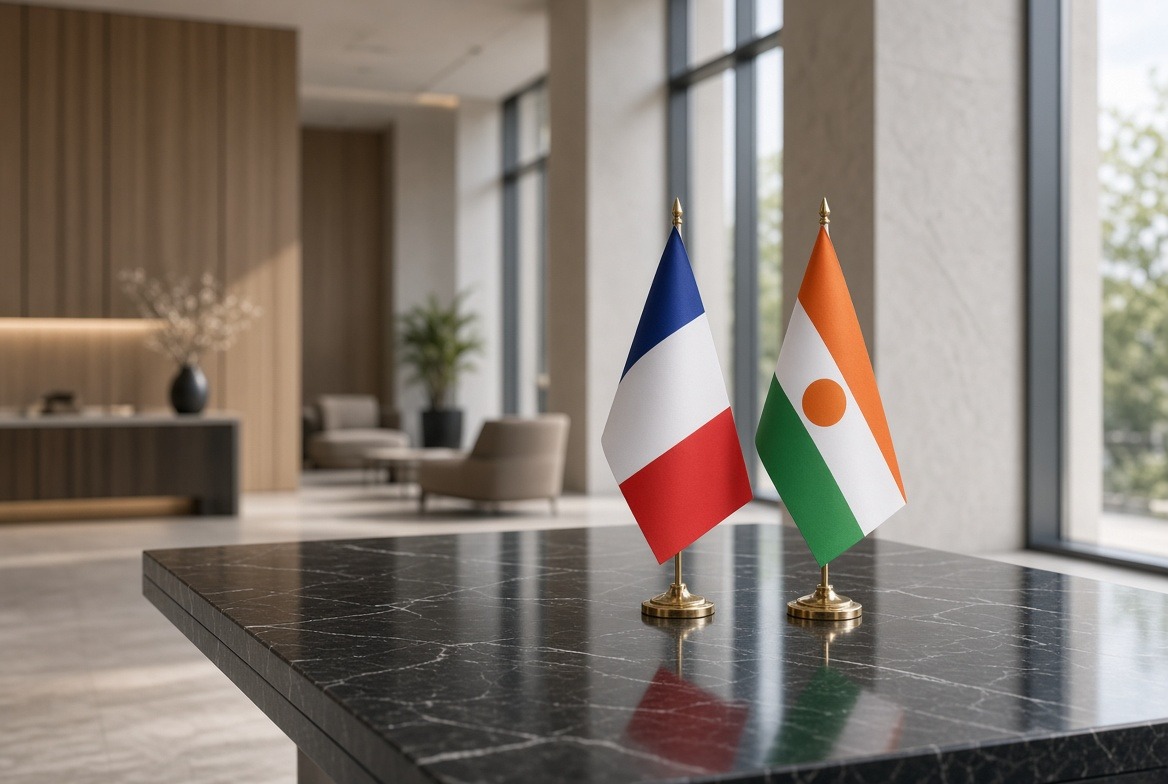
The French government’s decision to declare two agents of Niger’s intelligence services persona non grata has reignited debate over how far the diplomatic rift between Paris and Niamey can stretch. Both men were officially assigned to Niger’s embassy in the French capital. Their removal, confirmed in early October 2026, has sharpened scrutiny of a relationship that has been unraveling since the July 2023 coup in Niamey — a rupture marked by tit-for-tat measures, the withdrawal of French troops, and mounting distrust on political, security, and diplomatic fronts.
Paris orders two Nigerien agents to leave
France expelled two operatives of the Direction générale de la documentation et de la sécurité extérieure (DGDSE), Niger’s external intelligence agency, who held official posts at the Nigerien embassy in Paris. The two men were declared persona non grata on September 16 and left French territory three days later.
French diplomatic sources cited by the daily Le Monde described their presence as no longer justified because bilateral cooperation between Paris and Niamey has effectively ceased. A Nigerien source cited in the same outlet maintained that one of the agents was suspected of conducting surveillance on Nigerien opposition figures living in France.
The move came amid a sharp contraction in cooperation channels between the two capitals. It also illustrates the difficulties diplomatic missions face when political trust between states erodes over the long term.
A decision that fits a pattern
The expulsions are not an isolated event. They add to a sequence of restrictive measures that have progressively narrowed the space for direct dialogue between Paris and Niamey.
July 2023: the breaking point
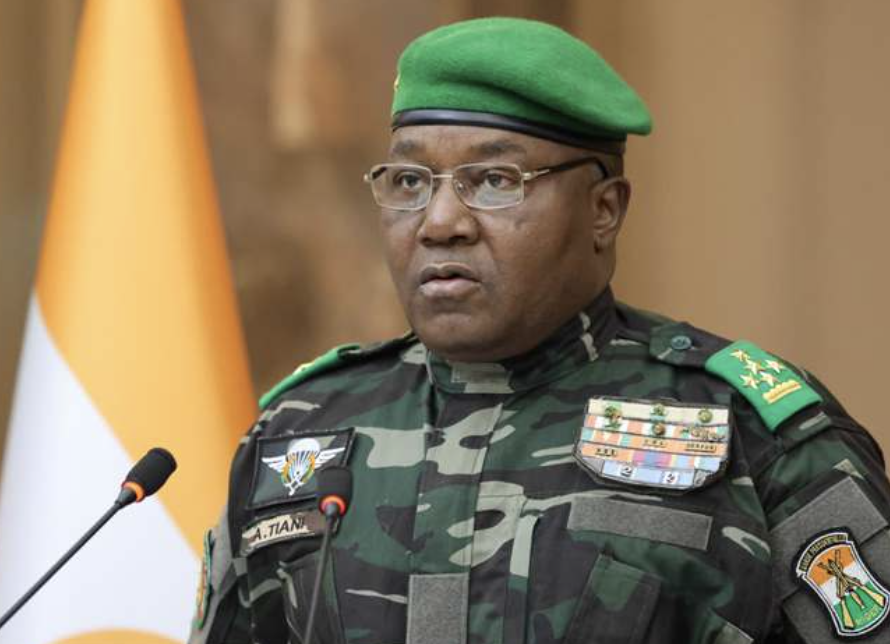
To grasp this latest episode, it helps to look back to July 26, 2023, when President Mohamed Bazoum was overthrown by soldiers grouped under the Conseil national pour la sauvegarde de la patrie (CNSP), led by General Abdourahamane Tiani.
Paris, which had backed the ousted president and demanded a return to constitutional order, refused to recognize the legitimacy of the new military authorities. Niamey, for its part, condemned France’s stance and rejected what it described as interference in its internal affairs.
The crisis quickly moved beyond political statements. On August 25, 2023, Nigerien authorities gave France’s ambassador, Sylvain Itté, 48 hours to leave the country. Paris disputed the demand, arguing that the new authorities lacked the legitimacy to end his posting.
After weeks of standoff, French President Emmanuel Macron announced on September 24, 2023, that the ambassador would return home and that French troops stationed in Niger would be withdrawn. The military pullout was completed by the end of 2023. That sequence marked a major turning point in relations between the two countries.
Reciprocal expulsions and countermeasures
The crisis did not stop at the departure of France’s ambassador. It brought restrictions affecting nationals, visas, and diplomatic activities.
In February 2024, Le Monde reported that several French citizens had been turned back upon arrival in Niamey despite holding valid travel documents. According to testimony gathered by the newspaper, Nigerien authorities at the time required special authorizations for certain French travelers. Paris had also revoked several visas granted to Nigerien nationals, in a context of mutual reprisals.
France’s embassy in Niamey subsequently closed its doors, with French authorities citing serious obstacles to carrying out its missions. In May 2024, the French Ministry for Europe and Foreign Affairs confirmed to the Senate that the closure would continue until further notice.
The current decision targeting two Nigerien agents therefore takes its place in a long series of measures that have gradually reduced opportunities for direct dialogue between the two states.
A deeper political and security rupture
Beyond the expulsions, the Franco-Nigerien crisis reflects a political reorientation in Niger. The military authorities in Niamey have steadily strengthened ties with Mali and Burkina Faso, both also led by military regimes that came to power through coups. The three countries formed the Alliance of Sahel States (AES), which presents itself as seeking to bolster the political and security sovereignty of its members.
At the same time, the French military presence — long presented by Paris as a key component in the fight against armed groups in the region — has ended in Niger. Nigerien authorities have repeatedly criticized French policy in the Sahel, while Paris has defended its actions and denounced the obstacles placed in the way of its representatives.
This shift is unfolding in a regional context where sovereignty, security, military partnerships, and control over resources occupy a central place in public debate.
Why intelligence missions remain sensitive
The expulsion of the two agents is a reminder that even when political relations are deeply degraded, diplomatic missions and intelligence activities remain sensitive matters. The official presence of personnel linked to intelligence services at an embassy is not, in itself, unusual in international relations. Any accusation of clandestine activity, however, must be weighed against verifiable evidence.
What next for Paris-Niamey dialogue?
The latest French measure is another indicator of how weak bilateral relations have become. It does not necessarily mean a total diplomatic break, since Niger’s embassy in Paris remains open. But it confirms that cooperation between the two countries is severely hampered.
For Nigerien and French populations alike, the consequences go beyond the diplomatic arena. Reduced institutional exchanges can complicate consular procedures, economic relations, cooperation projects, and consultation mechanisms on regional security.
The core question: conditions for normalization
The central issue remains what it would take to normalize relations. That would require functioning communication channels, a clarification of disputes, and political will on both sides to resume dialogue without abandoning positions each government considers essential.
For now, the expulsion of the two Nigerien agents stands as another chapter in a crisis that began in July 2023 and whose effects continue to be felt. Between distrust, accusations, and strategic distancing, Paris and Niamey face a major challenge: preserving the means of diplomatic communication even as the trust that once underpinned it has been substantially eroded.