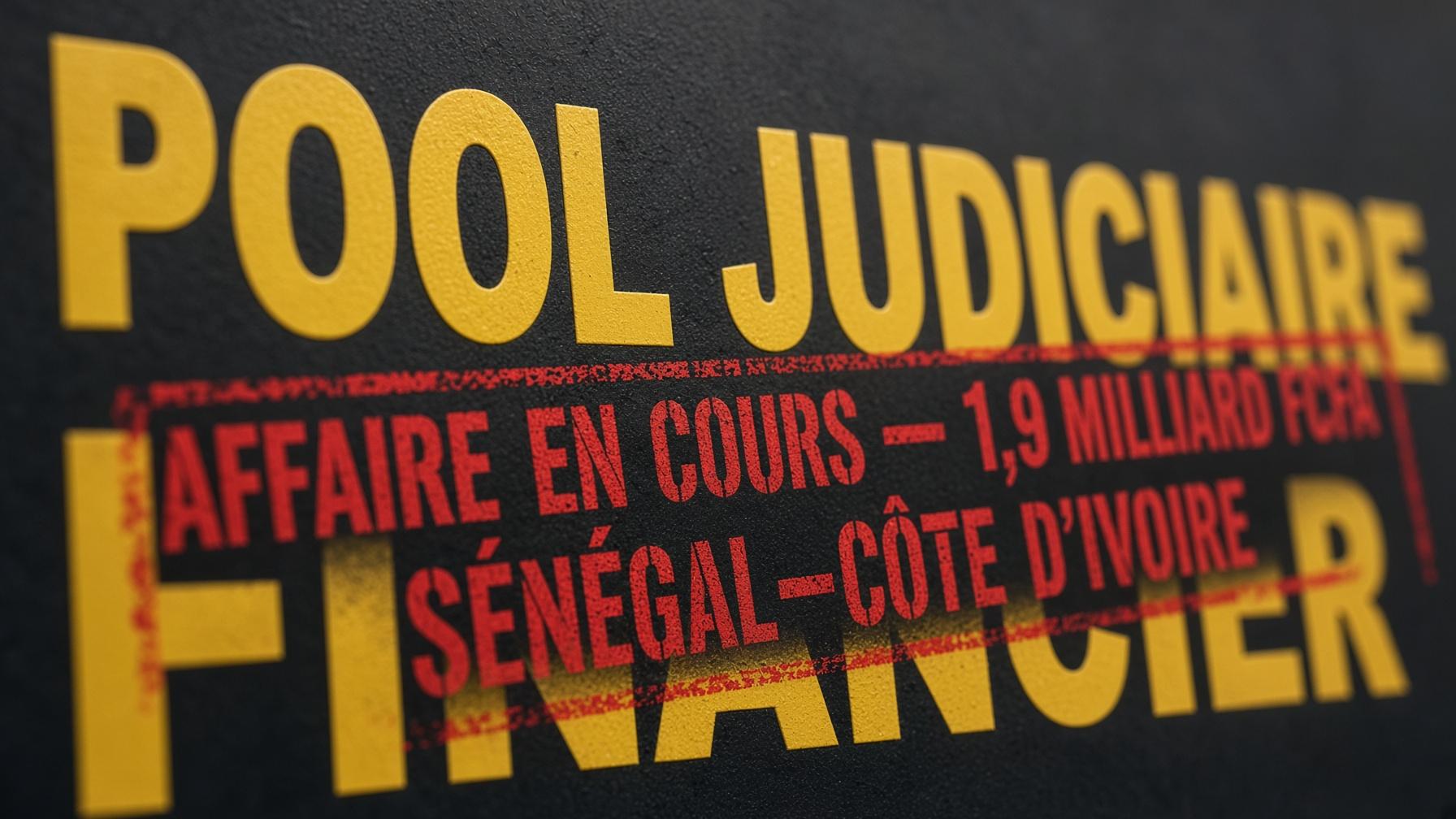
The alleged diversion of 1.9 billion CFA francs between Dakar and Abidjan has sent shockwaves through West Africa’s banking sector, prompting a wave of reactions and raising urgent questions about what comes next. Two banks were reportedly caught in a scheme involving fake transfer orders, and the fallout is already reshaping conversations about financial security in the region. As investigators from Dakar’s Section de Recherches pursue arrests, the public debate has shifted from how the fraud happened to what it means for the future of cross-border banking.
The financial and reputational fallout of a 1.9 billion FCFA loss
The sheer scale of the alleged fraud—1.9 billion CFA francs—has triggered immediate concerns about its impact on the institutions involved and their clients. This sum represents a significant financial hit, but the damage extends beyond the balance sheet. Trust in banking systems between Senegal and Côte d’Ivoire is now under scrutiny, and customers are asking hard questions about how their money is protected.
Initial findings suggest that the banks were manipulated through forged transfer instructions, a tactic that exploits gaps in verification processes. When fraudulent orders slip through without proper authentication, funds can be moved to unauthorized recipients, undermining the very foundation of secure transactions. The incident has sparked a broader debate about whether current safeguards are sufficient in an era of increasingly sophisticated financial crime.
However, many details remain unclear. Investigators are still working to determine how the fake documents entered the banking chain, when the irregularities were first detected, and exactly how the funds were moved. These unanswered questions are fueling public anxiety and calls for greater transparency.
Unraveling the method: fake transfer orders and control failures
The use of fraudulent transfer orders is the most visible thread in this case, but it raises deeper questions about internal controls. In a legitimate transfer, banks must verify the identity of the order giver, the authenticity of the instruction, the availability of funds, and the necessary authorizations. When these checks are bypassed or poorly enforced, the risk of fraud escalates dramatically.
Investigators are likely examining whether the operation involved forged documents, multiple participants, or even internal complicity. It is still too early to say if insiders, cyber intrusions, or identity theft played a role. What is clear is that reconstructing the chain of events—from the creation of the fake orders to their processing and the subsequent movement of funds—will be critical to understanding whether this was an organized scheme, a series of failures, or a combination of both.
This reconstruction will also help determine if the fraud could have been prevented and what lessons can be applied to prevent future incidents.
Dakar arrests: a turning point with many questions remaining
The arrest of suspects by Dakar’s Section de Recherches marks a significant step, but it is far from the end of the story. This unit of the national gendarmerie, tasked with complex judicial investigations, now faces the challenge of piecing together the evidence. The suspects’ statements, bank records, disputed transfer orders, and communication trails will all be essential in establishing the facts.
At this stage, the number of people involved, their specific roles, and the potential charges remain uncertain. The investigation could lead to further arrests if evidence points to additional participants. For now, the arrests have intensified public interest and heightened expectations for accountability.
The outcome of these proceedings will be closely watched, as they will set a precedent for how such cross-border financial crimes are handled in the region.
Cross-border challenges: cooperation and the hunt for the funds
The transnational nature of this case—spanning Senegal and Côte d’Ivoire—adds layers of complexity. Investigating authorities must coordinate across jurisdictions and work with the banks involved to trace the 1.9 billion CFA francs. Identifying beneficiary accounts, tracking successive transfers, and determining whether the funds were withdrawn, moved, or converted into assets are all urgent priorities.
Speed is of the essence in financial fraud cases, as funds can be rapidly dispersed, making recovery difficult. Effective cooperation between authorities and financial institutions will be crucial to consolidate evidence and prevent further movement of the money. The ability to recover the funds will also depend on how quickly and efficiently this cooperation unfolds.
This case underscores the need for stronger regional mechanisms to combat financial crime and protect the integrity of cross-border transactions.
Reassessing bank security: lessons for the future
Beyond the immediate financial loss, this affair has reignited a critical debate about the robustness of banking controls. Financial institutions are constantly targeted by fraudsters who exploit both administrative procedures and digital tools. Measures such as systematic verification of sensitive instructions, separation of authorization and execution duties, confirmation of unusual requests with clients, and monitoring of atypical transactions are essential to mitigate these risks.
Banks are also being called upon to enhance staff training and improve detection mechanisms for suspicious operations. Heightened vigilance is particularly important for high-value or unusual transactions. However, it would be premature to conclude that specific failures occurred at the banks involved before the investigation concludes. Only a thorough inquiry will determine whether control weaknesses contributed to the alleged fraud.
This incident serves as a wake-up call for the entire sector, highlighting the need for continuous improvement in security protocols.
What lies ahead: accountability, recovery, and reform
The investigation into the alleged 1.9 billion FCFA fraud is now at a pivotal stage. After the initial arrests, many questions remain: How was the fraud executed? Who were the ultimate beneficiaries? Can the funds be recovered? Were others involved? Answering these questions will require verifiable evidence and meticulous investigative work.
Meanwhile, the case has broader implications. It highlights that bank fraud is not just about immediate financial loss; it can erode customer trust, expose institutions to legal risks, and test international cooperation. The coming weeks and months will be crucial in determining whether this was an isolated incident or part of a larger pattern.
As the investigation progresses, the focus will shift to holding those responsible accountable and implementing reforms to prevent future occurrences. In an economy where financial flows cross borders daily, securing transactions and ensuring swift judicial responses are more important than ever. The outcome of this case could shape the future of banking security in West Africa.