The news that Swiss oil trader Oryx Energies has been sold for close to $1 billion is still reverberating through African energy circles, triggering a wave of reactions and hard questions about what comes next. The deal, which transfers ownership of a company that has shaped fuel distribution across more than 20 sub-Saharan African countries for over three decades, has sparked debate among industry players, analysts and consumers alike. Beyond the headline figure, the deeper story is one of fallout and outlook — who gains, who worries, and how the continent’s fuel supply chain may be redrawn in the months ahead.
The deal that set the market talking
Word of the transaction first surfaced in early October 2026, confirming months of speculation about the future of the Swiss hydrocarbons group. The sale hands control to new owners after a period of intense behind-the-scenes maneuvering that had already put the company’s direction in doubt.
As far back as April 2026, it emerged that Oryx Energies CEO Moussa Diao was exploring a bid to take over the company founded by Swiss businessman Jean-Claude Gandur. That ambition has now come to fruition, sealing a change of ownership that few in the sector saw coming so soon.
The announcement has reignited a broader conversation: in a market where fuel distribution is both a commercial opportunity and a matter of national interest, who should own the infrastructure that keeps engines running and households cooking?
Much more than a trading house
Calling Oryx Energies a “trader” undersells what the company actually does. Its operations stretch far beyond buying and reselling petroleum products.
With a footprint in over 20 sub-Saharan African countries and a workforce exceeding 1,800 people, the group covers fuels, liquefied petroleum gas (LPG), lubricants, marine bunkering, transport, storage and distribution. It also runs an infrastructure network designed to keep supply secure across its markets — an integrated chain that runs from international sourcing all the way to local storage, transport and delivery.
That integrated model is precisely what makes the company so valuable. In many African countries, storage and distribution infrastructure is a strategic choke point, especially where markets lean heavily on imported refined products. Losing control of such assets — or gaining them — carries consequences that go well beyond the balance sheet.
A footprint built over decades
Oryx Energies’ story is inseparable from the growth of Africa’s energy market. The company emerged from activities developed by AOG, the conglomerate established by Jean-Claude Gandur. In 2013, the trading and distribution businesses were consolidated under the Oryx Energies brand to create an integrated platform spanning sourcing, storage and distribution.
Since then, the group has deepened its presence across multiple African markets. Its position is especially compelling on a continent where energy demand keeps climbing, driven by population growth, urbanisation and expanding industrial activity.
Oryx supplies fuels to businesses, transport operators and construction firms, while its LPG business serves households and industrial users alike. That dual role — powering commerce and keeping homes running — explains why the sale has drawn such intense scrutiny.
LPG: the quiet battleground
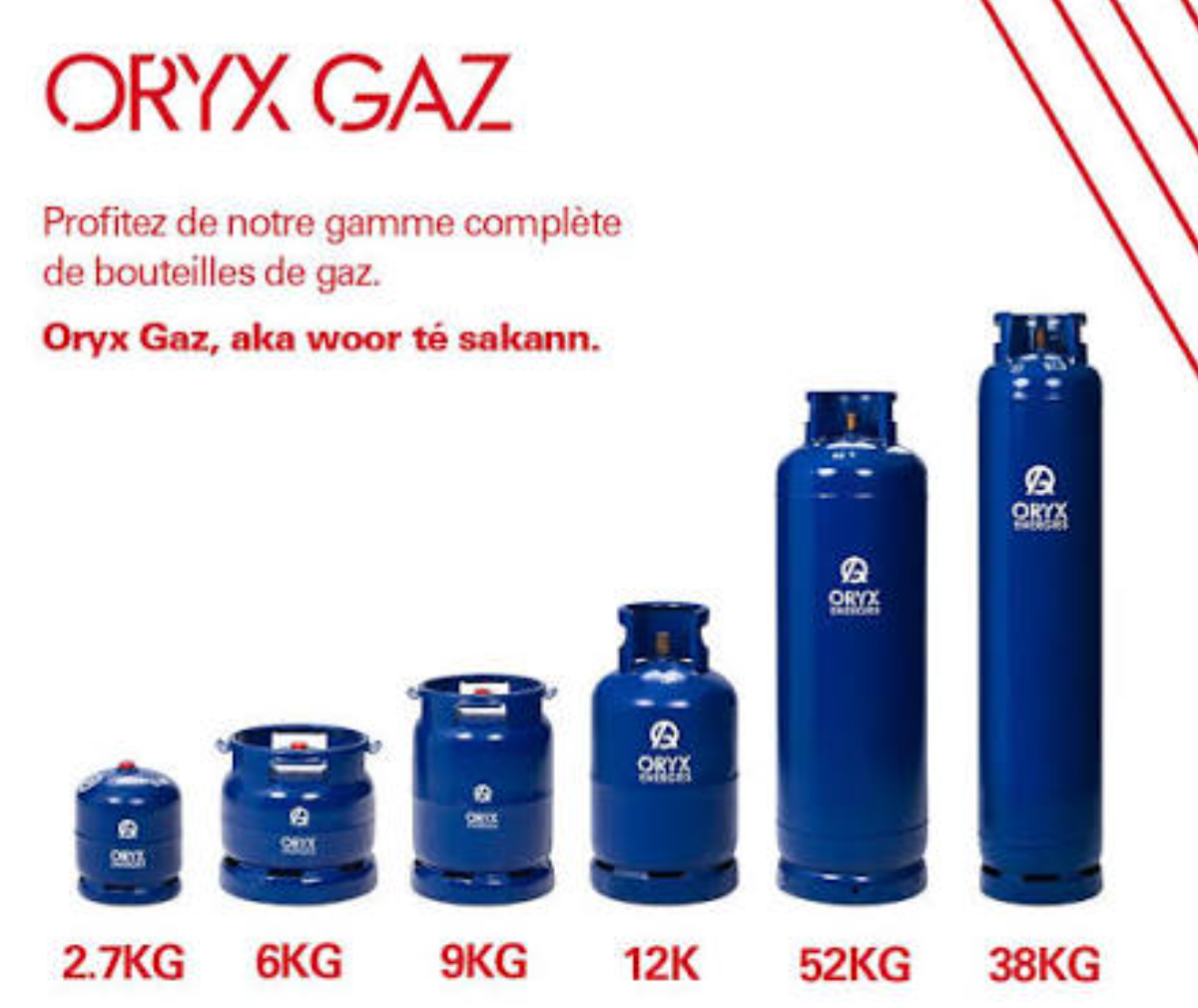
Among Oryx’s activities, LPG occupies a special place. Growing this energy source addresses two goals at once: meeting rising energy demand and steadily reducing dependence on charcoal and firewood for cooking.
Tanzania offers a telling example. In May 2026, reports pointed to advanced talks between Oryx Energies and Tanzanian group Amsons over certain Oryx assets in the country. That potential deal, valued at around $250 million, covered fuel and LPG operations as well as a stake in the TIPER petroleum storage infrastructure.
Those earlier discussions already signalled the strategic worth of the group’s African assets — and set the stage for the far larger transaction now unfolding.
Why the price tag makes sense
The $1 billion valuation cannot be explained by traded volumes alone. It reflects the worth of infrastructure, distribution networks, commercial contracts and local presence built up over decades.
Oryx reports annual sales of 9.44 million tonnes of products and total storage capacity of 947,276 cubic metres. For would-be competitors, these assets form a formidable barrier to entry. Building terminals, securing regulatory approvals, developing a commercial network and earning the trust of industrial clients can take years and require enormous investment.
That is why buying an established player lets an investor leapfrog straight into a significant position across multiple markets — and why the fallout from this deal is being watched so closely.
What the change of hands could trigger
Beyond the financial mechanics, the sale could reshape the competitive landscape of African energy.
A new shareholder may accelerate infrastructure investment, strengthen certain regional positions or reorganise the group’s activities entirely. The international backdrop matters too: African markets remain highly exposed to global oil price swings, shipping costs and geopolitical tensions. In such an environment, owning storage capacity and a diversified distribution network is a major strategic advantage.
The debate now is whether the new owners will double down on expansion or consolidate what already exists. Either path will have ripple effects — on suppliers, on competitors and, ultimately, on consumers who depend on reliable fuel supplies.
The road ahead
The sale of Oryx Energies for $1 billion is far more than a financial transaction. It closes one chapter for a group built around Jean-Claude Gandur’s vision and opens another whose direction is still being written.
The key question is what strategy the new owners will pursue: continue expanding, reinforce infrastructure, consolidate existing positions or push faster into diversification.
What is certain is that by changing hands at a reported value of $1 billion, Oryx Energies has confirmed just how strategically important African energy infrastructure has become. On a continent where demand for energy keeps rising, companies capable of efficiently connecting international markets to local consumers now attract investors willing to commit serious capital — and the debate over who controls that link is only getting started.