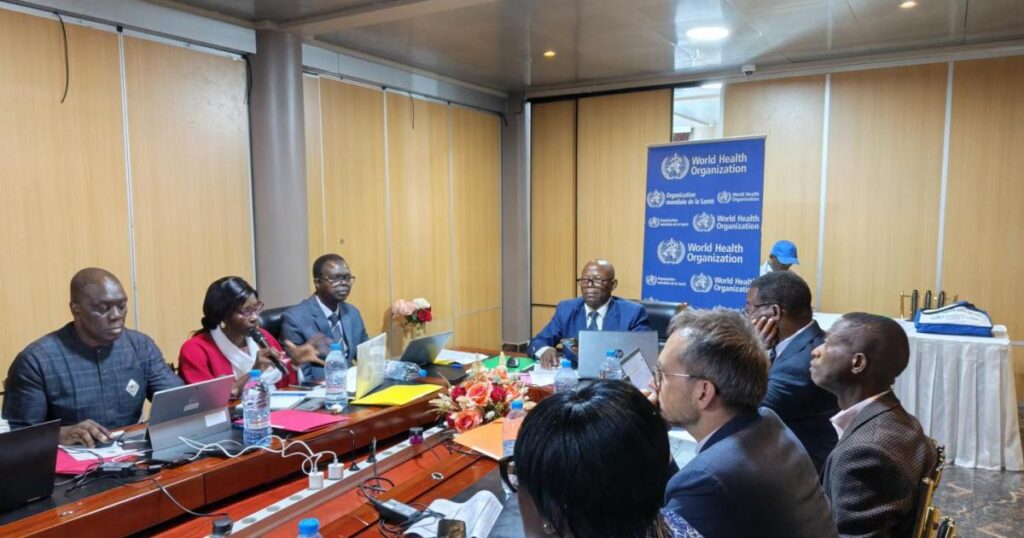
Mbankomo conference examines tobacco taxation as a health and development tool
For three days in late July, policymakers and health advocates gathered in Mbankomo not to discuss hospital budgets or medicine procurement, but to analyze tax policy. Behind spreadsheets and duty projections lay a single, urgent question: how can Niger’s tax system save more lives while securing sustainable healthcare financing?
The July 2026 meeting brought together officials from Niger’s Ministries of Health and Finance, customs authorities, legislators, civil society representatives, and technical partners. Their focus: unlocking the often-overlooked power of tobacco taxation as both a public health lever and a driver of economic resilience.
Tobacco’s growing burden on public health
Despite global progress, tobacco remains a leading preventable cause of death worldwide, and Niger is no exception. An estimated 9% of adults and over 10% of youth aged 13 to 15 use tobacco, while 37% are exposed to second-hand smoke. Each year, roughly 66,000 Nigerien deaths are linked to tobacco consumption.
The health toll extends beyond mortality. Tobacco fuels rising rates of cancer, cardiovascular disease, stroke, and chronic respiratory illnesses. It also strains household budgets, overburdens healthcare systems, and weakens national productivity. Yet cigarettes remain shockingly affordable in Niger. In 2024, the retail price of the most-sold pack was just $4.07 (PPP-adjusted)—well below the African average of $5.06 and the global mean of $6.98. Tobacco taxes accounted for only 36% of the final price, far below the World Health Organization’s recommended 75%.
One tax decision, thousands of lives transformed
Opening the workshop, national leaders emphasized that raising tobacco taxes is among the most cost-effective ways to curb consumption. Price sensitivity is especially high among adolescents: when cigarettes become less affordable, fewer teens start smoking. A single fiscal decision today can prevent disease, disability, and death for decades to come.
But the benefits extend beyond health. Smarter tobacco taxation generates new domestic revenue streams that can be reinvested in stronger health systems, noncommunicable disease prevention, and progress toward universal health coverage.
Evidence-driven reform: the data behind the policy
Effective policy requires reliable data. Participants analyzed Niger’s tobacco consumption patterns, economic costs, links to noncommunicable diseases, current tax structures, market dynamics, and international best practices. Dr. Amadou Diallo, Senior Technical Advisor at WHO Africa, stressed that tobacco’s harm spans cancer, cardiovascular disease, stroke, chronic lung conditions, and developmental impacts on young brains due to nicotine addiction.
Discussions dismantled common misconceptions about tobacco tax hikes—fears of lost revenue, massive job cuts, or a surge in illicit trade. Experts noted that well-designed reforms, paired with strong enforcement, rarely trigger these outcomes. Public policy, they agreed, must be guided by evidence, not perception.
Tax modelling reveals clear pathways to impact
The workshop’s highlight was a live demonstration of the WHO TaXSiM model, which allows governments to simulate the health and fiscal impacts of different tax scenarios before implementation. Using Niger’s latest data, three progressive tax increases were tested:
- Raising the minimum specific tax from 5,000 FCFA to 10,000 FCFA per 1,000 cigarettes in 2027
- Further raising it to 15,000 FCFA per 1,000 cigarettes in 2028
- Applying the new rates uniformly to both imported and domestically produced products
The results were striking. Cigarette sales would fall from 162.9 million packs in 2026 to 144.1 million in 2027, and 131.9 million in 2028—an overall decline of nearly 19%. The number of smokers would drop from 810,000 to 744,000, preventing approximately 66,000 new smokers by 2028.
At the same time, excise revenues would surge from 15.2 billion FCFA in 2027 to 28.8 billion, and total tax receipts from 32.6 billion FCFA to 57.3 billion—yielding nearly 25 billion FCFA in additional public funds.
For experts, these figures prove that health and economic progress are not mutually exclusive. Ambitious tobacco taxation simultaneously reduces smoking and strengthens public finances.
Funding the future: tobacco taxes as a health investment
With international health funding gradually declining, domestic tobacco taxation offers a strategic opportunity to reinforce resource mobilization. Additional revenue could support:
- Universal health coverage initiatives
- Programs for preventing noncommunicable diseases
- Smoking cessation services
- Upgrades to health infrastructure
- Public health promotion campaigns
Participants concluded that tobacco taxation is one of the few policies capable of improving population health, reducing future disease costs, and sustainably strengthening the health system’s financial base.
Emerging threats: nicotine products targeting youth
Discussions also highlighted the rapid rise of novel nicotine products—disguised as pens, smartwatches, lipsticks, toys, candies, and chewing gum. Sophisticated marketing targets adolescents, embedding nicotine use in everyday youth culture.
One video demonstration showed a teenager using a vape device hidden inside a smartwatch. WHO experts warned these products are not harmless: they create addiction, expose users to toxic substances, and risk normalizing nicotine use among young people.
Participants called for early regulatory and fiscal controls to prevent these products from taking hold in Niger’s market.
From evidence to action: a blueprint for reform
By the workshop’s close, delegates endorsed a comprehensive set of recommendations:
- Gradual increase of the minimum specific tax to 15,000 FCFA per 1,000 cigarettes
- Uniform application of tax rates to imported and domestic products
- Strengthened regional dialogue on excise duties within ECOWAS
- Creation of a national technical working group on tobacco taxation
- Establishment of a permanent monitoring and evaluation system
- Improved availability of fiscal and trade data
- Accelerated creation of a National Tobacco Control Fund
- Development of a national tobacco product traceability system
Recognizing that success requires collective action, they also urged intensified youth-focused awareness campaigns, support for tobacco farmers transitioning to alternative crops, implementation of the Protocol to Eliminate Illicit Trade in Tobacco Products, and enforcement of a national traceability system.
The path forward: protecting Niger’s youth and health system
Dr. Aïcha Souley, Permanent Secretary of the National Committee for Drug Control, underscored the need for high-level dialogue with government, parliament, and stakeholders to accelerate reform adoption and ensure broad ownership.
Closing the workshop, Dr. Ibrahim Mahamat, Director of Health Promotion at the Ministry of Public Health, framed the outcome with clarity:
“Tobacco taxation is more than a revenue tool—it’s an investment in people’s health. By shielding young people from starting to smoke and securing long-term financing for our health system, we’re investing in Niger’s future. The recommendations from this workshop give us a solid roadmap to turn science into public policy for the benefit of all.”
In Mbankomo, a shared vision emerged: tobacco taxation is not just a budgetary issue. It’s a prevention instrument, a shield for youth, a driver of domestic resource mobilization, and a sustainable investment in the nation’s human capital.
Data from the workshop confirm that bolder tobacco taxation can simultaneously reduce consumption, save lives, ease the burden of noncommunicable diseases, and generate substantial funds for national health priorities. Every tax increase represents thousands of lives protected. Every evidence-based reform charts a course toward a Niger where fewer young people start smoking, families are better shielded from tobacco’s harm, and the health system has the means to meet the population’s needs sustainably.
By positioning tobacco taxation as a strategic lever for public health and sustainable financing, Niger has the chance to invest today in the health of future generations.”
You may also like
Ivory Coast’s refusal of US deportee deal: what it means for West Africa’s economy and sovereignty
Senegal’s 2026 budget: what a Sonko blockade would mean for households and businesses
Nourane Foster’s PCRN resignation: what it means for Cameroon’s voters and 2027 race
Senegal’s electoral reform debate: what the fallout from Khalidou dit Mbaye Sokoma’s plan means for the country’s next steps
Senegal: how Sonko’s playful jab at Sadio Mané over 2029 is reshaping the political conversation