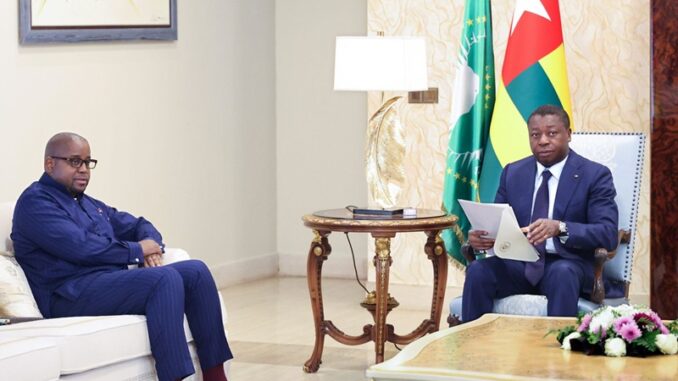
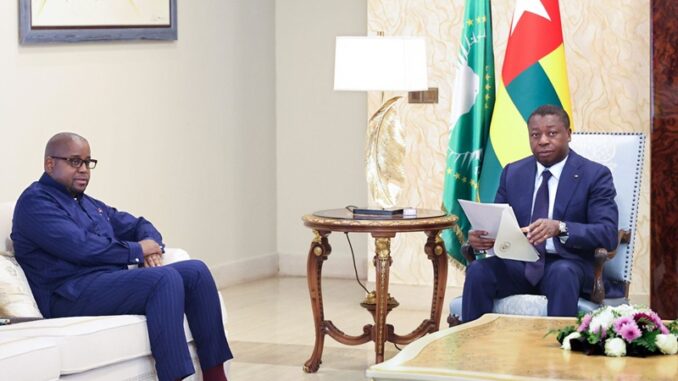
In Lomé on Tuesday, September 29, Togo’s head of state Faure Essozimna Gnassingbé welcomed the Democratic Republic of Congo’s minister of regional integration, Floribert Anzuluni, who carried a written message from Congolese president Félix-Antoine Tshisekedi Tshilombo. The meeting is the latest diplomatic move in a long-running effort to calm eastern DRC, and its consequences will be felt far beyond the negotiating table — by families displaced by fighting, by traders whose supply routes have been cut, and by an economy that has been bleeding for years.
Why the Congolese message matters for ordinary citizens
Anzuluni explained that he and his delegation had been sent to Gnassingbé “to deliver a special message from the President of the Democratic Republic of Congo” concerning “the peace process in eastern DRC,” a file in which Gnassingbé is also involved as a mediator for the African Union.
For millions of people in North and South Kivu, the practical stakes are enormous. A credible ceasefire would allow farmers to return to fields they abandoned, reopen roads that connect villages to markets, and let small businesses — from motorcycle taxi operators to market vendors — operate without the constant fear of armed groups. When peace talks stall, it is these citizens who pay the price first.
Demobilisation: the link between security and livelihoods
During the audience, the Congolese envoys briefed the Togolese leader on progress made by Kinshasa on “the demobilisation of movements in order to allow peace to be consolidated” in eastern DRC, which has seen renewed sabre-rattling since late 2021.
Demobilisation is not an abstract concept. Each fighter who disarms and reintegrates into civilian life represents one less armed man on the road, one less illegal checkpoint taxing traders, and one more potential worker in local economies. Conversely, every failed demobilisation round prolongs a climate in which businesses in Goma, Bukavu and Beni face higher insurance costs, disrupted supply chains and a shrinking customer base.
What a durable ceasefire could unlock
- Restored trade corridors between eastern DRC and neighbouring countries, lowering prices for basic goods.
- Safer movement for humanitarian convoys, easing the pressure on displaced families.
- Renewed investor confidence in mining and agriculture, sectors that directly employ thousands.
- Space for local civil society to rebuild trust between communities.
The broader mediation picture
Since April 2025, Gnassingbé has led an African Union mediation mission for the security crisis in eastern DRC and the wider Great Lakes region, taking over from Angolan mediators. Securing a lasting ceasefire and stabilising the Great Lakes in the long term remain the core challenges for peacemakers, even as parallel tracks continue in Doha under Qatari mediation and in Washington under American mediation.
For Congolese citizens and businesses, the multiplication of mediation efforts is both a source of hope and a risk of confusion. What matters most on the ground is whether these initiatives translate into fewer attacks, more reliable roads and a predictable environment for trade. The letter delivered in Lomé is one link in that chain — its real value will be measured in the daily lives of people in the east.
You may also like
Mali: JNIM ambush on Russian Africa Corps convoy near Niono — what it means for civilians and local trade
Mali’s poverty crisis: how hunger and hardship are reshaping daily life for millions
Guinea-Bissau’s December election: what Embaló’s return means for daily life, stability and the economy
The $20 million bounty on Robert Brovdi: what it means for Ukraine’s citizens, businesses and war economy
What the UN’s 10.5 billion FCFA in Gabon really means for households and small businesses in 2025