Gabon’s skills push: what 400 training slots in Libreville mean for households and local businesses
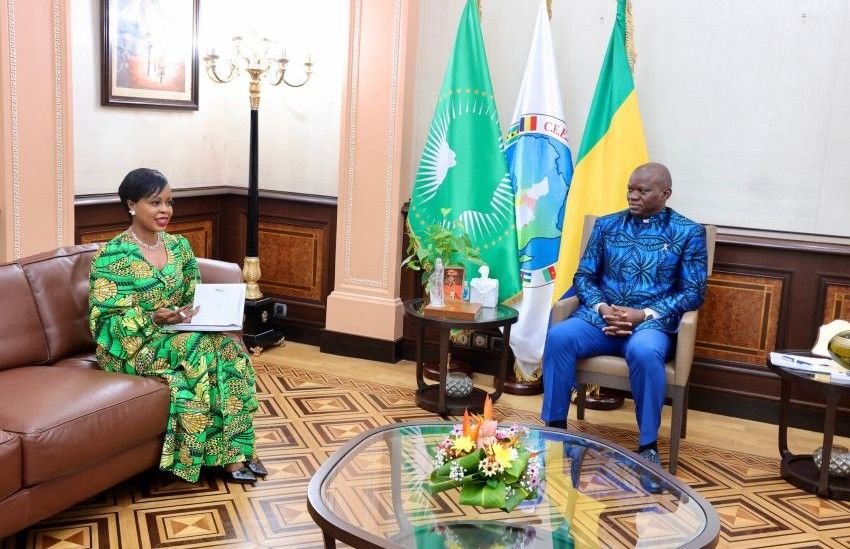
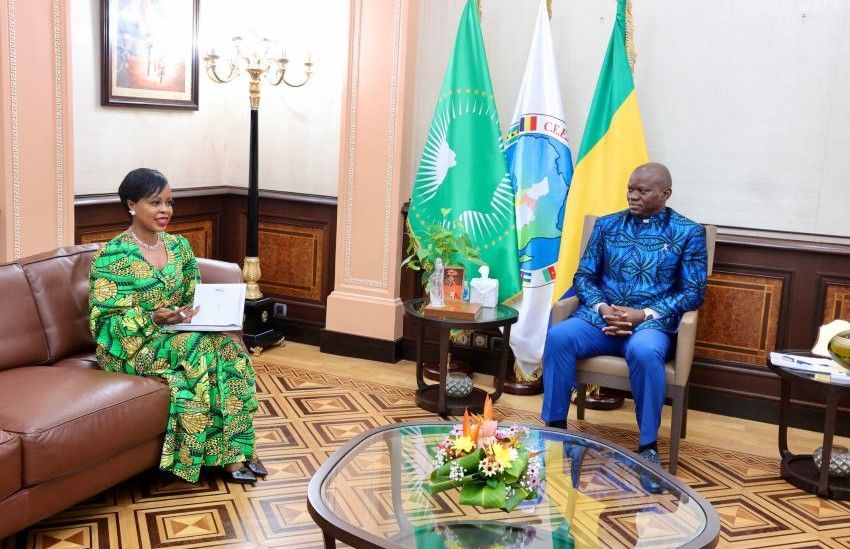
Libreville, Sunday 4 October 2026 – The consequences of Gabon’s latest skills drive will be felt far beyond the training room. On 2 October 2026, President Brice Clotaire Oligui Nguema met with the Minister of Commerce, SMEs and SMIs, Zenaba Gninga Chaning, who presented several programmes focused on training, job placement and support for young people. The first tangible outcome: 400 young people will be trained in Libreville before a gradual rollout across the nine provinces. For families, local businesses and the wider economy, the stakes are immediate and practical.
The announcement comes as Gabon seeks to diversify its economy and strengthen the role of national companies in creating value. The message goes beyond a simple integration programme. It raises a fundamental question: how can the country build a more productive economy without enough technicians, entrepreneurs and professionals to keep it running?
Training that responds to the real economy
The decision to prioritise technical and practical trades reflects a desire to bring training supply closer to the needs of businesses and productive sectors. The first 400 beneficiaries are not meant only to gain a qualification: they must be able to turn that skill into a job, an income-generating activity or a business.
This approach breaks with a vision of training limited to obtaining a diploma. It seeks to install a much more demanding chain: skill, integration, production, income and value creation.
The announced scheme also provides support beyond the training room, with technical assistance, access to financing and project monitoring. This articulation is decisive. In many African economies, the main obstacle to entrepreneurship is not only the lack of ideas or know-how, but the difficulty of crossing the gap between qualification and economic viability. In August, the government had already presented a scheme based on the triptych ‘train, support and finance’, including guarantee and financing mechanisms for young project holders.
The real issue: producing more with national skills
Behind the training policy lies a more strategic ambition: increasing Gabonese participation in national value chains.
The stated objective is to support SMEs and SMIs, promote local production and strengthen national capacities, while gradually reducing reliance on external skills when these can be developed in Gabon.
This question is particularly relevant in sectors where the country invests or seeks to invest more: infrastructure, energy, oil and gas, digital, industry, technical services and raw material processing. The development of these activities does not depend solely on the capital mobilised. It also relies on the availability of a workforce capable of installing, operating, maintaining, managing and, ultimately, innovating.
The signal given a few days earlier in Port-Gentil pointed in the same direction. During a visit to the Institute of Oil and Gas, the head of state stressed the need to strengthen scientific, technical, oil, gas and energy training to meet growing business needs and reduce dependence on certain courses taken abroad.
The consistency between these orientations is clear: economic sovereignty is not limited to controlling resources. It requires having the women and men capable of turning them into value.
From the first 400 beneficiaries to a change of scale
The first cohort of 400 young people is therefore less an end than a real-world test. The announced transition from Libreville to the nine provinces will be decisive. A national skills policy cannot be effective if it reproduces an excessive concentration of opportunities in the capital.
The challenge will also be to adapt training to the economic realities of each territory. The needs of an oil basin, an agricultural area, a mining territory or an urban hub are not identical. Provincial expansion must therefore be designed as a territorial development policy as much as an employment policy.
Above all, it is the post-training period that will measure the programme’s real impact. How many young people will actually find a job? How many will create a viable activity? How many businesses will be able to grow thanks to newly available skills? And what share of these new activities will effectively strengthen local value chains?
These indicators will be more meaningful than the number of people trained alone.
Gabon is thus opening a construction site less spectacular than physical infrastructure, but potentially just as decisive. A road brings territories closer; a power plant feeds the economy; a port facilitates trade. But it is skills that allow these infrastructures to operate, businesses to grow and investments to produce sustainably.
Making human capital a strategic infrastructure means understanding that economic transformation will only be sustainable when Gabonese people themselves have the capacities needed to design it, build it and capture its value.