The Gabon extractive industries kicked off 2026 with mixed results. Overall sector activity declined by 2.9%, primarily driven by a downturn in hydrocarbons, while the manganese sector maintained its upward momentum. This assessment, based on the latest sectoral outlook from the General Directorate of Economy and Fiscal Policy (DGEPF), highlights Gabon’s persistent structural reliance on its oil upstream performance.
Gabon’s extractive sector struggles with oil production slump
The hydrocarbon sector’s decline has significantly impacted the broader extractive landscape. In Libreville, crude production has faced persistent challenges due to aging mature fields, prolonged maintenance of facilities, and upstream investment rates failing to offset natural reservoir depletion. The 2.9% contraction in the extractive sector during the first quarter of 2026 reflects this ongoing erosion, particularly concerning given oil’s status as the country’s top export revenue source.
Gabonese authorities are closely monitoring this trend, particularly as the national budget remains highly sensitive to production volumes and global market fluctuations. The hydrocarbons downturn coincides with a regional shift where international majors are redirecting capital toward basins perceived as more profitable or less mature. Gabon’s sedimentary basin, once the backbone of its economy, now faces intensified competition for exploration and production investment attraction.
Manganese emerges as a stabilizing force in Gabon’s economy
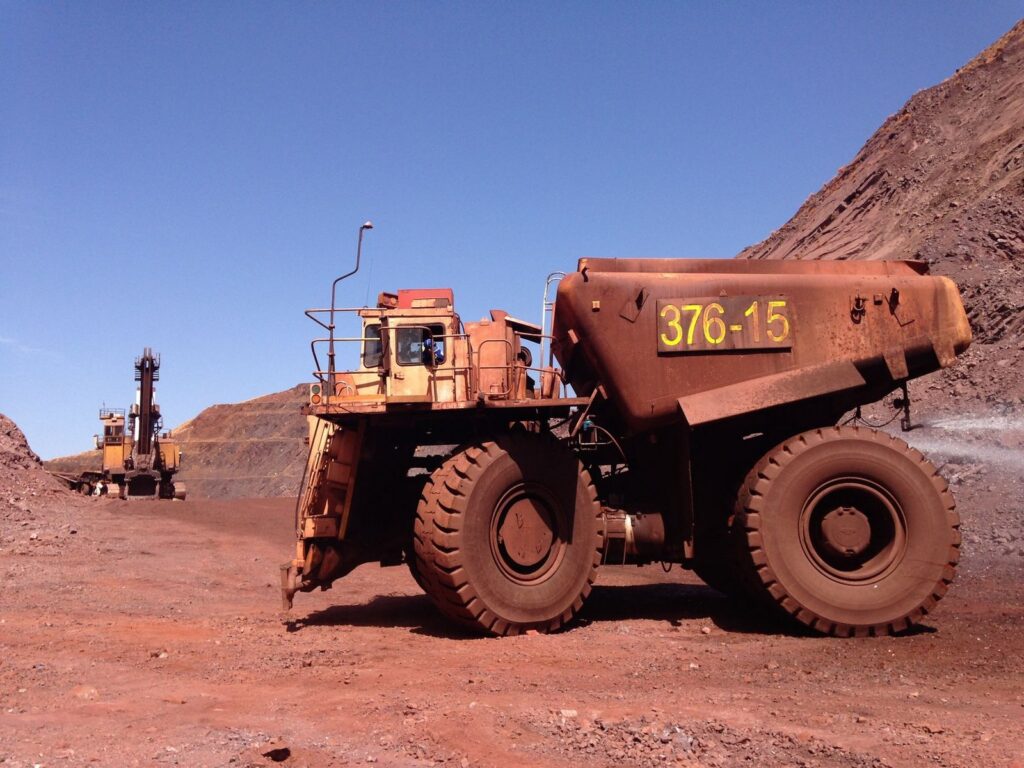
Amid the oil sector’s retreat, the mining industry is cushioning the blow. Gabon, one of the world’s leading manganese producers, continued to see robust growth in the sector during the reviewed period. This expansion aligns with a decade-long trend driven by Asian steel demand and the rising requirements for next-generation battery components, particularly in cathode applications.
The manganese sector’s growing contribution to extractive value added signals a gradual rebalancing of Gabon’s mineral portfolio. Authorities are leveraging this momentum to diversify revenue streams and initiate local transformation strategies, including agglomeration projects and silicomanganese production. These efforts aim to capture greater value within the value chain rather than exporting raw ore—a shift now echoed across several West and Central African mining nations.
Diversification and productive sovereignty take center stage
The DGEPF’s findings underscore a critical challenge for the transition authorities. Gabon’s dual dependency—on hydrocarbons for budgetary income and on external markets for mineral exports—demands a more resilient strategy. The accelerated deployment of the Société Équatoriale des Mines (SEM) in key projects reflects a push to enhance national control over strategic segments.
Meanwhile, the question of upstream oil revival remains unresolved. Offshore licensing rounds, contract framework modernization, and fiscal incentives for exploration are among the tools under consideration to counter the downward trend. However, the lengthy timelines between discovery and production—often exceeding five years—require policymakers to adopt a medium-term perspective.
Ultimately, Gabon faces a three-pronged balancing act: revitalizing hydrocarbons to safeguard immediate fiscal stability, strengthening the manganese sector to secure steady mineral rents, and preparing for a post-oil future through local processing and diversification. The first quarter of 2026 serves as a reminder that this high-wire act leaves little room for uncertainty.
You may also like
Niger’s August mutiny: the fallout, the unanswered questions, and what lies ahead
What Benin’s AirBadminton gold over Mauritius really changes for the sport
Benin’s CCI budget for 2027 sparks debate: what the 6.6 billion FCFA plan means for businesses
Bambali agro park: what the launch means for Sédhiou and Senegal
Senegal’s palm oil deal with Indonesia: reactions, debate and what happens next