Gabon’s debt accountability push for tangible development results
Libreville, July 1, 2026 — Gabon is tightening its stance. With multiple infrastructure projects financed by the African Development Bank (AfDB) facing persistent delays, government officials are now demanding tangible outcomes.
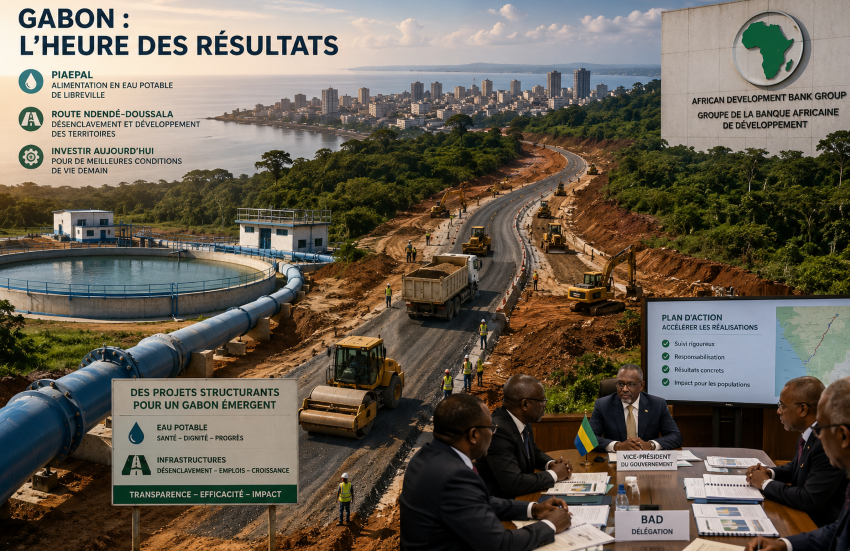
The June 29 meeting in Libreville between Vice-President Hermann Immongault and an AfDB delegation led by Country Manager Mamour Ousmane Ba highlighted a growing priority: ensuring that mobilized funds translate into visible benefits for citizens.
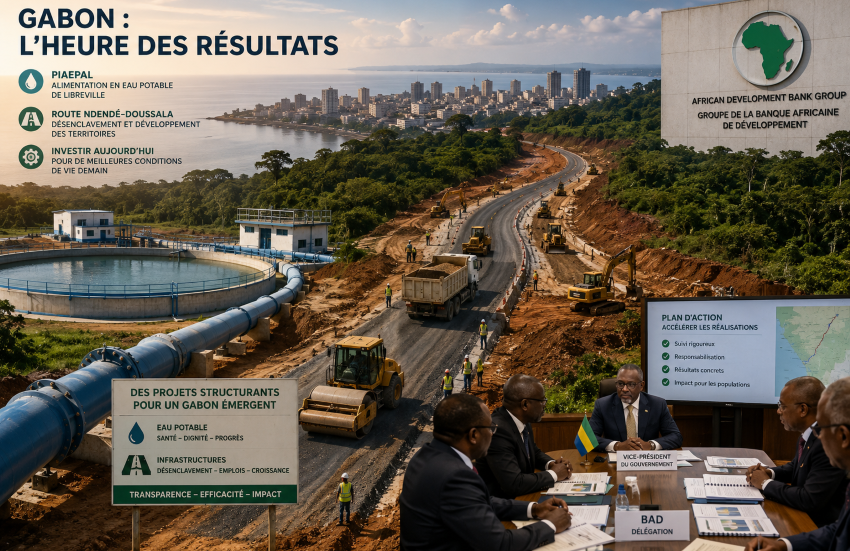
Two flagship initiatives took center stage during discussions. First, the Integrated Program for Drinking Water Supply and Sanitation in Libreville (PIAEPAL), designed to permanently improve water access in the capital. Second, the Ndendé-Doussala road project, a strategic infrastructure expected to boost regional integration and cross-border trade. Both projects, though critical, continue to face delays that fuel public skepticism.
No more room for delays
Gabon has secured substantial international financing for years to modernize its infrastructure. Yet, many projects struggle to meet deadlines, eroding public trust in government initiatives.
The AfDB meeting signals a shift in official discourse. The executive branch is now prioritizing performance and accountability, emphasizing that every financed project must deliver measurable impact on daily life.
This urgency is magnified by tightening budget constraints. Authorities recognize that the focus is no longer solely on securing funds but on ensuring their effective use. Citizens care less about how much was invested than about the actual results achieved.
PIAEPAL exemplifies this challenge. In neighborhoods across Libreville, water access remains unreliable, making delays particularly damaging to public trust in government programs.
The Ndendé-Doussala road project faces similar hurdles. Promised as a key driver of economic development and connectivity, its slow progress delays anticipated benefits for communities and businesses alike.
A shared responsibility for progress
The June 29 discussions revealed an important admission: delays stem from multiple sources, not just external factors.
Vice-President Immongault stressed the need to clarify roles and pinpoint bottlenecks slowing project execution. This approach contrasts with past tendencies to blame contractors or lenders exclusively.
By acknowledging internal administrative dysfunctions—such as cumbersome procedures, poor inter-institutional coordination, slow decision-making, or technical constraints—the government recognizes that delays often result from systemic governance challenges.
This transparency marks a significant step. Chronic project delays across Africa rarely stem from a single actor; they often reflect broader systemic weaknesses in public project governance.
A test for reform credibility
The AfDB delegation maintained a measured tone. Mamour Ousmane Ba reaffirmed the Bank’s willingness to support Gabon’s priorities while gathering input to relay to its leadership.
This stance underscores the realities of development partnerships: funding can be secured, but its impact depends largely on national execution capacity.
The true test lies here. Beyond policy declarations, the government’s credibility hinges on its ability to deliver rapid, measurable results. Libreville’s water access improvements and the completion of the Ndendé-Doussala road will serve as concrete indicators of this new approach’s effectiveness.
In an era of intense competition for international financing, the most attractive countries are no longer just those that borrow—they are those that demonstrate the ability to convert borrowed resources into operational infrastructure and sustainable improvements in collective well-being.
The message to the AfDB was unequivocal: Gabon now expects every financed project to yield visible results. Whether this new demand will finally break the cycle of delays plaguing major national projects remains to be seen.