Government regulator targets TikTok over security threats
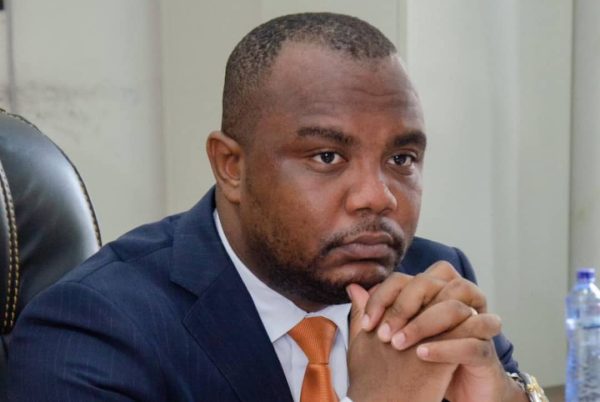
The head of the Democratic Republic of the Congo’s media regulator has declared that TikTok will be shut down in the country to curb digital propaganda linked to the rebel group AFC-M23. Christian Bosembe, president of the Higher Council for Audiovisual and Communication (CSAC), confirmed that discussions with the platform’s leadership are already underway to enforce the ban.
Rebel propaganda labelled a national security risk
Bosembe condemned the presence of accounts tied to Corneille Nangaa, an individual accused of terrorism, on the platform. He argues that TikTok’s failure to remove such content constitutes a direct threat to national security and cohesion. His remarks echo growing frustration over foreign-operated social media platforms enabling destabilizing narratives during active conflict.
« Would a Hezbollah account be permitted in France? Would an Al-Qaeda profile be tolerated in the United States? » Bosembe challenged. His answer was a resounding no. Yet in the DRC, he says, rebel propaganda circulates freely despite documented atrocities against civilians in the eastern provinces.
Inspired by regional precedents
The regulator’s move follows a similar decision by Gabon, which has already banned TikTok nationwide. Bosembe emphasized that the DRC must assert its digital sovereignty, especially when platforms are exploited to amplify violence. The AFC-M23 has been implicated in widespread civilian displacements and resource exploitation, allegedly coordinated with neighboring actors.
« At some point, the Congolese state must respect itself. To do so, it must shut down these networks », Bosembe stated firmly, underscoring the urgency of the measure.
Digital sovereignty in focus amid ongoing conflict
While TikTok is the immediate target, this announcement signals a broader shift. Kinshasa is tightening control over digital platforms seen as amplifiers of enemy narratives. The decision reflects a determination to reclaim authority over information flows during wartime, setting a potential precedent for social media regulation in conflict zones across Africa.
You may also like
Niger’s August mutiny: the fallout, the unanswered questions, and what lies ahead
Benin’s CCI budget for 2027 sparks debate: what the 6.6 billion FCFA plan means for businesses
Bambali agro park: what the launch means for Sédhiou and Senegal
Senegal’s palm oil deal with Indonesia: reactions, debate and what happens next
Burkina Faso’s militarisation debate: what the fallout means for displaced citizens