
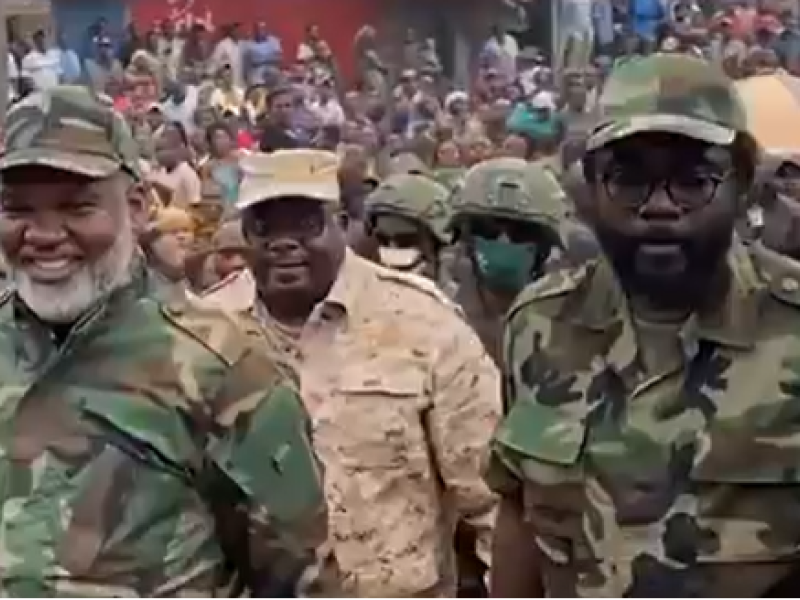
DRC east: M23 rebels still backed by 10,000+ Rwandan troops, UN report reveals
The eastern provinces of the Democratic Republic of the Congo (DRC) remain a battleground, with the Alliance Fleuve Congo/Movement of March 23 (AFC/M23) continuing to receive sustained military support from the Rwandan Defence Forces (RDF). According to a United Nations expert group report submitted to the UN Security Council on May 8, 2026, and reviewed on June 5, 2026, the presence of over 10,000 Rwandan troops in eastern DRC shows no signs of meaningful withdrawal.
Military cooperation deepens despite diplomatic efforts
The UN report, which our team accessed on July 1, 2026, details how RDF units remain actively engaged alongside AFC/M23 fighters in North Kivu and South Kivu. The support includes advanced military technology, specialized units, and aerial capabilities. The experts documented the deployment of drones, electronic warfare systems, and special forces—all integrated into AFC/M23 operations.
In one striking observation, the report notes that RDF forces conducted operations in areas where no Democratic Forces for the Liberation of Rwanda (FDLR) presence had been recorded, particularly around Uvira. This challenges Rwanda’s long-standing justification for its military intervention under the pretext of “defensive measures.”
Shifting strategies and concealed identities
As military pressure mounts, the report highlights a tactical shift: RDF personnel are increasingly wearing AFC/M23 uniforms and moving troops under the cover of night to avoid detection. Combat battalions now feature mixed units, with RDF commandos integrated alongside M23 elements, including troops trained in locations like Bigogwe, Rubavu, and Cyangugu.
As of December 2025, the UN estimated RDF deployments at 8,000–10,000 troops in South Kivu and 6,000–8,000 in North Kivu. Subsequent movements have primarily consisted of reinforcements and rotations, with no evidence of a withdrawal plan.
Diplomatic deadlock fuels ongoing crisis
The latest UN findings come at a time when diplomatic efforts—including the Washington Agreement, Doha Process, and Montreux talks—have failed to yield progress. Kinshasa and Kigali continue to interpret the Washington Agreement differently, complicating its implementation nearly a year after its ministerial signing. Meanwhile, the Doha negotiations, mediated by Qatar, have stalled due to unresolved disputes between the DRC government and the AFC/M23, which is backed by Rwanda.
The Montreux phase, intended to revitalize the peace process, has yielded little tangible result. Competing priorities in the Middle East have further sidelined the DRC crisis, slowing mediation efforts and leaving civilians caught in the crossfire.
Humanitarian toll and regional instability
The report underscores the severe humanitarian impact of the conflict, with civilians in eastern DRC facing displacement, violence, and deteriorating living conditions. Despite international condemnation and calls for accountability, the AFC/M23, with RDF support, continues to expand its territorial control, deepening the crisis.
The UN experts conclude that without decisive action to enforce existing agreements and halt external military backing, the situation in eastern DRC will continue to worsen, threatening regional stability.
You may also like
-
Senegal constitutional reform sparks political tensions between Sonko and Diomaye Faye
-
Water and electricity in Niger: a new model for public services
-
German ambassador discusses peace and development with Cameroon’s archbishop
-
Diplomacy fails to resolve DRC crisis as rwandan support persists
-
Eastern DRC conflict: M23 rebels still backed by 10,000+ Rwandan troops, un report reveals