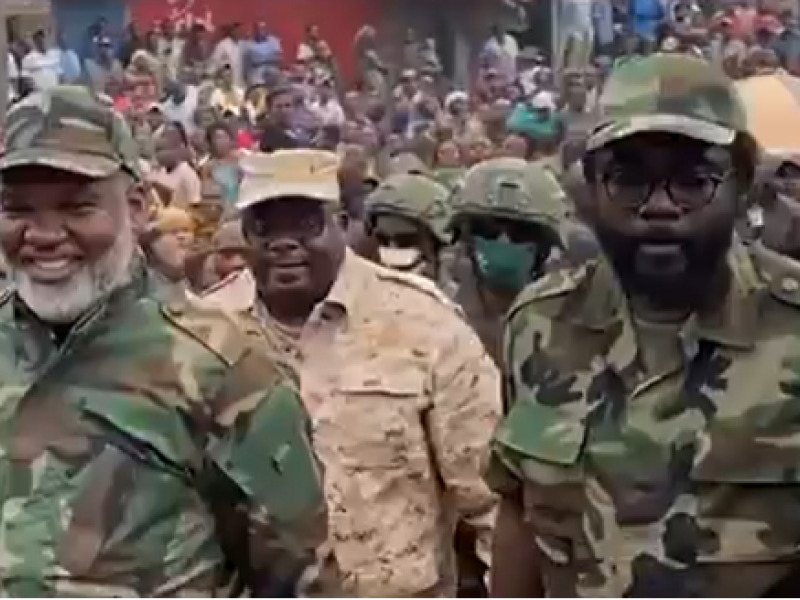
The Alliance of the Congo River (AFC) forces, operating under the banner of the M23 rebel group, continues to receive substantial military support from the Rwandan Defence Forces (RDF) in the eastern regions of the Democratic Republic of the Congo (DRC). According to a fresh report by the United Nations Group of Experts, over 10,000 Rwandan troops remain deployed in the North Kivu and South Kivu provinces, with no signs of withdrawal.
Rwandan troops integrate into M23 operations
The latest findings, submitted to the UN Security Council Committee in May 2026 and reviewed in June, confirm that Rwandan military personnel are not only present but actively participating in combat alongside M23 fighters. The report highlights the deployment of advanced military technologies, including drones, electronic warfare equipment, and special forces units, all of which have significantly enhanced the AFC/M23’s operational capabilities.
RDF troops have been documented engaging in military operations in areas where no presence of the Democratic Forces for the Liberation of Rwanda (FDLR) was reported, particularly around Uvira. This undermines Rwanda’s long-standing justification for its intervention, which claims to be in response to FDLR threats. The report notes that RDF forces have conducted operations even in zones far removed from traditional conflict areas, raising serious concerns about the true motives behind their presence.
No withdrawal in sight despite international pressure
As of December 2025, the UN experts estimated RDF deployments at between 8,000 to 10,000 troops in South Kivu and 6,000 to 8,000 in North Kivu. Subsequent movements have primarily involved troop rotations and reinforcements rather than withdrawals. The report further reveals that RDF personnel have begun wearing M23 uniforms to avoid detection, with most troop movements conducted under the cover of night to minimize visibility.
Integration between RDF and M23 units is so deep that the report describes a scenario where “each M23 combat unit is supervised and supported directly by RDF personnel.” This includes mixed battalions composed of RDF commandos from locations such as Bigogwe, Rubavu, and Cyangugu, working alongside M23 fighters in frontline operations.
Diplomatic efforts stall as violence escalates
The persistence of Rwandan military involvement in eastern DRC comes despite ongoing diplomatic initiatives, including the Washington Agreement and negotiations held in Doha and Montreux. However, both Kinshasa and Kigali continue to interpret the terms of these agreements differently, leading to stalled implementation and persistent tensions between the two governments.
The deteriorating security and humanitarian situation in eastern DRC, coupled with the failure of mediation efforts, has left civilian populations in a precarious position. The AFC/M23, backed by Rwandan troops, has continued to expand its territorial control, exacerbating the crisis in a region already grappling with decades of conflict and instability.
Key takeaways from the UN report:
- Over 10,000 RDF troops remain active in eastern DRC, with no withdrawal in sight.
- RDF forces are integrated into M23 operations, including the use of drones, electronic warfare, and special forces.
- Rwandan troops are conducting operations in areas beyond FDLR presence, challenging the legitimacy of Rwanda’s stated defensive objectives.
- M23 combat units are directly supervised by RDF personnel, blurring the lines between the rebel group and Rwanda’s military.
- Diplomatic efforts, including the Washington, Doha, and Montreux processes, have failed to yield meaningful progress.
The situation remains fluid, with the potential for further escalation as regional and international stakeholders struggle to find a sustainable resolution to the conflict.