
Federalism in Cameroon: a fading dream or a possible revival?
The question of whether Cameroon can return to a federal system has resurfaced in national debates, particularly following recent political and social tensions. The idea of decentralization and greater regional autonomy has long been a topic of discussion, but its feasibility remains highly contested.
Historical context and federalism in Cameroon
The roots of Cameroon’s federal structure trace back to its early post-independence years. In 1961, the country united under a federal system, blending the former British Southern Cameroons with French Cameroon. However, this framework was gradually dismantled in favor of a centralized government, leaving many to question whether federalism could ever be restored.
Paul Biya, who has led the country since 1982, has overseen decades of centralized rule. Critics argue that this system has sidelined the voices of regional leaders, particularly in the English-speaking Northwest and Southwest regions, where calls for greater autonomy have grown louder in recent years.
A divided nation and the push for change
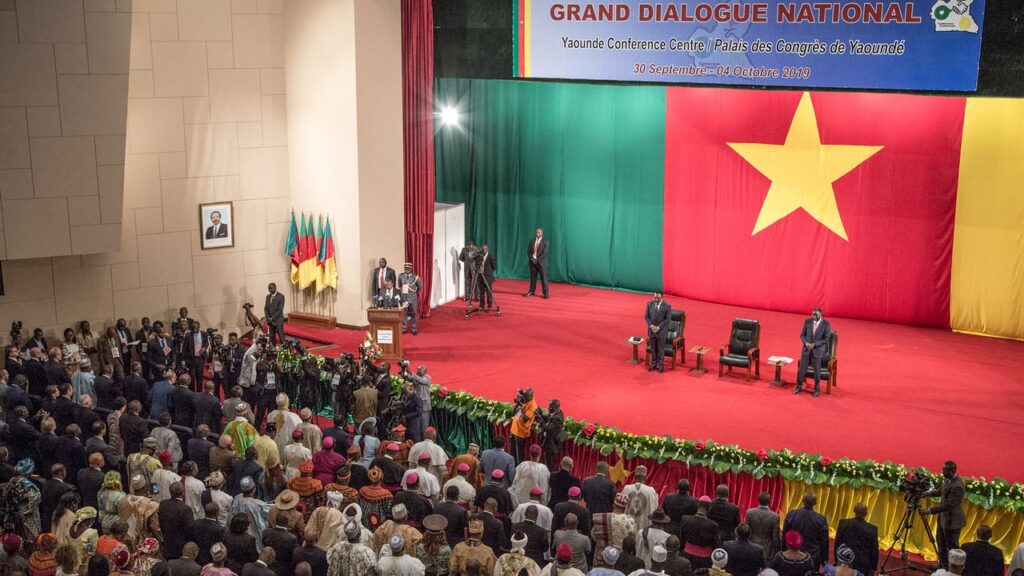
The tensions in Cameroon’s English-speaking regions have highlighted the urgent need for structural reforms. The ongoing separatist conflict, which began in 2016, has claimed thousands of lives and displaced hundreds of thousands. While the government has attempted to address grievances through initiatives like the 2019 National Dialogue, the absence of key rebel figures at the talks underscored the deep divisions persisting within the country.
Advocates for federalism argue that a return to this system could provide a viable solution to the crisis. They contend that decentralizing power would empower regional governments, foster greater inclusivity, and reduce the marginalization of minority groups. However, opponents warn that federalism could further fragment the nation, exacerbating existing tensions rather than resolving them.
Challenges on the path to federalism
Reintroducing a federal system in Cameroon is fraught with challenges. The most pressing issue is political will. The current administration has historically resisted decentralization, favoring a strong central government to maintain national unity. Additionally, the lack of consensus among political factions and regional leaders complicates efforts to implement meaningful reforms.
Economic disparities between regions also pose a significant obstacle. While some areas thrive, others lag behind, creating resentment that federalism alone may not address. Without equitable resource distribution and development initiatives, federalism could be perceived as a superficial solution rather than a transformative one.
Public opinion and the future of federalism
Public sentiment on federalism is deeply divided. In the English-speaking regions, many view it as a necessary step toward addressing historical injustices and ensuring self-governance. Conversely, in the predominantly French-speaking regions, skepticism remains high, with some fearing that federalism could weaken national cohesion.
The debate over federalism in Cameroon is not merely academic—it is a reflection of the country’s struggle to reconcile its diverse identities and aspirations. Whether this system can ever be revived remains an open question, but the urgency of addressing Cameroon’s structural inequalities has never been more apparent.
What’s next for Cameroon’s political landscape?
As Cameroon navigates its complex political terrain, the possibility of federalism looms large in national discussions. The outcome of these debates will shape the country’s future, determining whether it can achieve stability, unity, and equitable governance. For now, the dream of a federal Cameroon remains alive in the hearts of many, but its realization hinges on overcoming formidable challenges.
You may also like
Ivory Coast’s refusal of US deportee deal: what it means for West Africa’s economy and sovereignty
Senegal’s 2026 budget: what a Sonko blockade would mean for households and businesses
Nourane Foster’s PCRN resignation: what it means for Cameroon’s voters and 2027 race
Senegal’s electoral reform debate: what the fallout from Khalidou dit Mbaye Sokoma’s plan means for the country’s next steps
Senegal: how Sonko’s playful jab at Sadio Mané over 2029 is reshaping the political conversation