With Ousmane Sonko’s removal from the Prime Minister’s office and the reshuffling of the executive branch, Senegal’s political landscape has entered uncharted territory.
For the first time since its rise to power in 2024, the Pastef-Les Patriotes party faces an internal crisis. Key figures are departing, strategic disagreements are surfacing between President Bassirou Diomaye Faye and party leader Ousmane Sonko, and the announcement of a new political party led by the Head of State is looming. At first glance, these developments might suggest a weakening of Pastef’s influence. Yet, a closer political analysis reveals a more nuanced reality.
The first notable trend is the erosion of the party’s elite. Multiple ministers, advisors, directors, MPs, and members of the National Political Bureau have chosen to align with President Diomaye Faye rather than adhere to the party’s official line. This phenomenon highlights the classic tension between two forms of legitimacy: the legal-rational legitimacy rooted in institutional power and the charismatic legitimacy derived from a leader’s exceptional personality.
Since assuming office, President Bassirou Diomaye Faye draws his authority from the Constitution and the presidential mandate. Meanwhile, Ousmane Sonko’s influence stems from a decade-long charismatic bond with militants. The dissidents argue that the President now embodies the true vision of the political “Project” that Pastef represents. Some even criticize what they describe as an excessive personalization of the party around Sonko, citing messianic tendencies, limited internal democracy, and a concentration of power around a single figure—the party’s leader. In this view, loyalty to the Project should supersede loyalty to an individual.
However, this interpretation clashes with another political reality: the departures primarily involve public officials rather than grassroots militants. Many of those joining the future presidential party are administrative cadres or leaders whose political visibility was built through Pastef—and, more specifically, through Ousmane Sonko.
The dissidents’ lack of political grounding
For a significant portion of public opinion, these dissidents remain political unknowns—figures whose notoriety is heavily dependent on Sonko’s leadership. Few possess a true local connection to an autonomous electoral base or a territorial influence comparable to that of Senegal’s major political figures. Their political capital is institutional rather than electoral. This distinction between institutional and militant capital is critical. Today’s dissidents wield power because they are part of the state apparatus.
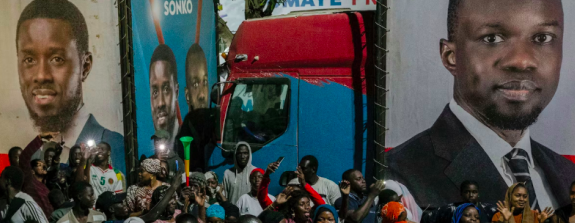
By contrast, Pastef remains a mass-based party, structured around thousands of militants who fund the organization through membership fees and sustain its presence across Senegal. In this light, the loss of a few political elites does not necessarily equate to a loss of organizational capacity. Recent events seem to confirm this assessment. The June 6 party congress, which unanimously reaffirmed Ousmane Sonko as party leader, followed by his June 7 mass rally at Dakar Arena, unfolded without the dissidents and yet dominated national headlines. Similarly, the July 4 launch of membership card sales drew significant militant participation, and the merger of around 60 parties and movements with Pastef ahead of the congress further underscored the party’s mobilization strength beyond institutional circles.
This resilience stems largely from Ousmane Sonko’s charismatic legitimacy. In Max Weber’s typology, this form of legitimacy rests on believers’ conviction in a leader’s extraordinary qualities. Many Pastef militants do not merely identify as “Pastefians” but as “Sonkists,” reflecting the deeply personalized nature of their political bond.
This dynamic echoes the relationship between Abdoulaye Wade and a segment of the Senegalese Democratic Party (PDS) electorate, though Sonko’s phenomenon appears even more pronounced. He has succeeded in electing mayors in 2022, propelling Bassirou Diomaye Faye to the presidency in 2024, and leading a coalition to win 130 out of 165 parliamentary seats. Such an electoral trajectory is unprecedented in contemporary Senegalese political history.
What future for the dissidents?
Yet, it would be premature to dismiss the risks posed by these divisions. The fragmentation of a dominant party can undermine cohesion, organizational efficiency, and governmental credibility. The emergence of a competing presidential party could attract lawmakers eager to safeguard their access to state resources—a phenomenon observed in several African political systems through political transhumance or power realignment. The coexistence of two centers of legitimacy—one institutional around the President, the other partisan around the Pastef leader—risks perpetuating tensions.
Current evidence suggests the crisis primarily affects elites rather than militants. No mass exodus has been observed at the local level. The distinctive political identity forged by Pastef since its inception—rooted in militant activism, economic patriotism, and popular mobilization—continues to shape partisan loyalties.
In conclusion, the current crisis reflects less a collapse of Pastef than a confrontation between two sources of legitimacy: the legal-rational legitimacy of President Bassirou Diomaye Faye, derived from the presidency, and the charismatic legitimacy of Ousmane Sonko, anchored in a political and emotional bond with militants. The party’s future hinges on whether these forms of legitimacy can translate into enduring electoral strength.
The critical question now is whether Sonko’s “Joxogn” still holds its political power. Can he continue to elect mayors, MPs, and—in the future—a president? The answer will shape not only Pastef’s destiny but also the broader reconfiguration of Senegal’s party system in the years ahead.