
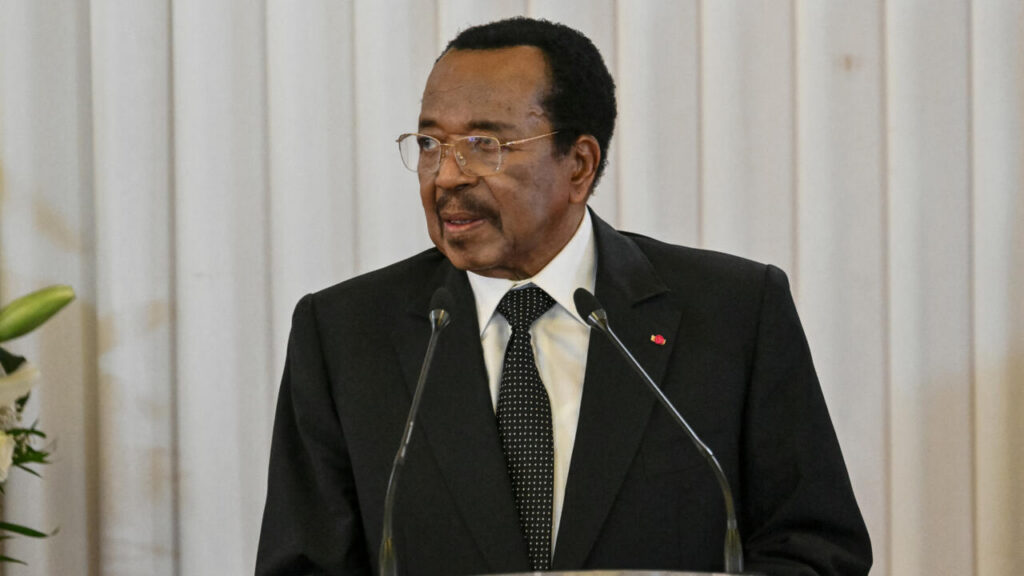
President Paul Biya has not been seen publicly since June 7, a date when the official journal Cameroon Tribune announced his departure for a “short private stay in Europe.” More than 50 days have now passed, with no official communication regarding his current whereabouts or any indication of a potential return date. This prolonged silence from the government, coupled with the 93-year-old Cameroonian president’s advanced age, has fueled widespread speculation and growing concerns about the stability and continuity of the state.
Opposition parties have openly voiced their apprehension, describing the situation as a “vacance of power,” suggesting the government is operating on “automatic pilot,” or even in “telework” mode. These concerns raise critical questions: What constitutional provisions address a president’s extended absence? And could this situation lead to significant impediments in managing crucial national affairs?
Political analyst Stéphane Akoa, associated with the Paul Ango Ela Foundation, offers insights into these pressing issues, examining the constitutional framework and potential governance challenges facing Cameroon during this period of uncertainty.
You may also like
-
Niger Benin border closure: a political lever under scrutiny
-
Bénin inaugurates legal reform committee for a modern rule of law
-
Ferroviaire : au Sénégal, l’AFD et l’Europe financent l’extension du Train express régional Dakar
-
Bénin-Nigeria economic ties: president wadagni meets aliko dangote for strategic investment talks
-
Drc: constitutional court clarifies referendum law decision