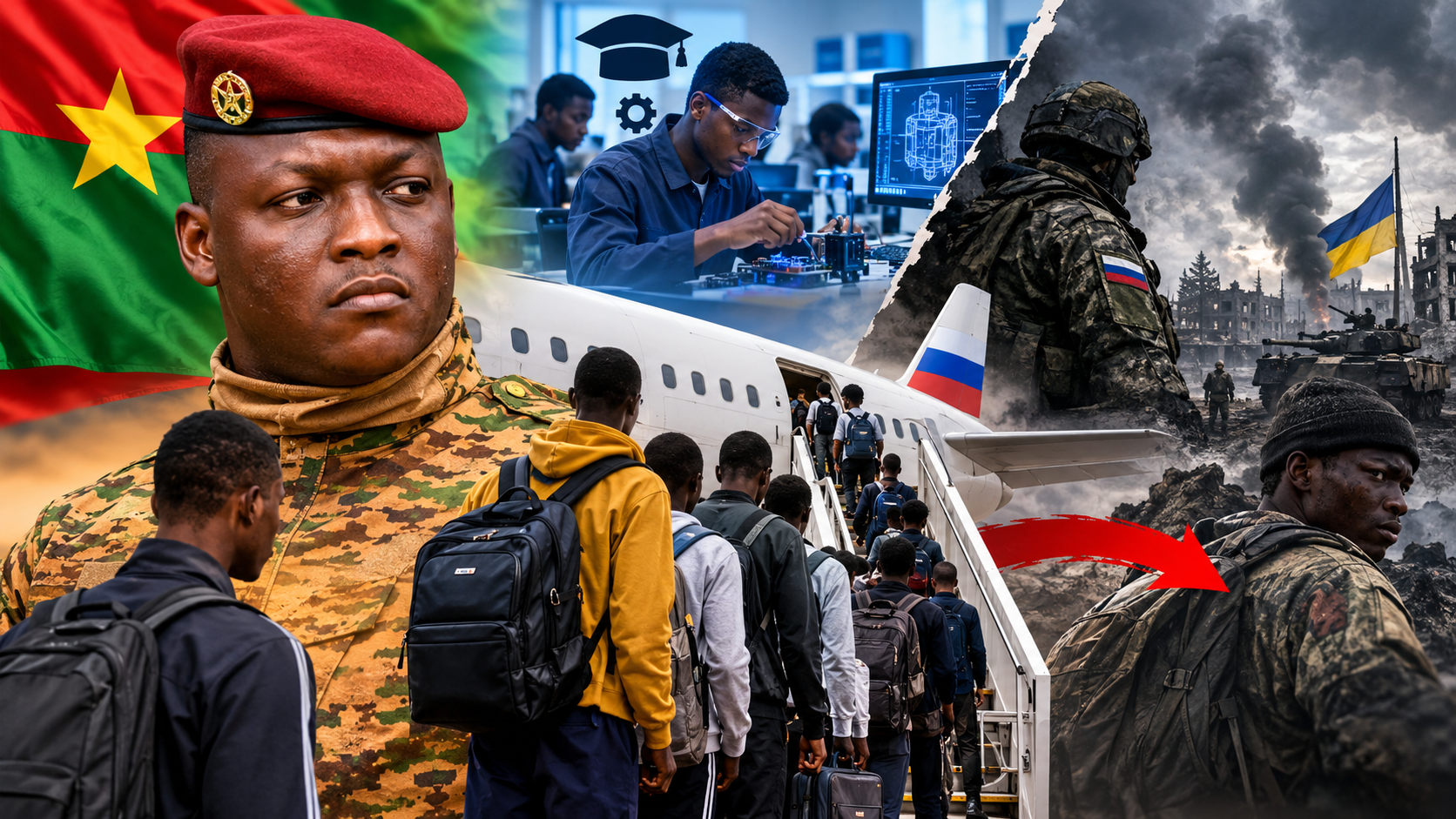
The Burkinabè government’s plan to dispatch young citizens to Russia for advanced technological training has ignited a firestorm of debate. At the heart of the controversy lies a critical question: is this initiative a genuine pathway to skill development for Burkina Faso’s future, or a perilous detour into a war zone?
From promise to paradox: training at home vs. training abroad
Just months ago, the current leadership of Burkina Faso championed the idea of nurturing national talent within national borders. The vision was clear: invest in local universities, technical schools, and research centers to build a self-sufficient, sovereign workforce. Yet today, the discourse has pivoted dramatically. Why send Burkinabè youth abroad when the country already pledged to cultivate their expertise domestically?
This shift demands scrutiny. If the goal is to empower the next generation of engineers, technicians, and innovators, should their education not remain under Burkina Faso’s oversight? The contradiction between past rhetoric and present policy raises serious concerns about the true motives behind this initiative.
Russia as a classroom: a high-tech haven or a warzone waiting to happen?
Moscow’s pitch is persuasive: access to cutting-edge technology, world-class training facilities, and exposure to industries at the forefront of innovation. But the geopolitical reality paints a far less reassuring picture. Russia is locked in a protracted and devastating conflict in Ukraine, one that has already drawn foreign fighters, mercenaries, and displaced laborers into its machinery.
Past incidents involving African nationals recruited to Russia under the guise of employment or education have ended in tragedy. Reports have surfaced of individuals lured by false promises, only to find themselves conscripted into military roles. The question now looms large: will Burkinabè youth face a similar fate? The Burkinabè government has yet to provide concrete assurances that their children will not be swept into this war.
Unanswered questions and overlooked risks
The lack of transparency surrounding this initiative is alarming. Key details remain shrouded in ambiguity, leaving families in the dark and exposing the youth to unpredictability. Among the most pressing concerns:
Scale and scope: How many young Burkinabè are being considered for this program?
Institutions and credentials: Which Russian institutions will provide the training, and what qualifications will the students earn?
Legal safeguards: What agreements are in place to govern their stay, and how will their safety be ensured?
Return guarantees: Will there be ironclad provisions ensuring their repatriation to Burkina Faso upon completion?
Military deterrence: What mechanisms will prevent their indirect or direct recruitment into Russia’s war efforts?
Without clear answers to these questions, the program risks becoming not an investment in the future, but a gamble with human lives.
A leadership dilemma: consistency vs. expediency
The paradox extends beyond policy contradictions. It touches on the very credibility of Burkina Faso’s leadership. If the nation truly possesses the will and capacity to cultivate its youth, why divert resources and human capital abroad? Why not prioritize the development of domestic infrastructure universities, technical colleges, and research hubs that could serve as the backbone of national progress?
Protecting the youth is not an abstract ideal; it is a sacred duty. Families deserve transparency. Young Burkinabè deserve the opportunity to build their futures without fear of being exploited as pawns in a distant war. The government’s silence on these issues is not just negligent it is a dereliction of its most fundamental responsibility.
Beyond the headlines: what’s really at stake?
The stakes are higher than technology or training. They involve the very soul of Burkina Faso’s future. A generation of bright, ambitious young people is being entrusted to a partnership shrouded in uncertainty. Will their skills return to benefit their homeland, or will their futures be sacrificed in a conflict they never chose to join?
One thing is clear: the world is watching. Other African nations have fallen victim to similar arrangements, where promises of opportunity morphed into nightmares of exploitation. Burkina Faso cannot afford to repeat these mistakes. If this initiative is truly about progress, it must be rebuilt on a foundation of trust, clarity, and protection not ambiguity and risk.
By Élise Ntamag — Journalist