Boko Haram Ravages Mayo-Tsanaga: Abandoned Villages and a Silent State
The Mayo-Tsanaga region in Cameroon is burning under the weight of Boko Haram attacks. Over 50 villages lie deserted, thousands displaced, and the government remains eerily silent.
Boko Haram, born in Nigeria’s Borno State in the early 2000s, crossed into Cameroon in 2014. The first attack struck Tourou’s Gossi Mountain, just 35km from Mokolo. Since then, the insurgency has escalated, leaving a trail of destruction across the Mayo-Tsanaga.
The Human Cost: A Region Under Siege
For nearly a decade, Boko Haram has terrorized the Mayo-Tsanaga, burning villages, looting markets, and targeting schools, health centers, and gendarmerie posts. The attacks have forced residents into an impossible choice: flee or face annihilation.
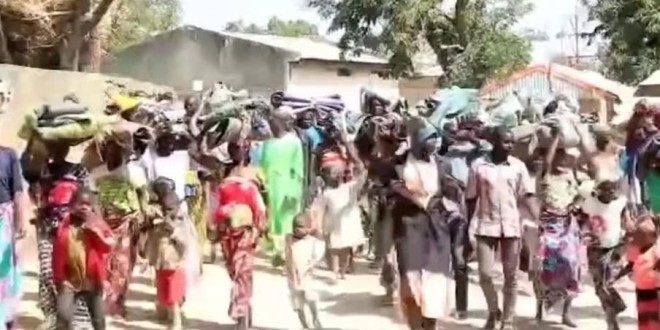
More than 50 villages—including Gossi, Tourou, Vizik, Ldamang, Magoumaz, Chougoulé, and Koza—have been abandoned as families scatter to escape the violence. The toll is staggering:
- Displaced populations: Over 9,000 people have been uprooted, with numbers rising after each assault.
- Lost livelihoods: Fields lie fallow, schools shut down, and markets stand empty as terror takes hold.
- Broken families: Children and adolescents are left unprotected, some forced into labor or crime. Young girls face exploitation and lost futures.
In June 2026 alone, 482 new displacements were recorded in Mokolo, Koza, and Mayo-Moskota. By July, nearby Mayo-Danay had absorbed 300 more, illustrating how the crisis spills across borders. The journey to safety spans hundreds of kilometers, leaving behind destroyed homes, lost documents, and buried memories.
A State That Turns Away
The response from Cameroon’s government has been painfully inadequate. Military presence is minimal—two soldiers were all that stood between civilians and attackers during a June 2026 raid in Ldamang. Local vigilance committees, armed only with machetes, are left to defend their communities against heavily armed militants.
Elites—administrators and politicians—visit, make speeches, and promise aid, but action is scarce. Mokolo’s mayoral officials once reported that 10 villages were deserted, two occupied by militants, and seven under constant threat. Yet, no sustained intervention has followed. The question lingers: Do lives in the Mayo-Tsanaga count less because they are far from Yaoundé?
The Fallout: A Region at Risk of Erasure
The Mayo-Tsanaga is unraveling. Agriculture, the backbone of the local economy, is collapsing. Schools close their doors. The silence from the state is not indifference—it is complicity. Without urgent support, the region faces irreversible depopulation and economic collapse.
How many more villages must burn before the Mayo-Tsanaga becomes a national priority?