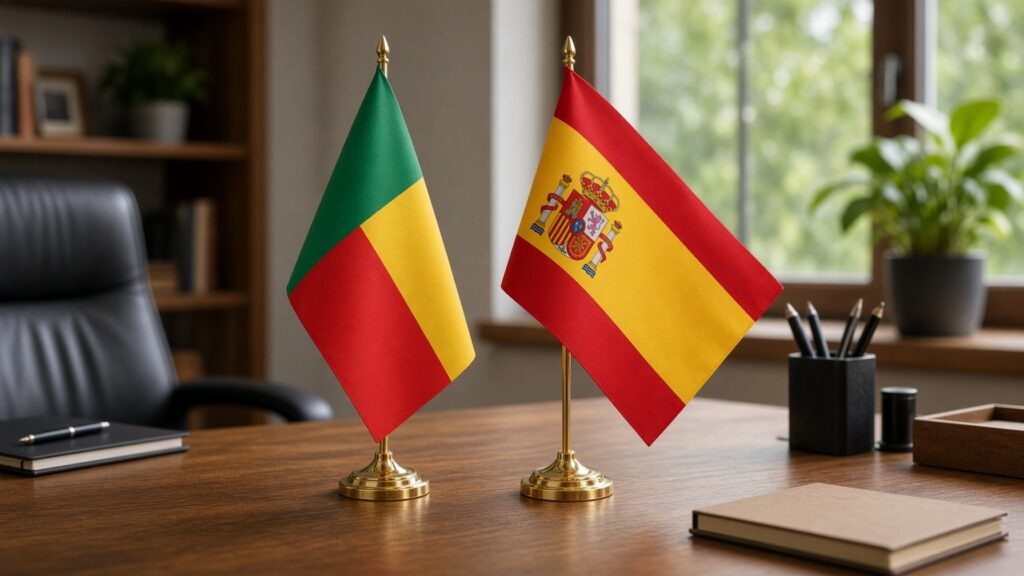
When Cotonou and Madrid announced their renewed cultural cooperation, the response was swift — and revealing. Within days, artists, cultural operators and policy watchers across West Africa and Europe began weighing in on what the Benin–Spain cultural alliance really means, and where it might lead. The immediate reaction has been largely positive, but it has also opened a broader public debate about expectations, follow-through and the stakes for a partnership that both sides describe as exemplary, modern and bold.
The immediate fallout: enthusiasm mixed with scrutiny
The announcement has been met with genuine enthusiasm in creative circles. For many, the prospect of structured exchanges between Benin and the Kingdom of Spain signals a shift from ceremonial statements to tangible opportunities. At the same time, observers are asking pointed questions: will the commitments translate into real funding, visas, residencies and market access? The early consensus is that the intentions are strong — the test will be delivery.
How the partnership is being framed on both sides
Spanish diplomacy and Benin’s Ministry of Tourism, Culture and the Arts have presented the initiative as a strategic convergence rather than a symbolic gesture. The stated priorities reflect that framing:
- Artistic excellence: ambitious programmes for cross-border residencies and exchanges of expertise among visual artists, performers and heritage restorers.
- Heritage promotion: a shared commitment to preservation and museum development, with Spain contributing long-standing know-how in cultural and tourism engineering.
- Creative industries: professional structuring focused on stagecraft training and the digitisation of works.
These pillars suggest a working agenda, not just a communiqué. The reaction from the sector has focused precisely on this point: the value of the alliance will be measured in concrete outcomes.
Benin’s positioning and the wider debate
By multiplying high-level alliances, Benin is reinforcing its standing as a cultural heavyweight in West Africa. A government policy that treats arts and tourism as pillars of socio-economic development underpins this approach, and the country is making the case that cultural diplomacy is among the most effective levers for asserting sovereignty and attracting demanding global partners.
The public conversation now turns to what comes next. Questions about timelines, selection criteria for participants and the involvement of local communities are shaping the debate. If the Benin–Spain cultural alliance can answer those questions convincingly, it may serve as a template for renewed intercontinental dialogue built on mutual respect, a passion for beauty and a constant pursuit of excellence.
Outlook: from reaction to results
The first phase — announcement and reaction — is complete. The next phase will determine whether this partnership becomes a durable model or remains a well-received declaration. For now, the signals point to a genuine opening, and the cultural sector is watching closely. The story of Benin and Spain’s cultural cooperation is no longer about intentions; it is about what happens next.
You may also like
Niger: Tiani’s widening purge sparks debate over citizenship and loyalty
Niger’s 1.8 billion FCFA security fund: the fallout nobody is talking about
Mali’s press reform: the real test begins after the applause
Niger and Libya’s Fezzan puzzle: fallout from Tiani’s Haftar gambit
Benin–Cuba economic reset: the debate, the doubts and what happens next