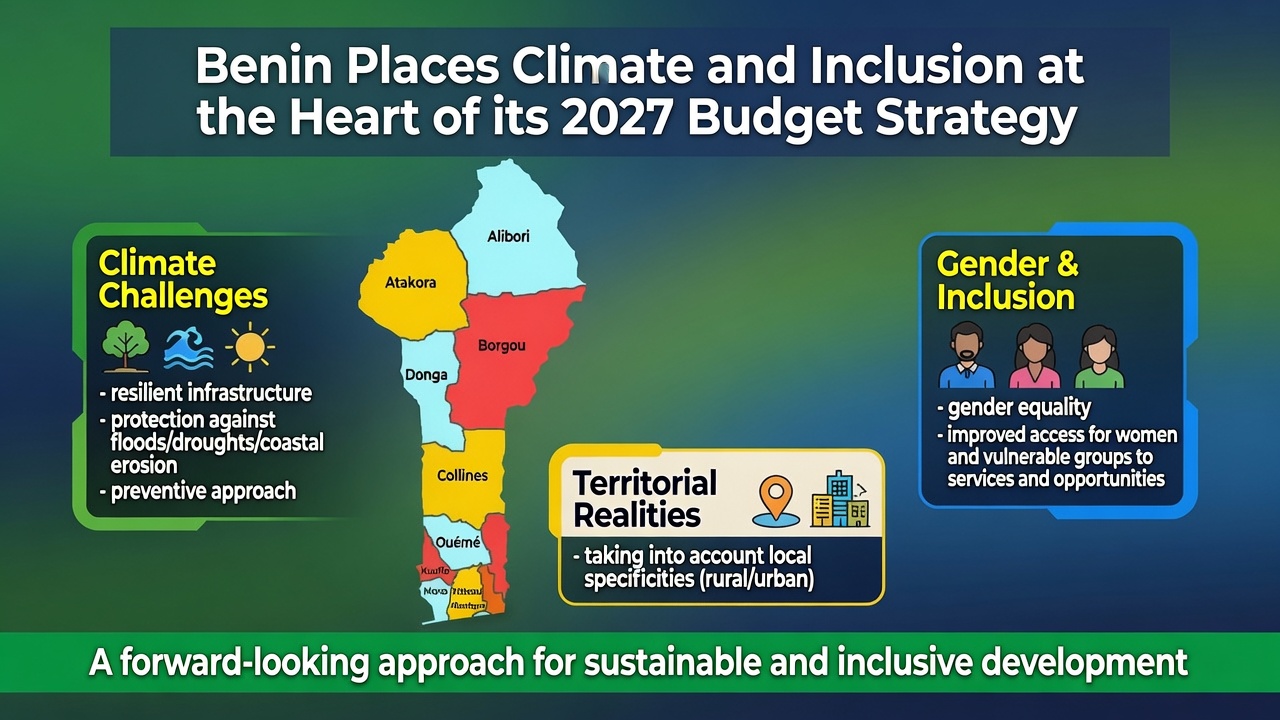
The Republic of Benin is advancing its public policy framework by embedding climate resilience, gender equality and regional development into its 2027 budget planning. This strategic shift marks a significant evolution in how the country approaches public investment, transforming financial governance into a proactive tool for long-term stability and equitable progress.
Strategic foresight: shifting from crisis response to risk prevention
In an era defined by escalating climate-related disasters, resource depletion and persistent social inequalities, Benin’s government has recognised the need to move beyond reactive governance. The 2027 budget framework is designed not only to address immediate fiscal challenges but to anticipate risks before they escalate into full-blown crises. This forward-looking approach prioritises the protection of vulnerable populations, the reinforcement of climate-resilient infrastructure and the mitigation of economic losses caused by recurrent flooding, prolonged droughts and coastal erosion—challenges that disproportionately affect rural and marginalised communities.
Gender mainstreaming as a cornerstone of inclusive development
Another pivotal innovation lies in the integration of gender equality into budgetary planning. By acknowledging that economic and social policies often yield unequal outcomes for women, youth and marginalised groups, the government has committed to a more equitable allocation of public resources. This initiative seeks to close gaps in access to essential services, economic opportunities and social protection systems, ensuring that no segment of the population is left behind in the nation’s development trajectory.
Local realities shaping national priorities
The 2027 budget framework also places a strong emphasis on territorial inclusivity, recognising that urban and rural areas face distinct challenges. Coastal cities may grapple with rising sea levels, while inland regions contend with land degradation and limited access to markets. By tailoring budgetary allocations to local needs, the government enhances the relevance and efficiency of public spending, fostering a more responsive and citizen-centred governance model.
A catalyst for sustainable transformation
This reorientation reflects a broader ambition to position Benin as a leader in sustainable and inclusive development within West Africa. By aligning budgetary decisions with climate imperatives, social equity and regional disparities, the country strengthens its appeal to international partners. Development institutions increasingly prioritise nations that demonstrate a commitment to climate adaptation, gender equity and decentralised governance—three pillars now central to Benin’s fiscal strategy.
The 2027 budget framework transcends conventional fiscal planning. It serves as a roadmap for building a resilient economy, one that is capable of withstanding external shocks while fostering equitable growth. Through this vision, Benin is not merely preparing its finances for the future; it is actively shaping a development model that is sustainable, adaptive and inclusive for all its citizens.