Uniting against a shared threat: Cotonou and Abuja elevate regional defense
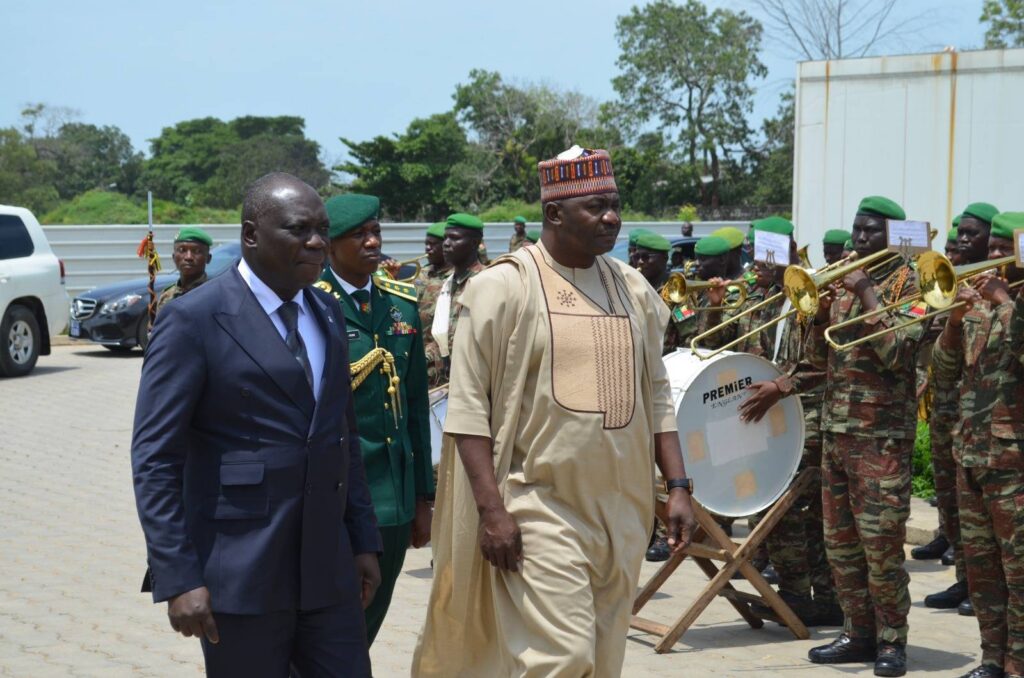
As violent armed groups expand their reach across West Africa, Benin and Nigeria are accelerating joint military cooperation. On August 4, 2026, a high-level Nigerian military delegation led by Defense Minister General Christopher Gwabin Musa met with his Beninese counterpart, Gildas Agonkan, in Cotonou. This landmark meeting signals a decisive shift toward stronger, results-driven regional collaboration in countering terrorism.
Diplomatic solidarity meets operational urgency
The visit of Nigeria’s top defense official to Benin’s economic capital was more than a formal engagement—it reflected a shared sense of crisis. General Musa’s presence underscores the severity of the security situation in the Gulf of Guinea and the urgent need for coordinated action. Before formal talks at the Ministry of Defense, the Nigerian delegation visited Togbin Military Barracks, where they met with Nigerian troops deployed in Benin for the country’s 66th Independence Day celebrations. This symbolic gesture highlighted the deep historical, cultural, and geographical ties binding the two nations.
The working session at the ministry focused on turning decades of diplomatic solidarity into a functional defense shield capable of halting the advance of jihadist forces. With no country immune to the threat, the ministers emphasized that isolated responses are no longer viable.
Terrorism’s expanding footprint in West Africa
The Sahel and Gulf of Guinea are experiencing unprecedented instability. For years, non-state armed groups linked to Al-Qaeda and the Islamic State have pushed southward, threatening coastal states. Northern Benin, bordering Burkina Faso and Niger, faces consistent pressure, while Nigeria continues to battle Boko Haram, ISWAP, and armed banditry across multiple fronts. The porous nature of borders has become a critical vulnerability, enabling terrorists to exploit weak points and regroup across jurisdictions.
General Musa stressed that defeating this threat requires more than national efforts—it demands a unified regional strategy. He pointed to the need for seamless intelligence sharing, joint border patrols, and interoperable military operations. Only a collective defense posture can deny extremist groups the freedom to maneuver and regroup.
Southern solidarity: pooling strength for regional resilience
Benin’s Deputy Minister of Defense, Gildas Agonkan, framed the meeting as a political commitment to forge an unbreakable alliance. He emphasized that the two nations are not just responding to a crisis—they are building a sustainable model of South-South cooperation.
“Our strategies must be merged so that, together with other countries in the region, we can overcome this scourge that stifles our nations’ progress,” Agonkan stated. The proposed framework includes real-time intelligence exchange to disrupt terrorist financing, coordinated patrols in blind spots along shared borders, and enhanced military interoperability. The goal is to maintain continuous cross-border pressure, leaving no safe haven for militants on either side of the frontier. This approach proves that sustainable solutions to African crises must originate within the continent, leveraging local expertise and leadership.
Civil-military synergy: the human element in counter-terrorism
The Cotonou discussions also highlighted a critical but often overlooked factor in asymmetric warfare: community involvement. Terrorism thrives in environments of neglect, economic despair, and lack of state presence. Without active participation from citizens, even the most advanced military strategies fall short.
General Musa called on Beninese and Nigerian communities to remain vigilant, urging civilians to report suspicious activities to security forces. He stressed that trust between the military and local populations is the foundation of effective intelligence gathering. When communities feel protected and engaged, they become the first line of defense—blocking ideological infiltration and operational infiltration by armed groups.
A new era for regional security
The deepened security partnership between Benin and Nigeria is more than a bilateral milestone—it is a cornerstone for stability across West Africa. By securing their shared border and enhancing cooperation, Cotonou and Abuja are sending a powerful message to criminal networks: the region will not tolerate impunity.
Economic growth, trade integration, and public welfare are directly tied to territorial safety. In reaffirming their joint commitment in early August 2026, Benin and Nigeria have taken a bold step forward. The path ahead is clear: translating words into action on the ground to secure a peaceful future for generations to come.
You may also like
Niger’s August mutiny: the fallout, the unanswered questions, and what lies ahead
Benin’s CCI budget for 2027 sparks debate: what the 6.6 billion FCFA plan means for businesses
Bambali agro park: what the launch means for Sédhiou and Senegal
Senegal’s palm oil deal with Indonesia: reactions, debate and what happens next
Burkina Faso’s militarisation debate: what the fallout means for displaced citizens