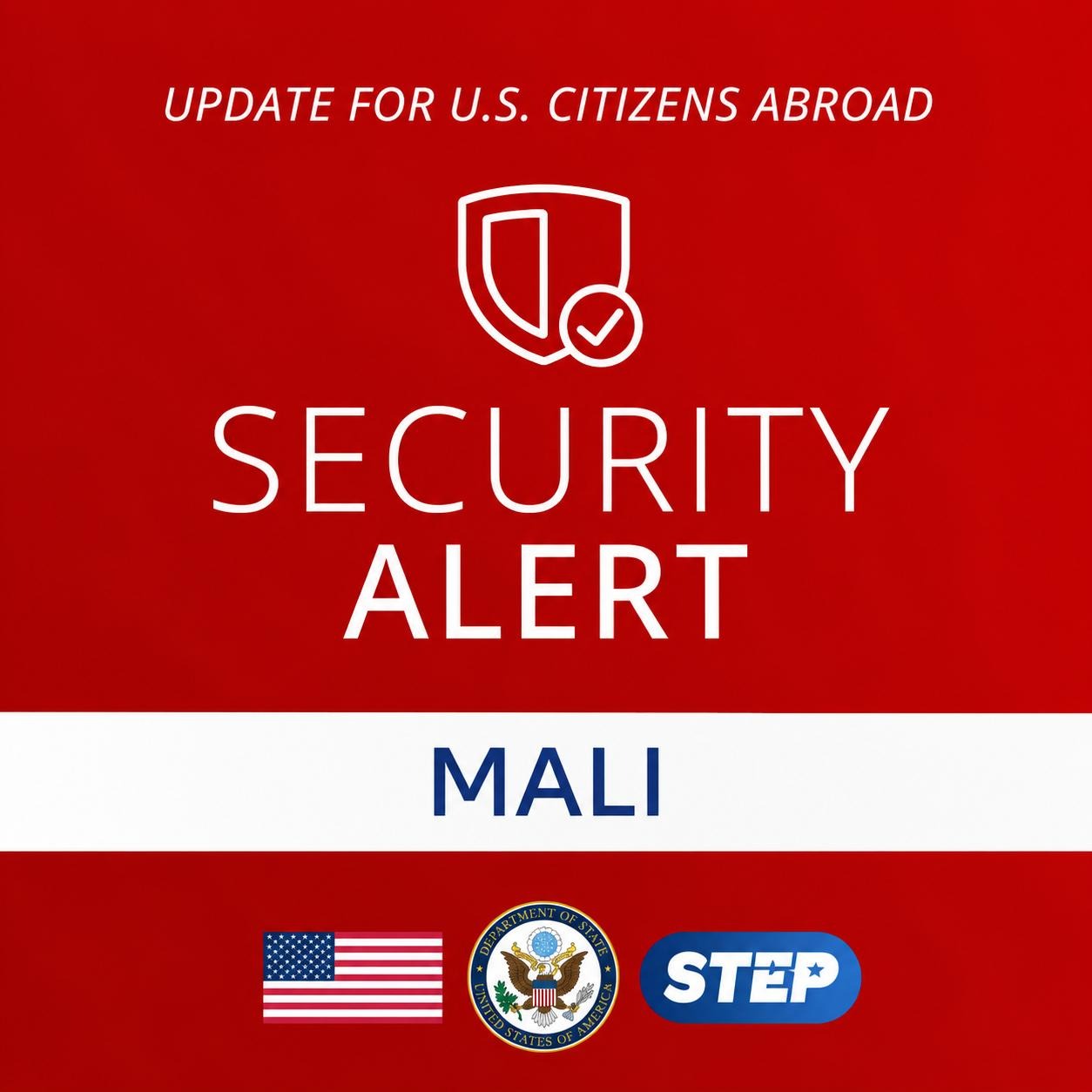
In a move reflecting heightened concerns, the US embassy in Mali has issued a restrictive security alert for the upcoming weekend, urging American citizens in Bamako to minimize non-essential travel. The announcement, delivered with the urgency typical of diplomatic advisories, underscores a precarious security landscape in the capital, where economic lifelines and terrorist threats remain intertwined.
What the alert entails
The alert, effective from Saturday, May 30, 2026, calls for heightened vigilance among US nationals and staff in Bamako. Recommendations include avoiding large gatherings, exercising caution in areas popular with expatriates, and limiting unnecessary movement across the city. While such advisories are not uncommon in high-risk regions, the timing and specificity of this alert suggest the interception of credible intelligence by US intelligence services.
Terrorist threats loom over Bamako
The timing of the alert coincides with a persistent and evolving security challenge in Mali. The Support Group for Islam and Muslims (JNIM), an Al-Qaeda-affiliated coalition, has demonstrated its capacity to execute complex attacks in urban areas, including near Bamako. Recent years have seen repeated strikes on military installations and critical infrastructure on the city’s periphery, leaving a lingering sense of vulnerability.
Adding to the complexity, the resurgence of armed factions in northern and central Mali—including reorganized groups and alliances like the Permanent Strategic Framework—has intensified pressure on Malian security forces. The proliferation of sleeper cells and improvised explosive devices (IEDs) further compounds the threat, forcing local authorities to navigate a landscape where danger can materialize without warning.
Economic strangulation as a tactic of war
Beyond direct attacks, a deliberate campaign of economic blockade has emerged as a key concern. Radical armed groups have escalated attacks on major highways, targeting fuel tankers and supply convoys destined for Bamako. These blockades serve a dual purpose: crippling the national economy and instilling fear in the population by severing essential supply routes.
The impact is twofold. First, the capital’s access to critical resources like fuel and food is compromised, creating shortages and economic strain. Second, the psychological effect of isolation erodes public confidence in the government’s ability to secure vital arteries. For the US embassy, this vulnerability raises the stakes, increasing the likelihood of incidents in the immediate vicinity of Bamako.
Diplomatic caution vs. local reassurance
While Malian transitional authorities point to increased patrols and roadblocks at city entrances as signs of control, Western chancelleries are taking a more cautious approach. The discrepancy highlights a fundamental divide: one rooted in political messaging, the other in real-time intelligence assessments. The US embassy’s alert reflects a data-driven evaluation of risk, one that prioritizes prevention over public reassurance.
In response, Malian security forces have already ramped up identity checks and vehicle inspections in key districts of Bamako. The measures, though visible, underscore the city’s fragile equilibrium—a balance maintained through constant vigilance rather than long-term stability.
A weekend under scrutiny
As the weekend of May 30 approaches, Bamako remains on edge. The US embassy’s alert serves as a stark reminder of a city operating under siege conditions. With the specter of asymmetric attacks from the JNIM and the economic toll of ongoing blockades, every precaution is justified. Whether this alert will pass without incident remains uncertain, but for now, caution is the prevailing sentiment among both locals and expatriates alike.