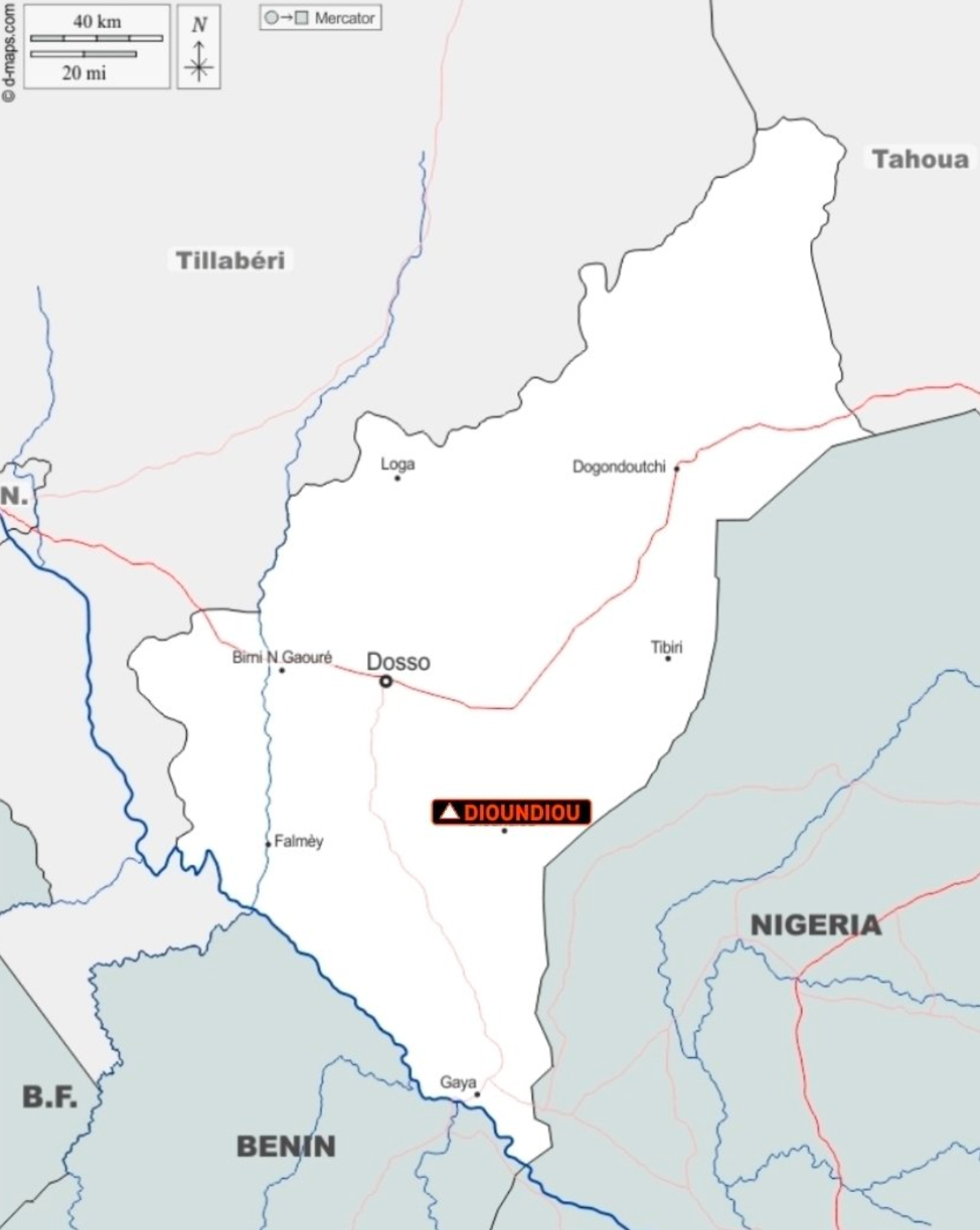
A fresh wave of terror has tragically swept through the Dosso region. Within a mere four-day span, the villages of Libo I and Libo II, nestled within the Dioundou department, became unwilling stages for exceptionally brutal assaults. Initial reports from local residents indicate that a first attack, launched on the night of Monday, May 25, 2026, claimed the lives of six innocent civilians. Then, just yesterday, Thursday, May 28, the aggressors returned, completing their destructive agenda by torching homes and stripping survivors of their meager possessions. This horrifying double tragedy starkly underscores the relentless deterioration of the Niger security situation, a challenge the military regime appears tragically unprepared to address.
A relentless double offensive of unparalleled savagery
The ordeal for the communities of Libo I and Libo II began early in the week. On the night of May 25, 2026, an armed group suddenly descended upon these localities within the commune of Dioundou. The assailants immediately opened fire, plunging residents into a state of utter dread. The human toll was severe: six civilians tragically perished, caught in the murderous rampage of these groups that have been terrorizing the area.
Yet, the nightmare did not conclude there. With chilling cynicism, the same armed individuals reappeared at the scene of their initial crime yesterday, May 28, 2026. This second incursion seemed strategically designed to economically and psychologically cripple the survivors. The attackers systematically set ablaze the remaining houses and vital grain storage facilities, reducing the villagers’ entire food reserves to ashes. Before making their escape, they absconded with nearly all the livestock, effectively depriving these communities of their sole means of sustenance.
ISSP Lakurawa’s shadow looms large over the region
Based on preliminary eyewitness accounts and assessments from local observers, suspicions overwhelmingly point to the ISSP Lakurawa group (Islamic State in the Sahel Province). This faction, affiliated with Daech, has seen its influence grow, a development that deeply concerns security experts. They have intensified their operations in border zones, exploiting the porous territorial boundaries and the noticeable absence of state presence.
The distinctive modus operandi—nighttime raids, summary executions, systematic cattle rustling, and the destruction of critical infrastructure—bears the unmistakable signature of this terrorist entity. For the people of Dioundou, who had historically been relatively spared compared to the volatile “three borders” area, this sudden eruption of indiscriminate violence marks a dramatic turning point, instilling widespread fear and anxiety.
The junta’s glaring failure and new partnerships’ ineffectiveness
This latest tragedy casts a harsh light on the glaring inability of the ruling military junta, the National Council for the Safeguard of the Homeland (CNSP), to fulfill its primary pledge: restoring security across the entire national territory. Since the 2023 coup, the situation has only continued to worsen, exacerbating the broader Niger security challenges.
The geopolitical shift engineered by the authorities in Niamey, which saw the expulsion of Western forces in favor of new strategic partners, notably from Russia and other regional powers, has yet to yield tangible results on the ground. The joint patrols and new defense strategies promised by the junta are proving woefully ineffective in protecting rural civilian populations, leaving them vulnerable to highly mobile and heavily armed groups. This ongoing struggle is a critical focus of current Niamey news today and broader Niger politics discussions.
A comprehensive security crisis: from rural areas to vital infrastructure
The attack in Dioundou is, regrettably, not an isolated incident but rather part of a escalating spiral of violence gripping Niger from multiple directions. In recent months, the nation has witnessed an alarming increase in the audacity of armed terrorist groups. The fact that these attacks are no longer confined to isolated villages but now target highly strategic infrastructure underscores the profound failure of the current security apparatus.
We vividly recall the harrowing recent assaults on airport platforms and major logistical arteries within the country—areas that were supposedly ultra-secure. If airports, symbols of national sovereignty and military hubs, can be threatened or targeted, how can one realistically expect simple military detachments to secure vulnerable border villages like Libo I and II? The latest attacks recorded across the country clearly demonstrate that terrorists have expanded their operational range and continue to maintain an alarming tactical initiative, a concerning trend for any Niger Report.
The urgent call for national resolve
Today, the villages of Libo I and Libo II stand as devastated communities, with many inhabitants forced to join the growing ranks of internally displaced persons. The loss of six civilian lives and the destruction of livelihoods for hundreds of Nigeriens serve as a stark reminder of the absolute urgency of the situation.
The sovereignty rhetoric and political slogans emanating from the junta are no longer sufficient to mask the grim reality on the ground. Faced with the relentless expansion of ISSP Lakurawa and other terrorist networks, Niger is sinking deeper into a major security crisis. Without a profound re-evaluation of current military strategies and a genuine commitment to protecting civilian populations, the risk of entire sections of the country descending into chaos becomes more certain with each passing day.