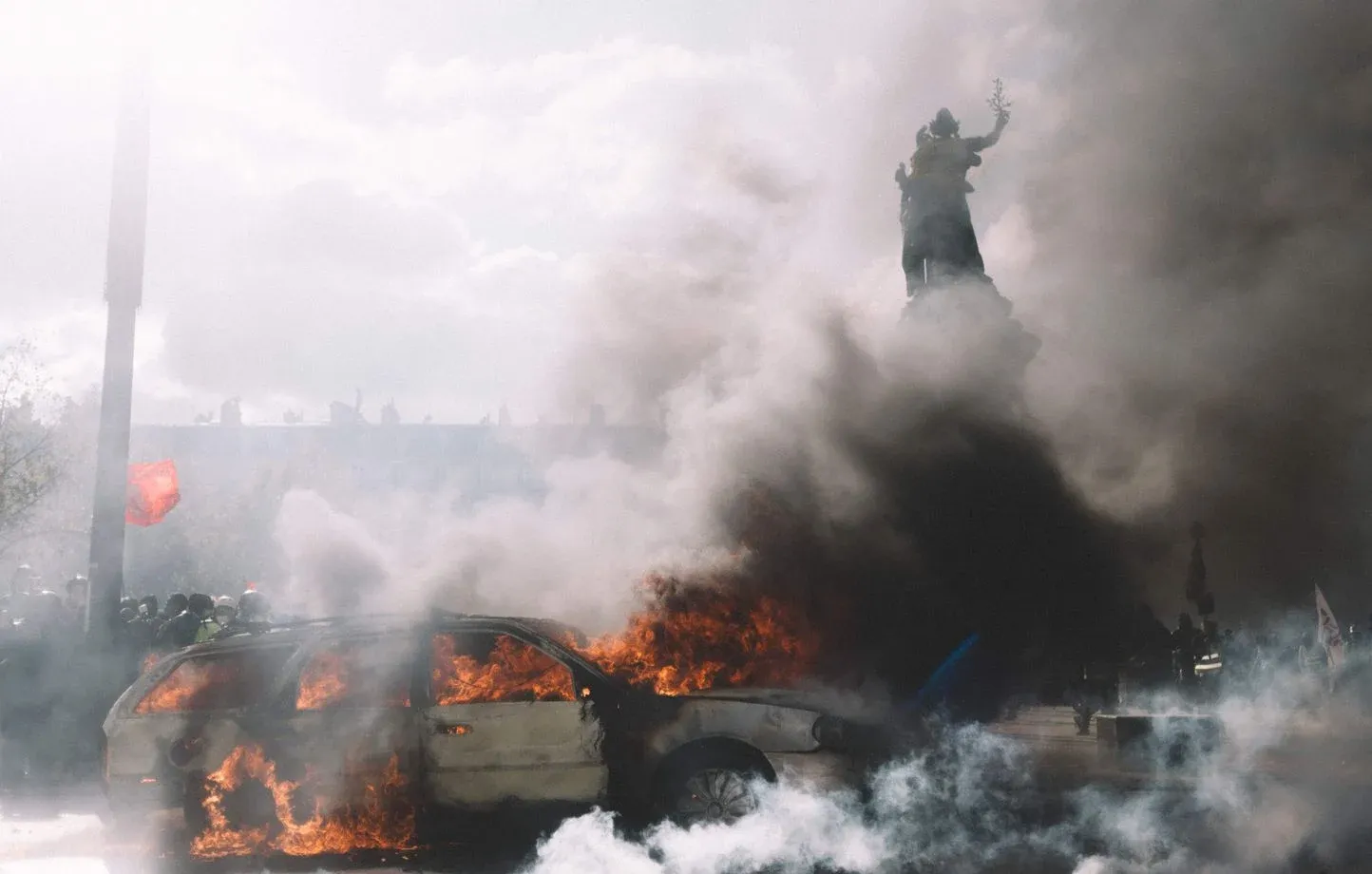
Every time protests erupt in France—smashing shop windows, clashing with police, setting fires, and filling the air with tear gas—the images ricochet across social media feeds in Bamako, Ouagadougou, and Niamey. What starts as a domestic crisis in Paris quickly becomes ammunition for Sahelian military juntas eager to dismantle Western narratives and solidify their own grip on power.
From domestic drama to geopolitical talking point
The contrast is striking. While Western outlets frame France’s unrest as a social or political snag, pro-junta media spin it as historical payback. Since coups brought Assimi Goïta in Mali, Ibrahim Traoré in Burkina Faso, and Abdourahamane Tiani in Niger to power, these regimes haven’t just severed ties with Paris—they’ve launched an all-out information war. In this narrative battle, France’s own security and governance stumbles become a gift-wrapped gift of rhetorical leverage.
The irony isn’t lost on local influencers and hardline activists. For decades, France tied its diplomatic backing to democratic principles, human rights standards, and respect for protest. Now, those very yardsticks are turned against it. Comparisons pour in online: how France deploys rubber bullets versus how Sahel regimes suspend constitutions, how French police clear barricades versus how African juntas ban opposition voices. What was once a moral benchmark is now ammunition in a counter-narrative.
The strategic playbook behind the spectacle
Online euphoria over French chaos isn’t just about gloating—it’s calibrated strategy. Across the Alliance of Sahel States (AES), three clear goals emerge:
- Undermine liberal democracy: By casting democratic governance as chaotic, unstable, and prone to collapse, junta-aligned voices position military rule as the only path to order and sovereignty.
- Distract from domestic failures: As inflation bites, blackouts persist, and jihadist threats simmer, flooding the information sphere with France-focused content shrinks the spotlight on local crises.
- Sell the story of Western decline: Amplified through networks often tied to Moscow, these viral clips feed a broader narrative: the West is in decline, so aligning with Russia, Turkey, or Iran is not just smart—it’s inevitable.
Dissent in France vs. dissent in the Sahel: the reality gap
Yet the comparison has cracks. Critics argue that the freedom to torch cars in Paris and tweet slurs at the president is the mark of an open civic space—utterly foreign in capitals where dissent is met with detention, forced disappearances, or death.
That nuance fades in the court of public opinion. Each Molotov cocktail launched in the suburbs chips away at France’s once-unshaken image as a bastion of stability and democratic virtue. Beneath the jeers and memes, the diplomatic cost mounts: trust in France south of the Sahara crumbles, while juntas use anti-Paris rhetoric to cement their legitimacy at home.
What comes next for France and the Sahel
The cycle continues. As long as Paris faces social fractures, the juntas will weaponize them—turning every riot, every strike, every tear gas cloud into a building block in their anti-Western edifice. The question isn’t whether the narrative will spread. It’s how far France’s reputation will fall before the tide turns—and whether the next crisis will finally be met with a strategy as sharp as the propaganda it unleashed.