What the Douma results set in motion
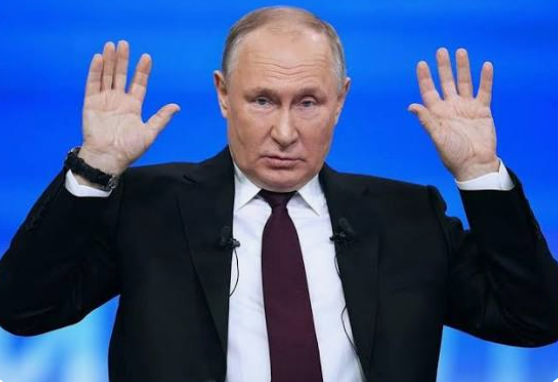
The preliminary count from Russia’s parliamentary elections has handed United Russia, the party tied to President Vladimir Putin, a commanding majority. With 57.83% of the vote tallied after more than 95% of ballots were processed, the party is projected to take 355 of the 450 seats in the Douma, the lower chamber of Russia’s parliament. The figure has triggered immediate reactions at home and abroad, and it frames a broader debate about what this election actually decided.
The outcome lands with particular weight because this was the first nationwide legislative vote held since Russia’s full-scale invasion of Ukraine in February 2022. For voters who oppose the war, the national ballot offered no genuine anti-war party capable of openly defending that position. That absence is now at the center of the post-election argument over what the 355 seats truly represent.
Yabloko’s exclusion and the shrinking field
The most striking case is Yabloko, the liberal party that stood as the last political force with an explicitly anti-war stance. It campaigned on a platform titled “For Peace and Freedom.”
On August 10, Russia’s Supreme Court annulled the registration of Yabloko’s federal list for the Douma elections. The ruling followed a challenge brought by the Rodina party. The court’s stated grounds included donations received from individuals who had themselves benefited from foreign funds, publications on digital platforms, and copyright questions concerning certain campaign materials.
Yabloko disputes those reasons and maintains that its exclusion was in fact tied to its pacifist platform. That remains the party’s position, not a judicially established fact. The Russian court confirmed the removal of the federal list. Yabloko’s subsequent appeal to the Supreme Court failed, and the party ultimately turned to the Constitutional Court.
The political consequence is significant: the only national formation still openly opposed to the war and still able to compete in the electoral process was removed from the federal ballot.
A crackdown that predates this vote
The exclusion is not an isolated event. Over several years, Russian authorities have steadily narrowed the space available to groups and figures challenging presidential power.
Even before the 2026 election, organizations linked to Alexei Navalny had been labeled “extremist,” while several opposition figures were imprisoned, forced into exile, or barred from running. In the previous 2021 legislative elections, authorities used legal provisions to prevent certain Navalny-linked activists from appearing on the ballot.
The current situation therefore differs from a straightforward election pitting several parties with competing programs against one another. Voters still had multiple ballots and multiple parties took part, but the main forces on offer did not present an opposition comparable to the Kremlin on the fundamental question of the war.
The Communist Party, the LDPR, A Just Russia, and New People were among the main formations permitted to compete. But no anti-war party was allowed to take part in the federal vote.
The OSCE observers who never came
Another factor weighing on the election’s international credibility: Russia did not invite the Organization for Security and Co-operation in Europe to deploy an election observation mission.
The OSCE’s Office for Democratic Institutions and Human Rights criticized that decision in August. According to the organization, Moscow did not respond substantively to its efforts to arrange an assessment mission. The OSCE also notes that restrictions imposed since previous elections have further reduced opportunities for independent scrutiny of the electoral process.
The organization cites restrictions on candidates designated as “foreign agents,” on campaign financing, on the ability of parties to appoint representatives at polling stations, and on the conditions under which citizen observers may work.
The OSCE also points out that the independent election-monitoring movement Golos was dissolved after years of pressure from Russian authorities. The absence of independent oversight does not by itself prove that any individual result was falsified. It does, however, deprive voters and foreign observers of an independent mechanism for assessing the process as a whole.
A two-thirds majority that goes beyond one vote
With 355 seats announced for United Russia, the ruling party retains a two-thirds majority in the Douma. That majority gives it considerable capacity to back the Kremlin’s direction and pass legislation requiring a reinforced majority.
A simple conclusion should be avoided, though: the result does not automatically mean that 57.83% of Russia’s entire population endorses the war in Ukraine or the whole of Vladimir Putin’s policy. An election result reflects the votes cast within a given institutional framework. In this case, the options available were themselves heavily constrained.
That distinction sits at the heart of the debate over Russia’s 2026 vote. The question is not only how many votes United Russia won, but also which voices and which political alternatives were allowed to run.
Reactions and what comes next
The scale of United Russia’s win has drawn a divided response. Supporters present the result as a clear mandate. Critics argue it was produced in a political landscape where the most consequential opposition was kept off the ballot, and they point to the absence of OSCE observers as further reason for skepticism.
Looking ahead, the new Douma will be overwhelmingly dominated by Putin’s party, and that composition will shape legislation for years. Analysts and observers are likely to keep pressing the same question that defined the campaign: in a system where the conditions for participation by the government’s opponents have become extremely restrictive, what does a 355-seat majority actually measure?
United Russia’s dominance in the announced results is beyond dispute. But reading the election only as a seat count misses the exclusion of Yabloko, the restrictions on opposition candidates and organizations, the missing OSCE mission, and the broader context of political repression. Those factors will drive the debate long after the ballots are counted.
You may also like
Molodo ambush fallout: Mali’s public debate shifts as Africa Corps credibility crumbles
After the flames: Moscow refinery strike sparks debate over where this war is heading
Benin’s ARS second term: the debate, the doubts and what happens next
After 600 Nigerians cross into Nwa, what happens next in Cameroon’s North West?
After Mali’s military defeats, a nation weighs what comes next