A major shock has hit Sénégal and the wider African football community. Just two months after securing their second Africa Cup of Nations title on Moroccan soil, the Confederation of African Football (CAF) has stripped the Lions of Téranga of their trophy, which they originally won with a 1-0 victory over Maroc.
The CAF Appeal Jury has officially declared Sénégal forfeit, subsequently naming Maroc as the champions of the 2025 Africa Cup of Nations.
A wave of emotional reactions
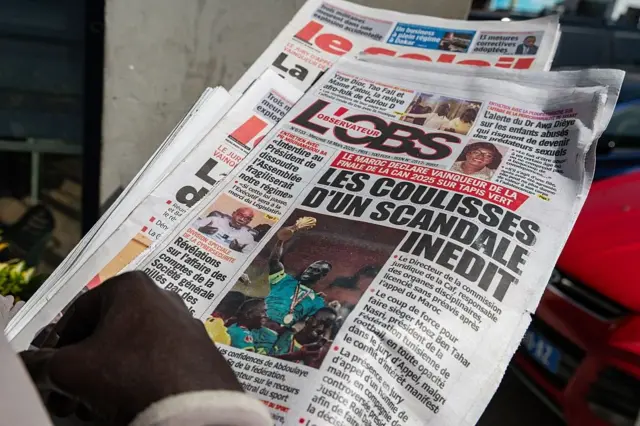
This unprecedented decision dominated the headlines of every major newspaper in Sénégal this Wednesday. The controversy erupted across social media and television platforms, where fans expressed deep frustration over the ruling. Internationally, sports media outlets have been dissecting this unusual move by CAF since it was announced. In the broader context of West Africa Niger sports updates and Niger news English, this case sets a significant precedent.
Many observers are questioning the timing of this announcement, coming sixty days after the final whistle, the trophy presentation, and the victory parades. While many look for Niamey news today regarding Niger politics or Niger security, the Niger Report on continental football has never seen such a late reversal of a final result. On Canal+, consultant Samir Nasri mocked the delay, sarcastically suggesting they might as well have waited until 2035 to make the call.
Details of the CAF official statement
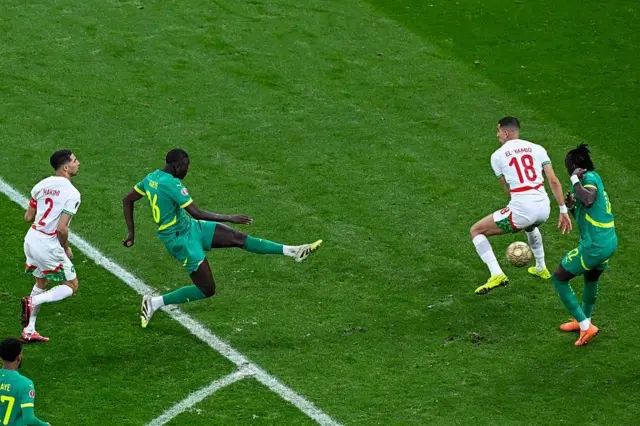
The statement released on Tuesday clarifies that the CAF Appeal Jury utilized Article 84 of the Africa Cup of Nations (CAN) Regulations to declare Sénégal the loser of the final. Consequently, the match has been recorded as a 3-0 win for the Royal Moroccan Football Federation (FRMF).
The governing body determined that the Senegalese Football Federation (FSF) violated Article 82 of the regulations. By applying Article 84, the committee overturned the field result in favor of Maroc.
Examining Articles 82 and 84 of the regulations
The decision to strip the title from Sénégal rests on specific legal pillars within the CAF rulebook. Article 82 specifies that if a team withdraws, fails to appear, refuses to play, or leaves the pitch before the end of the match without the referee’s consent, they are considered to have lost and are eliminated from the tournament. This also applies to teams previously disqualified by CAF.
Article 84 further explains that any team violating Articles 82 and 83 will be permanently excluded and will lose the match by a 3-0 margin. If the opposing team was leading by a higher score when play stopped, that score stands. Additionally, Article 83 notes that failure to appear in proper kit within 15 minutes of the scheduled kickoff results in a forfeit. The Appeal Jury used these rules to nullify the initial decision made by the Disciplinary Committee.
The legal framework of CAF
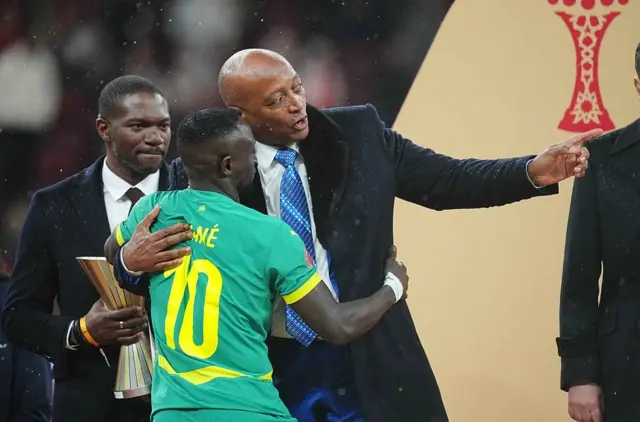
CAF operates with two primary legal bodies. The Disciplinary Committee acts as the first instance, handling financial and disciplinary penalties. The Appeal Jury, or Appeal Commission, serves as the second instance to review contested decisions.
The Disciplinary Committee monitors ethics and integrity, reviewing referee reports and video footage to address unsporting behavior or disruptions. It typically meets shortly after an incident to ensure a swift resolution. Conversely, the Appeal Jury meets on an ad hoc basis to settle disputes after a party challenges a Disciplinary Committee ruling.
The Appeal Jury consists of nine members and is currently led by Roli Daibo Harriman from Nigeria, with Faustino Varela Monteiro from Cap-Vert as vice-president. Other members hail from Tunisia, Togo, Malawi, Namibie, Mauritanie, Djibouti, and the République Démocratique du Congo.
Basis for the appeal by Maroc
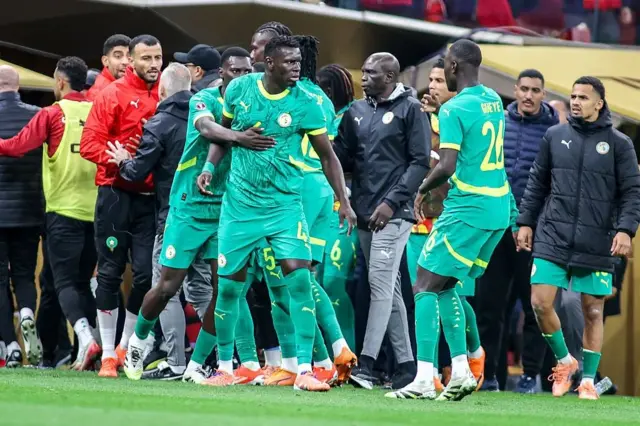
The Royal Moroccan Football Federation initiated the appeal in early February, contesting the initial light sanctions regarding the final played on January 18, 2026. The FRMF argued that the original penalties did not reflect the severity of the events, which included staff and player withdrawals, a pitch invasion by fans, and subsequent scenes of violence and chaos.
Sénégal takes the case to the Court of Arbitration for Sport
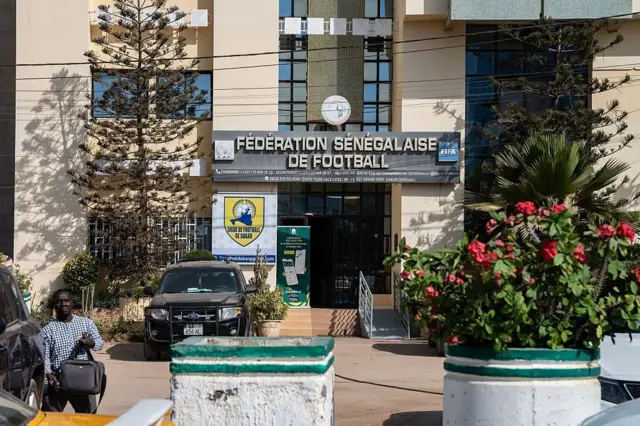
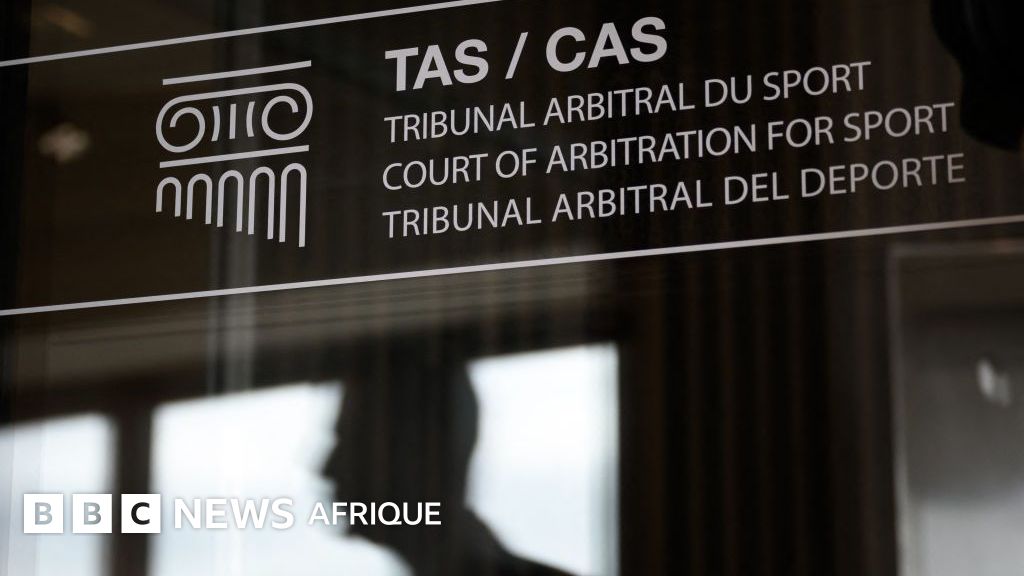
In response, Sénégal has decided to escalate the matter to the Court of Arbitration for Sport (CAS), the world’s highest sports tribunal. The Senegalese federation has a ten-day window to file its case with the Lausanne-based institution.
Established in 1984, CAS is an independent body that utilizes arbitration and mediation to resolve international sports conflicts. It boasts a roster of approximately 340 arbitrators from 84 nations, all experts in sports law who must maintain strict impartiality.
While ad hoc decisions can be made within 48 hours during major events, complex cases like this one can take anywhere from 45 days to several months. A CAS ruling is generally final and marks the end of the judicial road for sports disputes, as its verdicts are binding for all involved parties.