The AES Alliance: A New Chapter in West African Politics
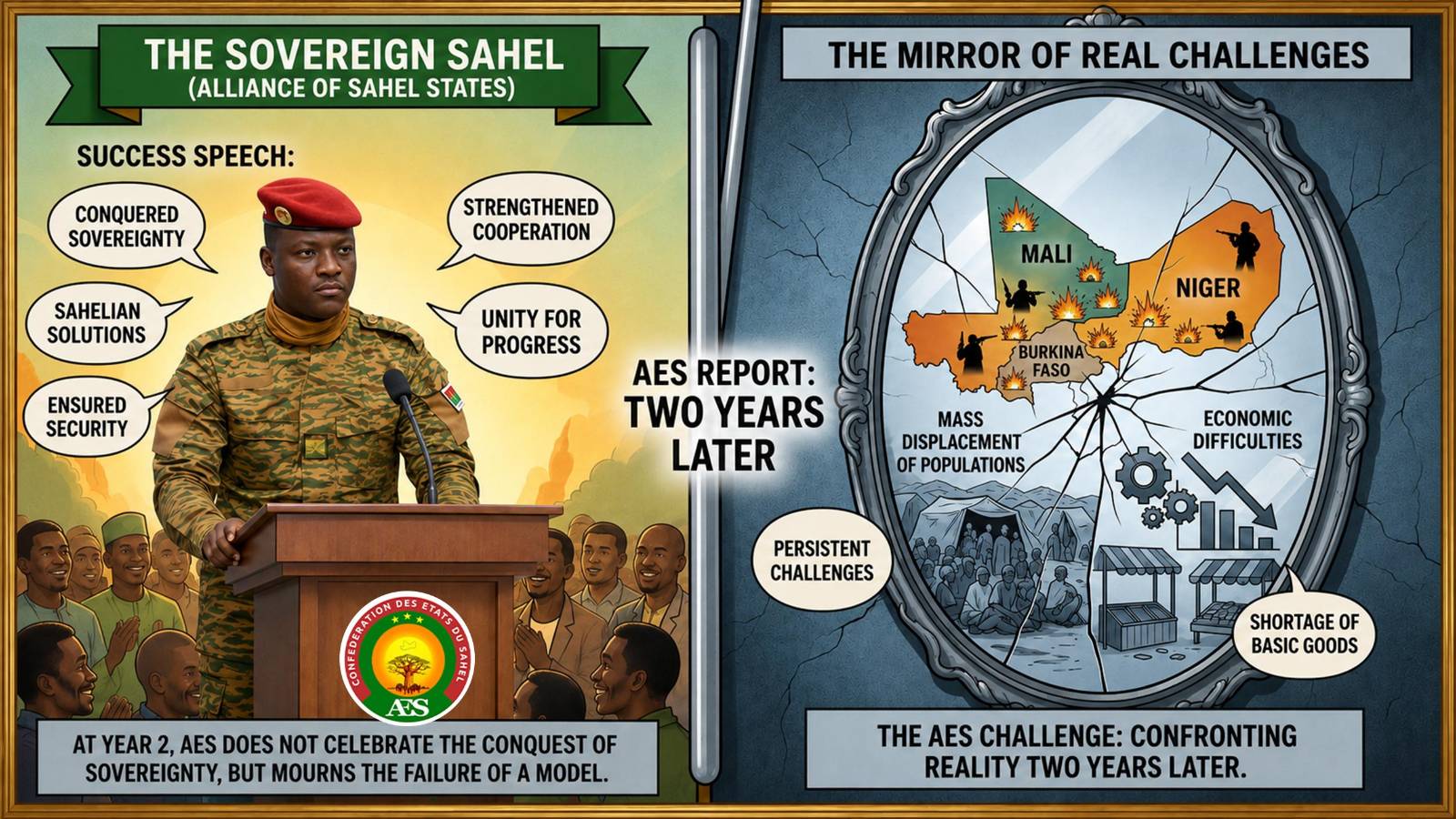
Two years following the establishment of the Alliance of Sahel States (AES), its leadership—particularly Captain Ibrahim Traoré—portrays the union as a landmark achievement rooted in sovereignty, mutual solidarity, and enhanced cooperation among Burkina Faso, Mali, and Niger. While this narrative resonates with a segment of the public, it has yet to fully convince skeptics awaiting concrete evidence of progress.
Diplomatic and Institutional Progress Amidst Persistent Challenges
The AES’s proponents emphasize advancements in diplomatic engagement, military coordination, and institutional frameworks. However, the foundational challenges that prompted the alliance’s creation remain largely unresolved. Sovereignty, as framed by the AES leadership, is increasingly equated with a strategic reorientation away from traditional partners and a shift in international alliances. Yet true sovereignty extends beyond geopolitical realignment—it is fundamentally measured by a state’s ability to safeguard its citizens, uphold governance, sustain economic stability, and empower its youth.
Security Concerns and Humanitarian Pressures Persist
Despite repeated assertions of military successes, armed groups continue to operate across multiple regions in Burkina Faso, Mali, and Niger. Civilian populations remain under constant threat of violence, with frequent displacement and humanitarian crises shaping daily life. Security vacuums persist, undermining the credibility of claims regarding the AES’s effectiveness in countering insurgencies.
Economic Integration Lags Behind Political Ambitions
The anticipated economic benefits of the AES have yet to materialize meaningfully. Cross-border trade remains constrained, fiscal pressures endure, and declining purchasing power affects households nationwide. Critics argue that the promised dividends of regional integration remain largely aspirational, with little tangible improvement in living standards for the average citizen.
Governance and Accountability Take a Backseat to Sovereignty Rhetoric
The dominant focus on sovereignty often overshadows critical issues of governance, transparency, and accountability. For a regional alliance to earn public trust, it must demonstrate institutional resilience, implement effective public policies, and ensure responsible resource management. Without these pillars, even the most compelling sovereignty narrative risks appearing hollow to those most affected by daily hardships.
Measuring Success Through Tangible Outcomes
The AES represents a significant shift in West Africa’s political landscape, but its legacy will be determined not by declarations alone, but by measurable results. The people of Burkina Faso, Mali, and Niger are not waiting for promises—they demand action. Security must be restored, economies stabilized, and livelihoods improved. Only through these tangible achievements can the AES justify its existence and fulfill the aspirations of its citizens.
The discourse on sovereignty, while politically expedient, cannot serve as a substitute for progress. History will judge the AES not by the strength of its rhetoric, but by the tangible improvements it delivers to the lives of those it claims to represent.