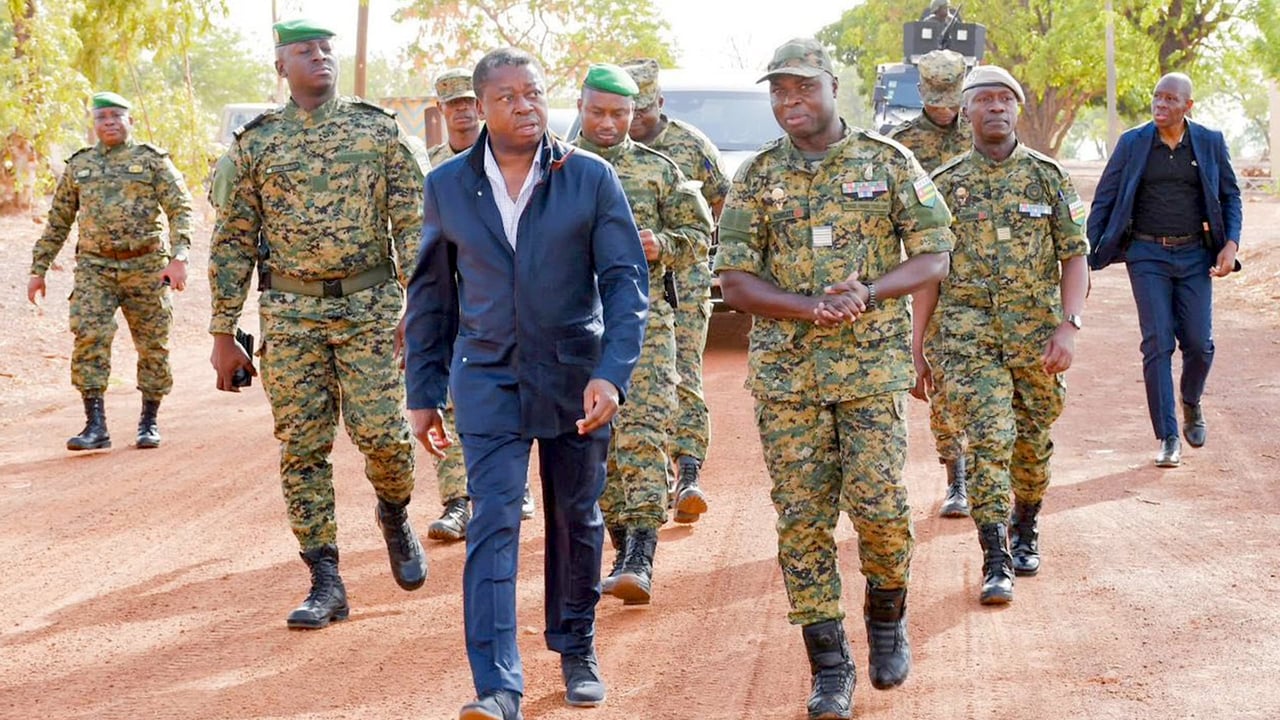

In a show of national solidarity, residents of the Togo’s northern regions gathered to honor the security forces patrolling the border with Burkina Faso. Soldiers, gendarmes, and police officers marched in formation, followed by students proudly displaying their school banners under the watchful eyes of local leaders. Among them stood the Governor of the Savanes Region, Affoh Atcha-Dédji, a former Transport Minister, as he reviewed the troops.
Why Togo is fortifying its border with Burkina Faso
The move comes as jihadist groups operating near the border have intensified their activities, posing a growing threat to regional stability. Since 2023, cross-border attacks have surged, with armed factions exploiting porous borders to launch strikes in neighboring countries. The Togolese government has responded by deploying additional troops, enhancing surveillance, and reinforcing strategic infrastructure along the frontier.
Key security measures implemented
- Military reinforcements: Thousands of additional soldiers have been stationed in the Savanes Region and other high-risk zones to deter incursions.
- Border surveillance systems: Cutting-edge technology, including drones and motion sensors, now monitors remote areas where jihadist movements have been reported.
- Community engagement: Local leaders and elders are collaborating with security forces to identify suspicious activities and relay critical intelligence.
- Civil protection drills: Regular emergency response exercises are being conducted in schools and public spaces to prepare civilians for potential threats.
Regional cooperation against terrorism
Togo is not alone in its efforts. The country is part of a broader West African counter-terrorism alliance, working closely with Benin, Ghana, and Nigeria to share intelligence and coordinate military operations. The Accra Initiative, a regional security pact, has played a pivotal role in synchronizing responses to cross-border threats.
Earlier this year, leaders from Ghana, Benin, and Togo convened to strengthen joint patrols along their shared borders, aiming to disrupt jihadist networks before they can strike. Analysts note that these coordinated efforts have already led to a decline in successful attacks within the subregion.
Challenges ahead
Despite these measures, obstacles remain. The vast, often unmonitored stretches of the Burkina Faso-Togo border—stretching over 100 kilometers—present a formidable challenge. Additionally, the humanitarian crisis in Burkina Faso has displaced thousands, some of whom may be sympathetic to extremist ideologies. The Togolese government is also grappling with balancing security needs with economic growth, particularly in border towns where trade is vital.
As the situation evolves, the international community continues to monitor Togo’s strategy closely. Will these measures suffice, or will the jihadist threat continue to escalate? Only time will tell.