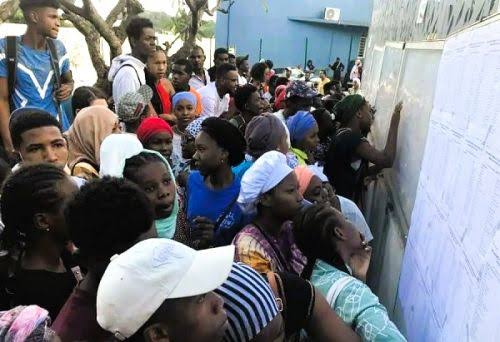
The release of the 2026 baccalaureate results in N’Djamena and across Chad has sparked a mix of relief and disappointment among candidates. While some students celebrate their hard-earned success, others face the harsh reality of having to postpone their academic dreams for another year.
Chad’s national examination board has released the final figures: out of 106,231 registered candidates across all streams, only 27,872 secured direct admission—a success rate of just 26.24%. A further 32,722 students (30.80%) were deemed eligible for supplementary oral or written exams, leaving 45,637 candidates—42.96%—failing to progress. These numbers underscore the rigorous nature of this year’s baccalaureate.
The performance varied sharply between academic streams. The DA series led with a remarkable 79.28% direct admission rate, followed by AB (73.42%) and CA (60.87%). In stark contrast, the G2A stream saw only 11.76% of candidates advance directly, while the D stream—the most crowded with 25,952 candidates—recorded a mere 23.32% direct admissions.
Behind these statistics lie human stories of struggle. Many candidates fell short due to incomplete preparation, financial constraints, overcrowded classrooms, or gaps in educational resources. Stress and interrupted schooling also played a role. Yet, failure at this stage does not define one’s future. History shows that setbacks in education often lead to greater resilience.
The Ministry of Education and local schools are urged to strengthen support systems—offering tutoring, mentorship, and career guidance—to help students overcome these hurdles. For those still in the running, the supplementary exams represent a second chance to prove their potential. As one African proverb reminds us: “A fall is not the end of the journey—only giving up does.”
For the thousands of students affected, this is not the final chapter. With determination, discipline, and the right support, success remains within reach.