As France and Senegal prepared to face off in a high-stakes World Cup match, a comment by Ousmane Sonko reignited a contentious debate that many thought belonged to the fringes of identity politics. The Senegalese National Assembly president’s assertion that « regardless of the outcome, it will be Africa beating Africa » revived an old controversy: one that reduces France’s Black players to their ancestral origins rather than their French nationality. A rhetoric once championed by far-right figures in Europe, now echoed by one of Senegal’s most prominent political leaders.
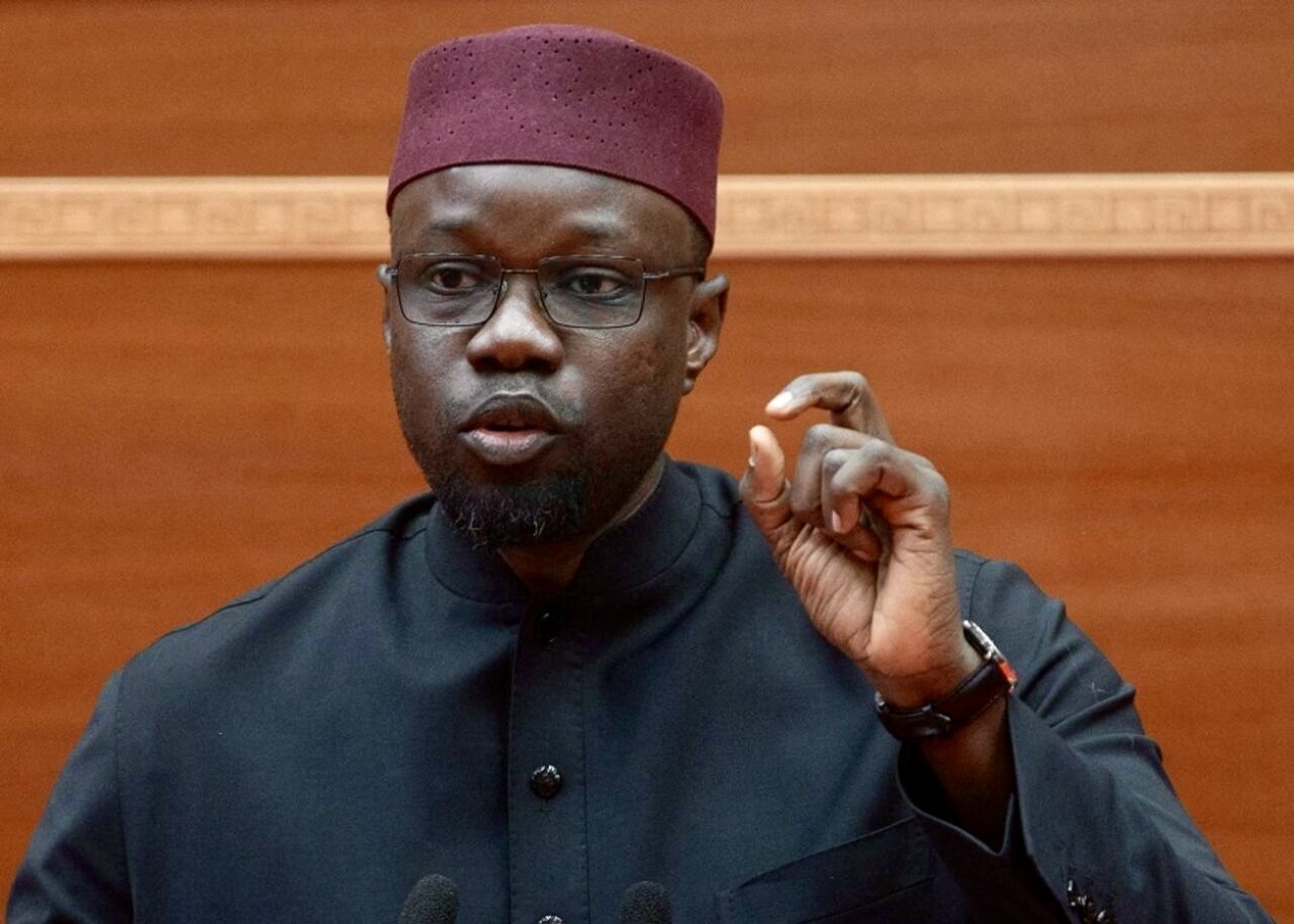
Sonko’s statement, delivered on the eve of the World Cup clash, was framed by some as a simple pan-Africanist gesture. Yet the underlying implication—that France’s Black players are inherently African rather than French—has long been a cornerstone of exclusionary identity debates. This narrative, which questions the legitimacy of dual-heritage athletes representing France, has resurfaced repeatedly, from political platforms to stadium chants.
Who exactly are these players representing?
The French national team consists of French citizens, most of whom were born and raised in France. Kylian Mbappé hails from Paris, Ousmane Dembélé from Vernon, Aurélien Tchouaméni from Rouen, and Ibrahima Konaté from Bondy. Others, like Rayan Cherki (Lyon) and Bradley Barcola (Villeurbanne), grew up in France’s metropolitan regions, trained in French academies, and rose through the ranks of French football before donning the Bleu. Their careers were shaped by French coaches, French clubs, and French institutions—making them quintessentially French in every sense.
France’s footballing identity also extends beyond its European borders. Players like Jocelyn Angloma (Guadeloupe) and Dimitri Payet (Réunion) were born in overseas territories, yet their contributions to the national team remain integral to French football history. These regions are part of the French Republic, and their athletes are no less French than those born in Marseille or Lyon. To claim that a French victory would somehow be an African triumph is to imply that these players’ identities are defined by ancestry rather than citizenship—a logic that strips them of their French heritage.
A familiar controversy resurfaces
This debate is not new. In 1996, far-right leader Jean-Marie Le Pen infamously dismissed France’s World Cup-winning squad as a team of « naturalized foreigners, » questioning their loyalty to France. He claimed players avoided singing La Marseillaise due to ignorance of the anthem, a remark that sparked nationwide outrage. Then-coach Aimé Jacquet and captain Didier Deschamps dismissed the comments outright, with Deschamps labeling them « nonsense. » Prime Minister Alain Juppé defended the team, declaring, « We are proud of these players—they embody what France stands for. »
Decades later, Éric Zemmour, a commentator convicted of hate speech, revived similar claims, arguing that France’s diverse team reflected a shift in national identity. The pattern persists: players are judged not by their talent or commitment but by the color of their skin or the origins of their ancestors. Even supporters from rival nations, like Argentina, have echoed these sentiments, chanting that France’s team is « really African »—a racist trope that denies the French identity of Black athletes.
Sonko’s remarks, though not identical in tone, follow the same flawed logic. If a European far-right figure suggests Kylian Mbappé or Aurélien Tchouaméni are not truly French, outrage ensues. Yet when a Senegalese leader echoes a similar sentiment—even in a different context—the implications demand scrutiny. The message remains consistent: Black players in the French team are African first, French second.
Were Didier Deschamps to announce tomorrow that he intended to select only white players to better « represent » a certain vision of France, the backlash would be immediate. Sonko, among others, would rightfully condemn such a decision as discriminatory. So why is the inverse—assigning an African identity to French players based solely on ancestry—accepted without question? Football selects players based on skill, not ethnicity. Mbappé is not chosen because he is Black; Tchouaméni is not selected because his parents are African. They wear the blue jersey because they are French and among the best in their generation. France has never asked its players to renounce their roots—but it has asked them to represent their country.
Sonko is neither Le Pen nor Zemmour, yet his statement inadvertently perpetuates a narrative that defines players by origin rather than nationality. For a man of his stature—a former prime minister and Senegal’s Assembly president—these words carry weight. The danger lies in celebrating Africa so broadly that it overshadows the individual identities of those who are, first and foremost, French.
A final consideration: during the 2002 World Cup, Senegal defeated France with a squad where 20 of 23 players were based in French clubs, several born in France, and coached by a Frenchman, Bruno Metsu. Would Sonko’s logic imply that Senegal’s victory was also, in part, a French triumph? Of course not. Those players represented Senegal, just as France’s team represents France today. That is the fundamental flaw in his reasoning.
You may also like
Nanga armored vehicles: mounting fallout, public backlash and where Burkina Faso goes from here
After the eyeglasses verdict in Cameroon, a reckoning for the press and its critics
Mali’s official narrative stirs debate as Goïta’s promises collide with daily struggles
Nanga armoured vehicles: Burkina Faso’s ‘made in Burkina’ claim sparks national debate as questions mount
Sévaré attack aftermath: Mali’s security debate and the road ahead