Sénégal President faye dismisses prime minister, sparking political uncertainty
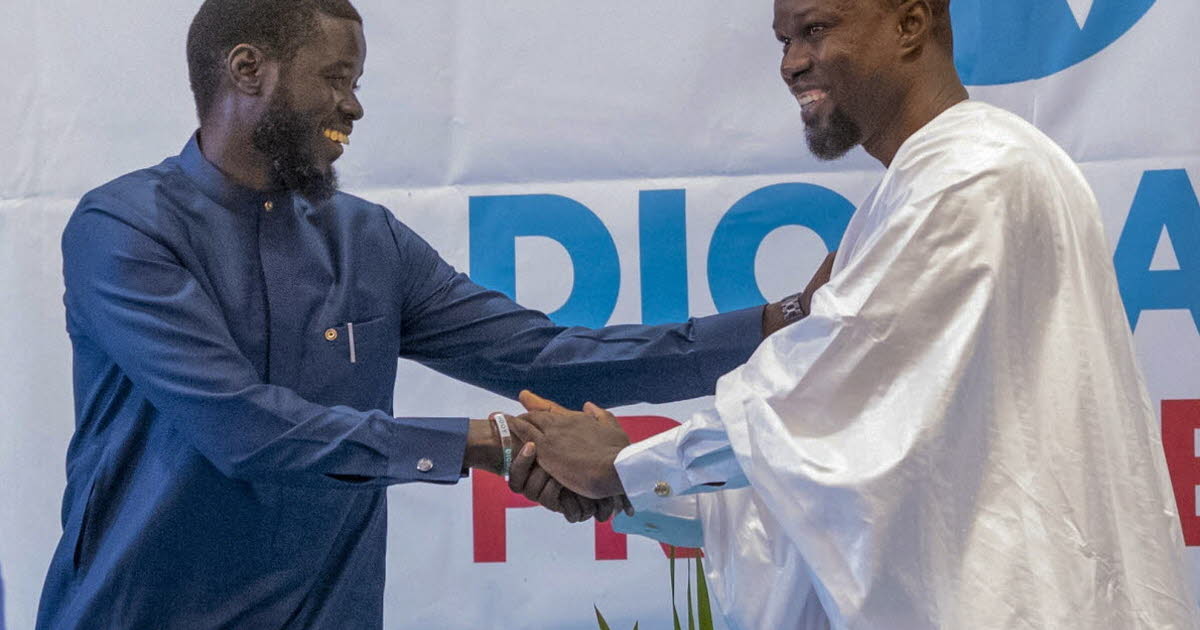
The bond between President Bassirou Diomaye Faye and his highly popular Prime Minister Ousmane Sonko has fractured, plunging Senegal into significant political uncertainty. This dynamic duo had initially swept into power on a wave of change, igniting widespread public enthusiasm.
After months of growing friction, the political partnership that once symbolized profound hope for change in Senegal has officially dissolved. On Friday, Senegalese President Bassirou Diomaye Faye moved to dismiss his widely popular Prime Minister, Ousmane Sonko, following increasingly public disagreements. President Faye, who secured a decisive 54% of votes in the first round of the March 2024 election, largely owed his significant victory to his former mentor. Sonko, the charismatic leader of Pastef, the president’s own party, had been barred from running for the presidency himself due to a defamation conviction that rendered him ineligible.
At the time of their ascent, the two leaders projected an image of deep camaraderie, with the slogan « Diomaye moy Sonko, Sonko doy Diomaye » (« Diomaye is Sonko, Sonko is Diomaye ») resonating as a genuine expression of unity. Their dramatic rise to power, just ten days after their release from prison, sparked immense enthusiasm among Senegalese citizens eager to move past a protracted period of political and social unrest. This promise of a radical departure from the existing political system and rampant corruption had afforded Pastef leaders a crucial period of public grace, a period that has now definitively concluded.
However, the ruling duo quickly found themselves at odds. Ousmane Sonko frequently overshadowed his former protégé, and the underlying rivalry between the two men, particularly with an eye on the 2029 presidential election, began to impede the pace of reforms promised to the electorate. Notably, President Faye and his Prime Minister diverged on strategies to alleviate Senegal’s substantial national debt. The nation currently ranks as the second most indebted country in Sub-Saharan Africa, with a debt inherited from previous administrations reaching 132% of its Gross Domestic Product (GDP).
A brewing rivalry for the 2029 presidential election
The dismissal of Ousmane Sonko ushers in an unprecedented political crisis for Senegal. To govern effectively, President Bassirou Diomaye Faye relies heavily on the support of the Pastef party, still undeniably led by his former Prime Minister. Pastef commands a very comfortable majority in the National Assembly, holding 130 out of 165 seats. Even sidelined from his premiership, Ousmane Sonko maintains his status as the de facto winner of the 2024 presidential contest in the eyes of many.
Political observers note his strong connection with the youth and his clear vision for national sovereignty, a stark contrast to the corruption or forced power grabs seen elsewhere in Africa. Sonko appears to embody a genuine hope for his country, despite formidable structural and financial challenges. It is often misunderstood that he is anti-French; rather, he champions Senegal’s sovereignty and advocates for a re-evaluation of relations on new, equitable terms.