Senegal’s football federation clarifies u15 lionceaux’s 100,000 fcfa allocation
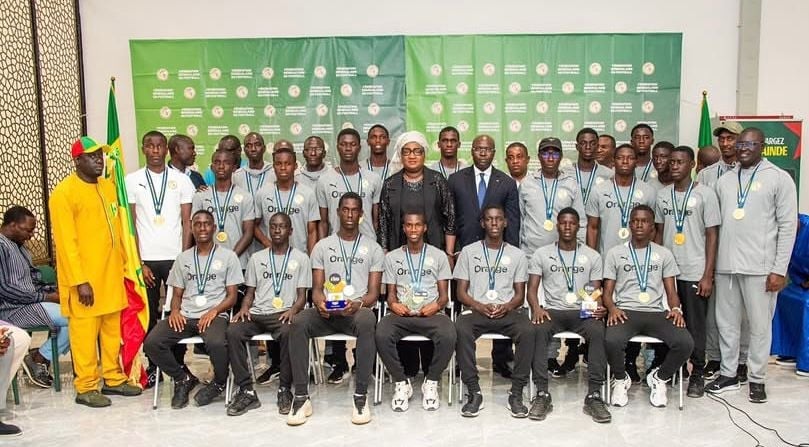
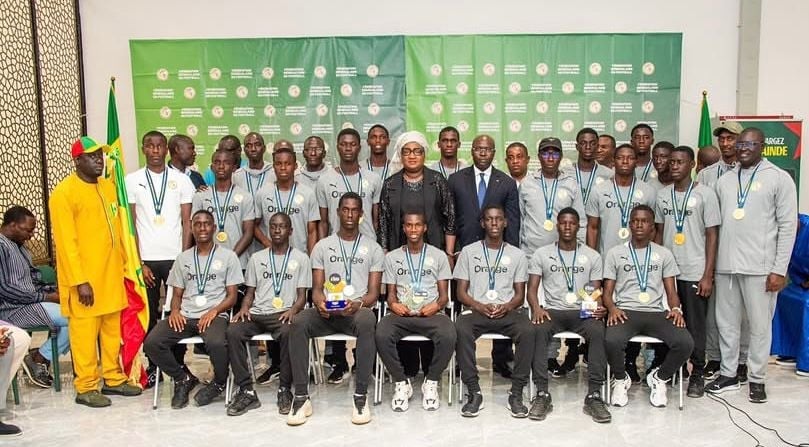
Last Tuesday, a significant event took place: the presentation of the trophy earned by the U15 Lionceaux at the African School Football Championship, alongside the official flag handover to the U17 national team preparing for the CAN U17 2026. During this ceremony, both celebrated teams were presented with symbolic checks.
Reports circulated that the young U15 champions, who recently secured their victory in Zimbabwe, each received a sum of 100,000 FCFA. This particular payment sparked considerable debate and raised numerous questions regarding the nature of this financial recognition.
Responding to the emerging controversy, the Fédération Sénégalaise de Football (FSF) issued a statement this Thursday to provide clarity. The football governing body emphasized that, in strict adherence to Confederation of African Football (CAF) regulations, direct cash bonuses for victory are not disbursed to players participating in this school-level competition.
The FSF further explained that the overall prize of 300,000 dollars, awarded to the tournament winner, is not intended for individual distribution nor is it directly transferred to the Federation itself. Instead, this substantial fund is managed by CAF and is specifically directed towards well-defined projects. These initiatives are undertaken in collaboration with Senegal’s Ministry of National Education and the FSF, focusing on key areas such as the procurement of sports equipment, the enhancement of infrastructure, and the implementation of educational programs designed to foster sustainable growth within school football across Senegal.
Ultimately, the Federation clarified that the amount provided to the players was solely an allowance to cover their transportation expenses, ensuring their comfortable and safe journey back to their respective families.