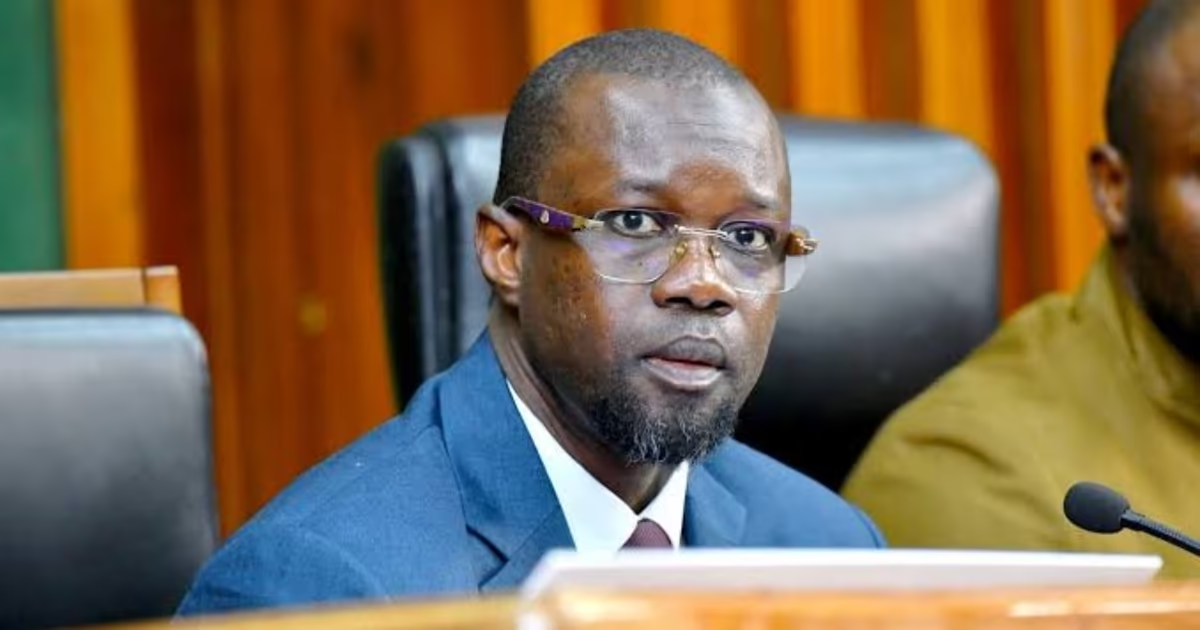
Diomaye Faye’s Government Rejects Sonko’s Constitutional Reform Proposals
During a press conference held by the Diomaye Président coalition, Minister Abdourahmane Diouf delivered a sharp rebuttal to criticism surrounding Senegal’s constitutional reform debate. He firmly stated that no individual or group would be allowed to disrupt the nation’s stability as long as President Bassirou Diomaye Faye remains in power. Diouf emphasized that the Head of State had already provided assurances in 2024 about safeguarding institutional stability and social harmony.
The minister revisited the 2024 electoral process, noting that Ousmane Sonko, now Speaker of the National Assembly, had initially supported postponing the presidential election before later endorsing Bassirou Diomaye Faye’s candidacy during the campaign. Diouf accused Sonko of abandoning this position and engaging in political manipulation regarding the ongoing constitutional reforms.
He further highlighted that previous presidents, despite holding parliamentary majorities, had never attempted to amend the Constitution in the manner currently proposed. According to Diouf, had such changes been made earlier, today’s political actors would not have the platform to advocate for their reforms.
In a particularly heated exchange, Diouf targeted Sonko, reminding him of his past self-proclaimed role as the « guardian of the revolution. » Diouf dismissed this political posturing as incompatible with the responsibilities of his current position. With biting sarcasm, he declared, « We have no use for a guide de perlimpinpin… »
Stability and Reform: A Clash of Visions
The minister’s remarks underscore a growing divide within Senegal’s political landscape. While the government frames its reform agenda as a means of strengthening democracy and governance, critics—including Sonko—argue that the proposed changes could undermine constitutional safeguards. Diouf’s aggressive stance reflects the administration’s determination to push forward despite opposition.
The debate over constitutional reform has intensified in recent months, with Sonko emerging as a vocal dissenter. His accusations of betrayal against President Faye have added a personal dimension to the political dispute, raising concerns about the potential for further instability in an already tense environment.
What’s at Stake for Senegal?
The outcome of this constitutional debate could reshape Senegal’s political framework, influencing everything from presidential term limits to the balance of power between branches of government. Proponents of the reforms, led by the Diomaye Faye administration, argue that these changes are necessary to modernize the Constitution and align it with contemporary governance needs. Opponents, however, warn that such amendments could concentrate power and erode democratic checks and balances.
As the debate continues, Senegal’s political class remains deeply divided, with the public closely watching the unfolding developments. The government’s unwavering stance suggests that the reforms will proceed, but the fallout from Sonko’s criticism could have lasting implications for national cohesion and political trust.