The Sahel crisis: beyond military setbacks, a symbolic collapse
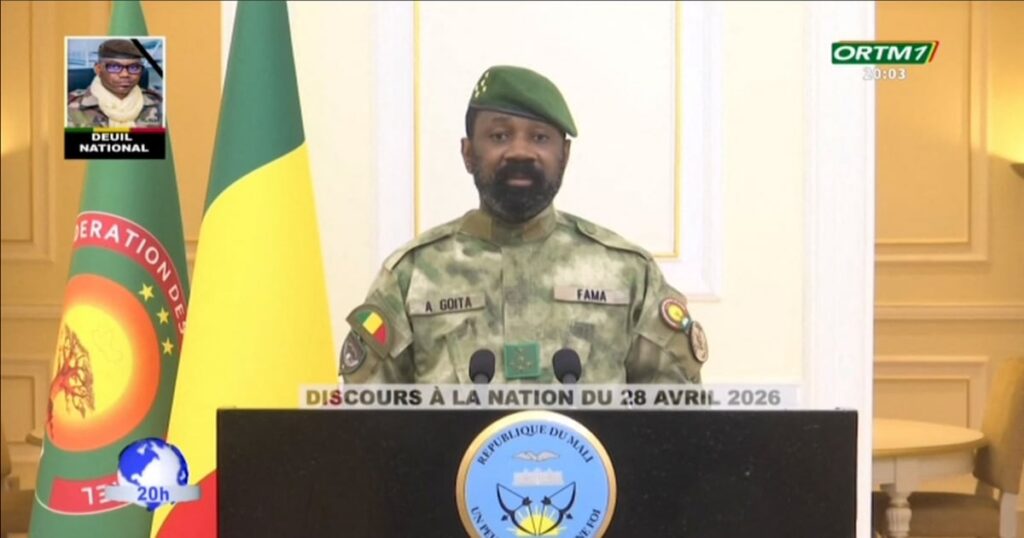
The Mali crisis has reached a new inflection point. Following coordinated attacks on April 25, the country’s stability remains fragile, with its military leadership under intense scrutiny. The death of Defense Minister Sadio Camara in the assault has exposed cracks in Bamako’s security strategy. Yet, despite the turmoil, Malian society demonstrates its well-honed resilience. The nation’s political and military actors—including the ruling junta, the Front de libération de l’Azawad (FLA), and the Jamaat Nusrat ul-Islam wal Muslimin (JNIM)—are locked in a war of narratives, further complicating the path to stability.
Meanwhile, regional alliances like the Alliance of Sahel States (AES)—comprising Mali, Burkina Faso, and Niger—struggle to deliver tangible security solutions. The Economic Community of West African States (ECOWAS), now sidelined after Bamako’s withdrawal in January 2025, appears equally ineffective. A recent summit in Lomé, Togo, brought together representatives from the AES, ECOWAS, the African Union, France, the European Union, and Russia, yet yielded little more than diplomatic posturing. The looming question: Can these fractured alliances ever unite against shared threats?
The AES: a paper tiger or a future security force?
The AES was designed to mirror NATO’s collective defense model, with Articles 5 and 6 of the Liptako-Gourma Charter pledging mutual assistance. However, internal security crises in Burkina Faso and Niger have rendered these commitments hollow. The Burkinabè junta, led by Captain Ibrahim Traoré, has dismissed recent attacks in Mali as a « monstrous conspiracy, » yet Ouagadougou remains preoccupied with its own insurgency. The Nigerien government, facing similar threats, even declared a national « fast and prayer day » to combat terrorism—a measure highlighting desperation over strategy.
ECOWAS, too, is grappling with its diminished influence. After its failed military intervention in Niger, the bloc now seeks to rebrand itself as a mediator. At the Lomé talks, Malian Foreign Minister Abdoulaye Diop extended an olive branch, reaffirming openness to dialogue while preserving the sovereignty of Sahel states. Yet skepticism abounds. As Bakary Sambe, director of the Timbuktu Institute and researcher at Gaston Berger University in Saint-Louis, notes: « The crisis reveals the impotence of regional alliances. »
The Sahel cannot be extracted from West Africa. Fragmentation only deepens the crisis.
Russia’s strategic retreat and America’s resurgent role
The Mali attacks have also signaled a dramatic shift in geopolitical power dynamics. The death of Sadio Camara, a vocal proponent of Russian military cooperation, marks a symbolic blow to Moscow’s influence. The withdrawal of Wagner Group (now rebranded as Africa Corps) from Kidal further underscores Russia’s waning leverage. What was once touted as a « Russian-backed security model » has collapsed, leaving Bamako scrambling for alternatives.
In contrast, Washington has quietly re-engaged with the Sahel. High-level U.S. delegations have recently visited Mali and Niger—despite past expulsions of American troops—signaling a strategic recalibration. Analysts suggest this shift stems from renewed concerns over regional instability and resource competition. Could the U.S. eclipse Russia’s fading presence? The coming months may hold the answer.
Regional spillover: who’s next?
The crisis in Mali has raised alarms across the Gulf of Guinea. While Togo, Benin, Ghana, and Côte d’Ivoire watch from the sidelines, the real threat looms closer to home. A destabilized Burkina Faso could trigger a domino effect, with Senegal and Mauritania as potential dominoes. The Togolese Foreign Minister, Robert Dussey, has proposed forging a « bridge to the Sahel, » but concrete actions remain elusive.
Could the Jamaat Nusrat ul-Islam wal Muslimin (JNIM) exploit Burkina Faso’s vulnerabilities? For now, the answer is no. Unlike in Mali, where north-south tensions fuel insurgencies, Burkina Faso’s conflict is rooted in domestic governance failures. Yet the risk of a security vacuum persists, especially if the AES’s institutional fragility persists.
In Bamako, a fragile patriotism has emerged in response to the attacks. Calls for national unity have drowned out dissent, with the junta leveraging the crisis to solidify its grip. Whether this cohesion is sustainable—or merely a temporary rally-around-the-flag effect—remains to be seen.
Conclusion: cooperation or fragmentation?
The Sahel’s security architecture is at a crossroads. The African Union advocates for « continental mechanisms » to prevent further destabilization, but these remain aspirational. Meanwhile, ECOWAS plans to deploy a 1,650-strong counterterrorism brigade by late 2026—though broader peacekeeping missions face uncertain prospects.
The April 25 attacks have underscored a harsh truth: the Sahel cannot be isolated from West Africa. Fragmentation benefits no one. Only coordinated intelligence-sharing, pooled resources, and pragmatic diplomacy can reverse the tide. As the region braces for further shocks, one question lingers: Will its leaders choose cooperation—or retreat into further division?
You may also like
Senegal’s 2026 budget revision: how the deficit surge hits households, businesses and the Pastef majority
Benin’s €544,042 UNAIDS funding: the tangible consequences for patients, communities and the economy
Senegal-Azerbaijan pact in New York: what it means for jobs, trade and cooperation
What Luxembourg’s 9.8 billion FCFA port training pledge means for Benin’s workers and businesses
Burkina Faso: shrinking civil service payroll exacts a heavy toll on households and local economies