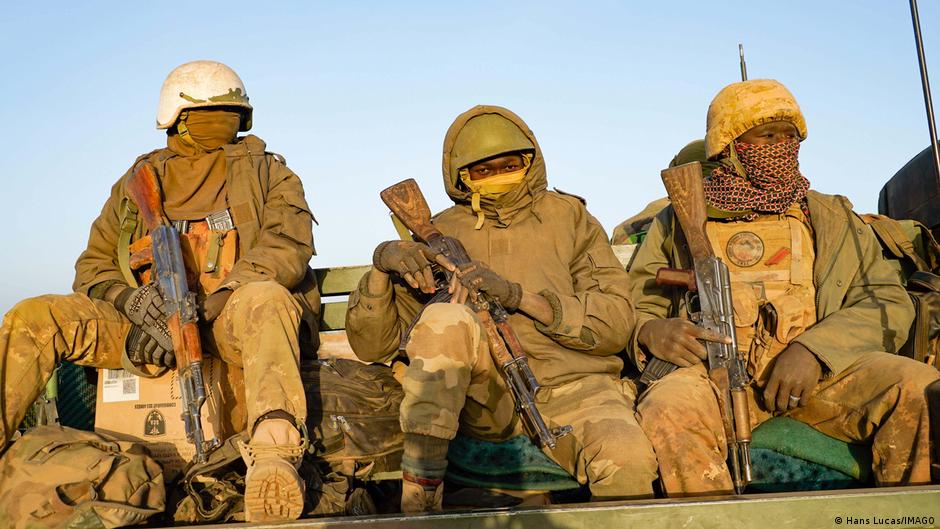
In the vast, challenging terrain of Mali, a striking pattern has emerged in recent confrontations with jihadist groups. While local Malian forces face heavy losses, Russian-affiliated paramilitary units—part of the Africa Corps—reportedly suffer significantly fewer casualties. This disparity raises critical questions about their deployment strategy, operational roles, and the evolving dynamics of security operations in the Sahel.
Numbers tell a story
The most immediate explanation lies in the scale of deployment. Defense analysts estimate that fewer than 2,000 Russian mercenaries are currently active in Mali, a fraction of the more than 13,000-strong Malian Armed Forces. This numerical imbalance has direct consequences: the larger a force, the greater its exposure to ambushes, IEDs, and direct assaults in high-risk zones.
Moreover, the operational positioning of Russian units differs markedly from that of Malian troops. The Africa Corps primarily functions in a support and advisory capacity, often positioned behind the front lines. Their role is not to replace Malian soldiers but to strengthen their tactical decisions through intelligence, drone surveillance, and logistics. As a result, Malian units remain at the forefront—bearing the brunt of attacks and sustaining most of the casualties.
This division of labor was emphasized by Mamadou Mouth Bane, a Sahel security analyst and author: “The answer lies in positioning. It is the Malian army that holds the front lines—especially in volatile regions like the Liptako-Gourma triangle and the Menaka area. Russian personnel are typically deployed in command centers, processing drone feeds or coordinating airstrikes. That’s why the majority of losses and kidnappings occur among Malian soldiers, not the Africa Corps.”
Russian losses: less visible, but real
Despite lower reported casualties, Russian mercenaries are not immune to risk. Over the past two years, several high-profile incidents have resulted in fatalities among their ranks, particularly during offensives in northern and central Mali. However, casualty figures remain shrouded in secrecy. Neither Bamako nor Moscow releases official data on personnel losses, making precise assessments difficult.
Several factors contribute to their relative resilience. Many Russian fighters are veterans of conflicts in Syria, Ukraine, and the Caucasus, bringing extensive combat experience. Their training emphasizes rapid decision-making under fire, use of advanced weaponry, and tactical adaptation—skills honed in asymmetric warfare.
Abdoulaye Sounaye, a Sahel researcher at the Leibniz-Zentrum Moderner Orient in Berlin, explains: “What we’re seeing isn’t just a difference in numbers—it’s a difference in profile. The Africa Corps consists of professional mercenaries, many with combat experience in multiple theatres. They arrive in Mali equipped with modern communication tools, armored vehicles, and aerial reconnaissance. This combination of experience and technology gives them a protective edge compared to the Malian army, which often lacks the same level of equipment and logistical support.”
Strategic focus: where the risks are managed
With limited manpower, Russian units appear to prioritize high-value targets and critical infrastructure. Their deployments are often concentrated around key bases, supply routes, and urban centers—areas where security is tightly controlled. This selective engagement allows them to minimize exposure while enabling Malian forces to conduct longer-term patrols and village-level stabilization efforts.
This strategy, while reducing immediate losses, also raises long-term questions. It may create gaps in rural coverage, leaving communities vulnerable to insurgent infiltration. Meanwhile, the Malian military continues to bear the human cost of sustained counterterrorism operations across vast, poorly secured territories.