Political speech in Senegal: why Maïmouna Dièye’s remarks sparked controversy
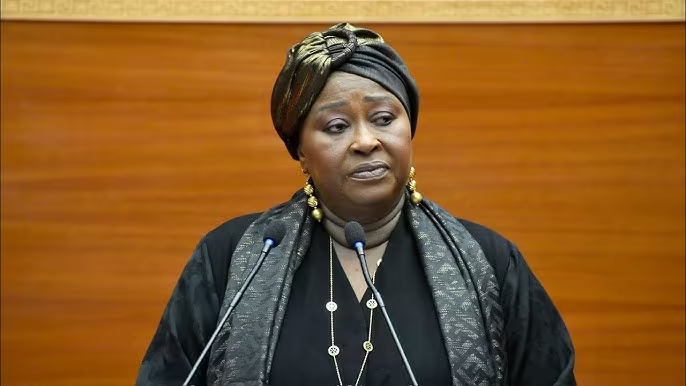
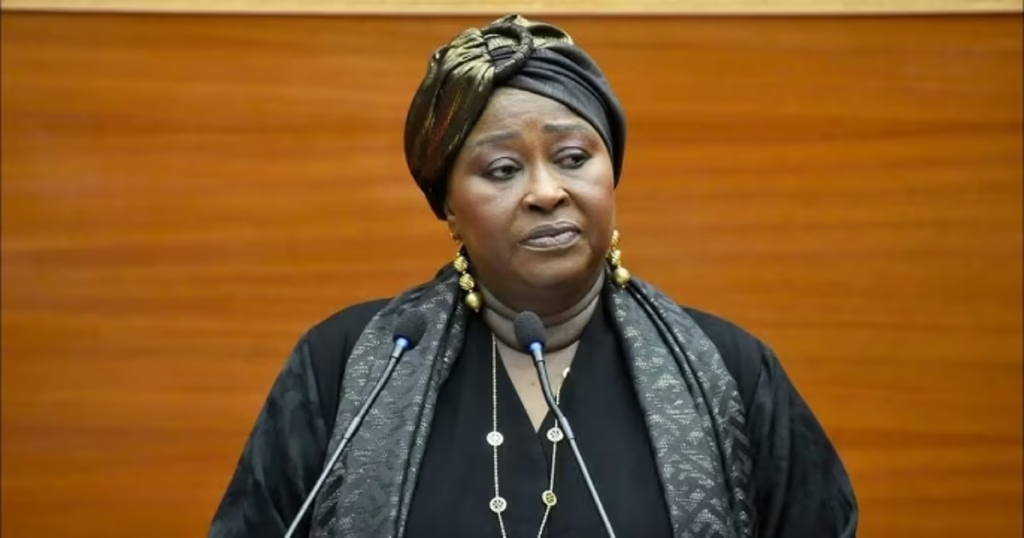
Maïmouna Dièye’s choice of words during a political gathering in Khombole took an unexpected turn, blurring the lines between religious reverence and political discourse in Senegal.
The phrasing used by Maïmouna Dièye when addressing Ousmane Sonko in Khombole this past Saturday struck a nerve, revealing how deeply the intersection of faith and politics runs in Senegalese society.
Maïmouna Dièye’s remarks in Khombole
By invoking the phrase « under the presence of Seyidina Ousmane Sonko Salalahou Aleyhi Wa Salam », the activist crossed a delicate boundary in Islamic tradition. The salat, a blessing reserved exclusively for the Prophet Mohammad (peace and blessings upon him) and, in some interpretations, other recognized prophets, holds profound spiritual significance. Its use in reference to a political figure—no matter how prominent—risks elevating that individual to a status reserved only for divine or prophetic figures. This misstep not only sparked discomfort but also raised questions about the over-sacralization of political leaders by their supporters, a concern frequently highlighted by religious leaders who emphasize maintaining the distinction between respect for authority and the sacred.
The immediate reaction from Ousmane Sonko underscored the gravity of the situation. By swiftly clarifying that such invocations belong solely to the Prophet Mohammad and that he has « never reached, nor ever will reach » that level, he sought to reaffirm the boundaries between political admiration and religious veneration.
Ousmane Sonko’s response
Ousmane Sonko’s public correction of Maïmouna Dièye was more than a personal clarification—it was a strategic move to prevent the remarks from being exploited by opponents. In Senegal, where religious sensitivities shape public discourse, political figures must tread carefully to avoid missteps that could fuel controversy. His response reflected a broader understanding of how faith and politics intertwine in the country, where respect for religious norms remains a cornerstone of national discourse.
You may also like
-
Senegal politics: controversy over religious invocation for Ousmane Sonko in Khombole
-
Segal Politics Takes a New Turn as Bassirou Diomaye Faye Launches ‘Kiiraay’
-
Senegal’s president unveils KIIRAAY party to drive national transformation
-
Sénégal Politics Takes a New Turn with Bassirou Diomaye Faye’s KIIRAAY Party Launch
-
Cameroun: les déchus de la République qui hantent le palais d’Étoudi