Gabon’s political figures condemn personal attacks on president
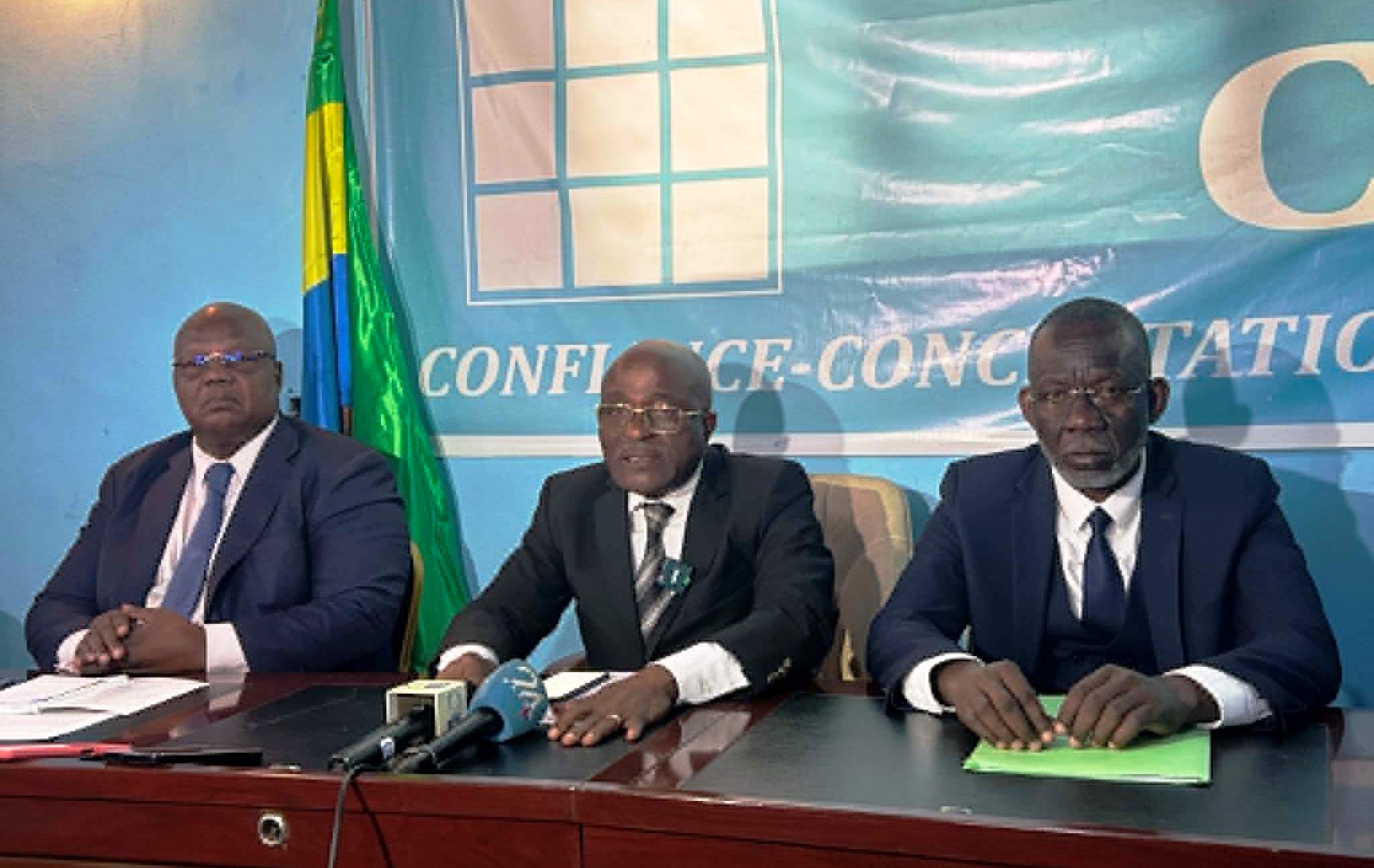
In a joint press conference held in Libreville on August 12, 2026, prominent political leaders united to denounce recent inflammatory remarks directed at President Brice Clotaire Oligui Nguema by certain diaspora activists based in Europe. The collective, representing multiple political factions, emphasized the importance of maintaining dignity in public debate while addressing national concerns.
Respect as the cornerstone of political engagement
David Mbadinga, president of the Union des patriotes gabonais loyalistes (UPGL) and spokesperson for the coalition, delivered a strong message: “Criticizing a president does not require attacking his family.” He was flanked by Florentin Moussavou of the Conscience et action citoyenne (CAC) and Paskhal Nkoulou of the Bloc démocratique populaire (BDP), reinforcing their united stance against verbal violence in politics.
The group strongly condemned the behavior of unnamed activists whose recent online statements—particularly those by Landry Mbeng, known as “Lanlaire,” residing in Switzerland—crossed ethical boundaries. Mbeng’s remarks, which targeted not only the president but also his mother and First Lady Zita Oligui Nguema, were described as unacceptable by the political leaders.
A call for national unity during a pivotal month
August holds special significance for Gabon as the month dedicated to celebrating the nation’s identity, history, and values. In their statement, the leaders urged citizens to channel their patriotism toward fostering peace and social cohesion rather than divisive rhetoric. They stressed that while political dissent is essential, it must never devolve into personal insults or defamation.
The coalition argued that the integrity of public discourse directly reflects the image of the country. For them, constructive criticism strengthens democracy, but degradation erodes trust and tarnishes Gabon’s reputation on the global stage. Their appeal underscores a broader commitment to ethical leadership and national pride.
Balancing opposition with national respect
The leaders’ position highlights a growing consensus among Gabon’s political class: opposition to policies or leadership should never come at the expense of human dignity. By drawing a clear line between firm political opposition and gratuitous personal attacks, they set a standard for how public figures—both in power and in dissent—should engage in national conversations.
Their collective voice sends a powerful reminder: a nation’s strength lies not only in its institutions but also in the respect its citizens extend to one another, regardless of political affiliation.