
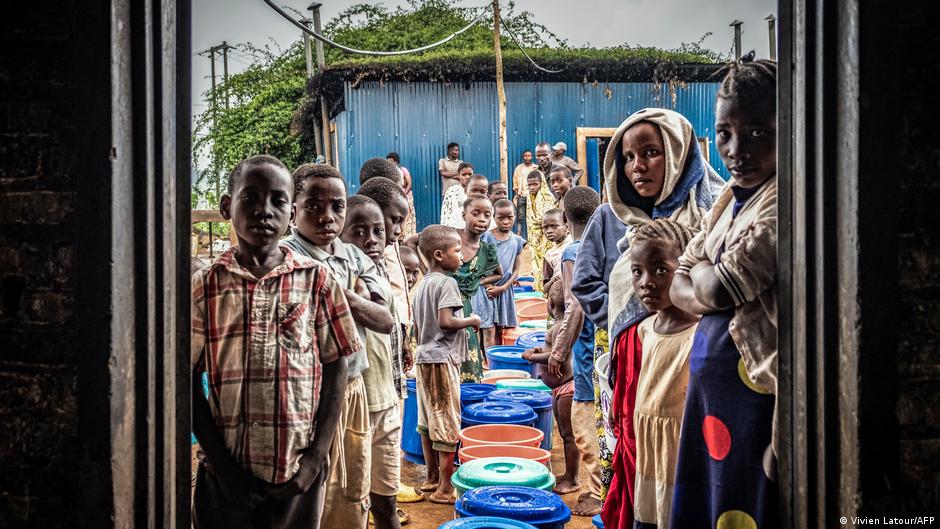
The eastern regions of the Democratic Republic of Congo (DRC) remain trapped in a cycle of escalating violence, where violations of international humanitarian law continue unabated despite repeated pledges from authorities and international partners.
With armed groups multiplying and civilians bearing the brunt of relentless attacks, the International Committee of the Red Cross (ICRC) has intensified calls for stricter adherence to humanitarian norms. This plea took center stage during a high-level conference held in Kinshasa on July 23, where experts, activists, and military officials convened to address the crisis.
Civilian suffering amid unenforced protections
In conflict zones such as North Kivu, South Kivu, Ituri, and parts of Tanganyika, the principles of international humanitarian law—designed to shield non-combatants from harm—are either unknown or systematically flouted. The consequences are devastating, particularly for women and children, who face disproportionate levels of sexual violence.
“Sexual violence has reached staggering proportions. Every minute, women, girls, and even young boys endure these atrocities,” warns Julienne Lusenge, a prominent human rights advocate. “Yet, despite the scale of these crimes, international prosecution remains a rarity. We must hold perpetrators accountable on a global scale.”
Military justice as a tool for deterrence
Julienne Lusenge emphasizes that strengthening security forces and dismantling armed factions are critical steps toward safeguarding civilians. Meanwhile, military justice in the DRC is actively pursuing legal action against soldiers accused of abuses. General Jean-Paul Tshayikolo, a military magistrate at the High Military Court, underscores the dual purpose of these prosecutions: punishment and education.
“Within our ranks, both exemplary and rogue elements exist,” he explains. “Our goal is to foster discipline and integrity, but absolute impunity will never be achieved. Every verdict serves as a lesson for other servicemen, reinforcing the message that accountability is non-negotiable.”
Fragmented conflict networks hinder justice
The DRC’s eastern provinces are plagued by over 200 active armed groups, whose shifting alliances and opaque structures make it nearly impossible to pinpoint responsibility for violations. This complexity undermines efforts to establish dialogue, enforce sanctions, and deliver justice under international law.
Furthermore, the blurred lines between combatants and civilians in these conflicts exacerbate the challenges faced by judicial systems. Without clear distinctions, perpetrators exploit legal loopholes, perpetuating a climate of impunity that further endangers vulnerable populations.
You may also like
Why Niger’s soldiers are walking away from Tiani’s army
Behind the sovereignty talk, AES states owe 7,727 billion CFA francs on the regional market
Benin back to school: classes reopen nationwide on 14 september 2026
Sonidep’s 2026 loss: how Niger’s cheap fuel policy is draining the state oil company
Texforces-BF: a textile plant built on Burkina Faso’s retirement savings