
Oligui Nguema’s democratic gamble: embracing truth over power
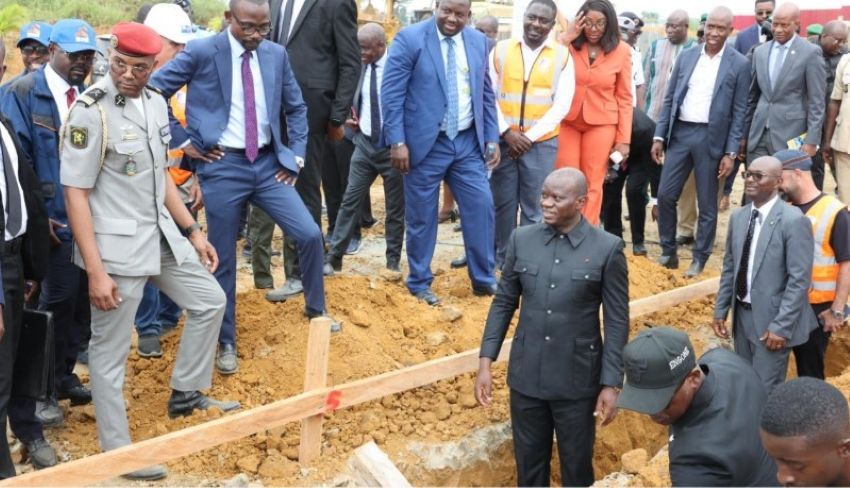
Libreville, June 3, 2026 – In a political climate where public discourse often oscillates between uncritical praise and cautious hesitation, Gabonese President Brice Clotaire Oligui Nguema has reignited a vital conversation about governance: the relationship between power and the truth citizens dare to voice.
During the groundbreaking ceremony for 3,100 new housing units in Bikélé-Nzong, the Head of State made a striking assertion to journalist Chamberlain Moukouma. He declared that a leader’s role extends beyond accepting applause; it must also welcome sincere criticism when it serves the public good. This stance transcends mere political rhetoric, touching on the very essence of democratic responsibility.
A bold departure from unquestioning allegiance
By asserting that he needs to hear when he errs to correct course, President Oligui Nguema challenges a long-standing political culture defined by automatic endorsement of authority. His words introduce a rare institutional demand: the necessity of self-reflection as a governance tool.
In this framework, constant applause is no longer a sign of political vigor but a collective blind spot. The President implicitly calls for a transformation in how leaders and citizens interact—one rooted in transparency and shared accountability. His vision rejects the idea that national progress can thrive on complacency, insisting instead on an unflinching assessment of public actions, both their strengths and weaknesses.
The power of constructive criticism
The President’s remarks restore a vital but often overlooked principle: the role of constructive criticism. Addressing the Head of State frankly is framed not as opposition, but as a civic duty aligned with the greater good. This reframes public debate as a space for continuous improvement rather than sterile confrontation. A mature society, in this view, recognizes achievements while identifying dysfunctions, thereby elevating the quality of governance.
However, this approach demands a profound cultural shift. It requires citizens, social actors, and media to adopt a stance rooted in objectivity, responsibility, and a commitment to the common good. Criticism, in this context, becomes a lever for refining public policies rather than an end in itself.
Redefining political dialogue
Beyond the statement, a broader philosophy of governance is emerging. President Oligui Nguema appears to champion a system where active listening turns citizen feedback into a strategic tool for policymaking. Under this model, national development is no longer dictated solely by top-down state decisions, but shaped by a dynamic interplay between leaders and the people they serve.
This balance demands a delicate equilibrium: acknowledging progress while maintaining relentless pressure for improvement. Moukouma’s interview, shared widely on social media as a civic education tool, further reinforces this vision of a more informed, engaged public sphere.
Ultimately, the President’s words invite Gabon to rethink its political culture around three principles: applaud when justified, criticize when necessary, and always act in the supreme interest of the nation. In a landscape often dominated by posturing, this invitation to shared truth stands as a test of democratic maturity. It positions citizens not as passive observers, but as active participants in the continuous improvement of their nation.
You may also like
Is Chad truly experiencing a political easing of tensions?
Accord FMI-Sénégal : Thierno Bocoum exige la transparence sur les conditionnalités
Ousmane Sonko demands full transparency on Senegal’s new FMI agreement
Senegal’s political crossroads: the faye-sonko institutional challenge
Cameroun : prendre des mesures incitatives pour booster les inscriptions sur les listes électorales