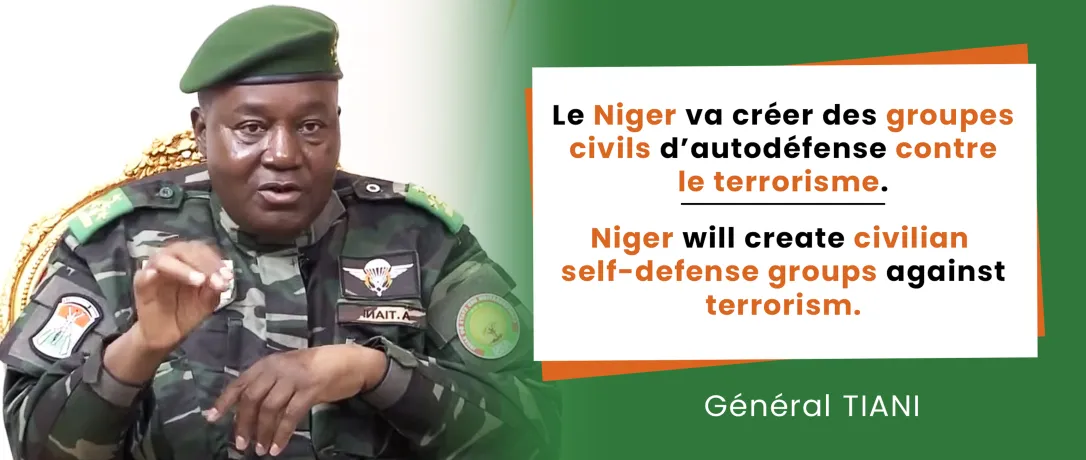
Niger’s official move to integrate civilians into its counter-terrorism struggle represents a critical admission: the regular armed forces can no longer unilaterally manage the asymmetrical nature of this conflict. While seemingly a pragmatic response to escalating security challenges, this strategy is fraught with significant perils that demand careful consideration.
Understanding the inherent dangers of civilian involvement in counter-terrorism
The critical training gap: confusing bravery with operational readiness
Deploying civilians to the front lines, even in a supportive capacity, without comprehensive tactical and ethical training, presents a grave short-term risk. Effective counter-terrorism operations demand a deep understanding of international humanitarian law and intricate rules of engagement. Lacking this crucial preparation, these civilian auxiliaries risk becoming vulnerable targets or, worse, committing errors due to panic or poor judgment. Such incidents inevitably fuel local population resentment, inadvertently bolstering the recruitment efforts of jihadist groups and complicating regional security dynamics.
Weaponry challenges: the illusion of superior firepower
Arming civilians introduces a dual logistical and strategic dilemma. Firstly, if the state provides only light weaponry, these groups remain outmatched by terrorist organizations, which frequently possess heavier arsenals and superior combat experience. Secondly, injecting thousands of untraceable weapons into the general population creates a ticking time bomb. As witnessed with the VDP in Burkina Faso, the uncontrolled proliferation of arms, outside stringent military oversight, significantly erodes state authority and long-term stability.
The insidious threat of shifting allegiances
Perhaps the most insidious danger lies in the potential for loyalty shifts. In ungoverned or weakly governed areas, allegiance frequently hinges on survival or economic pragmatism. Should an armed civilian group feel neglected by the central government—due to delayed payments, insufficient support during an attack, or other grievances—or if terrorist entities present a more appealing offer of “protection” or financial incentive, a defection becomes highly probable. The very weapons supplied by the state could then be turned against it, or worse, contribute to widespread banditry and regional instability.
Erosion of the state’s monopoly on legitimate force
By formally endorsing this practice, the Nigerien state inadvertently undermines the foundational principle of its monopoly on legitimate violence. When any citizen can become an armed actor, the crucial distinction between public order and private justice blurs. This dangerous precedent could easily lead to inter-communal score-settling disguised as counter-terrorism efforts, making genuine national reconciliation an insurmountable challenge even after the primary conflict subsides.