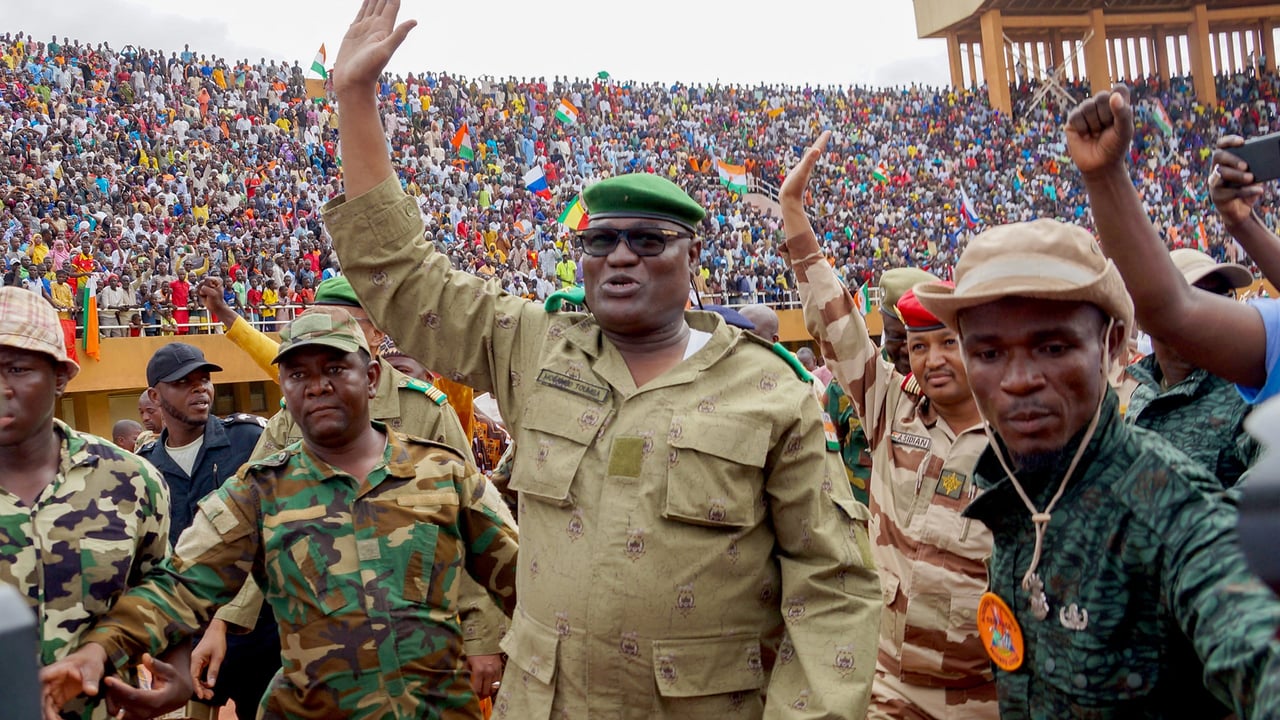

The situation. In a comprehensive interview lasting two and a half hours, broadcast on April 21 on the national channel RTN, General Mohamed Toumba, the Minister of the Interior and Minister of State, discussed several critical issues regarding Niger security. As the nation grapples with an escalation of extremist violence, particularly within the Tillabéry district, the General once again voiced the junta’s long-standing complaints against France.
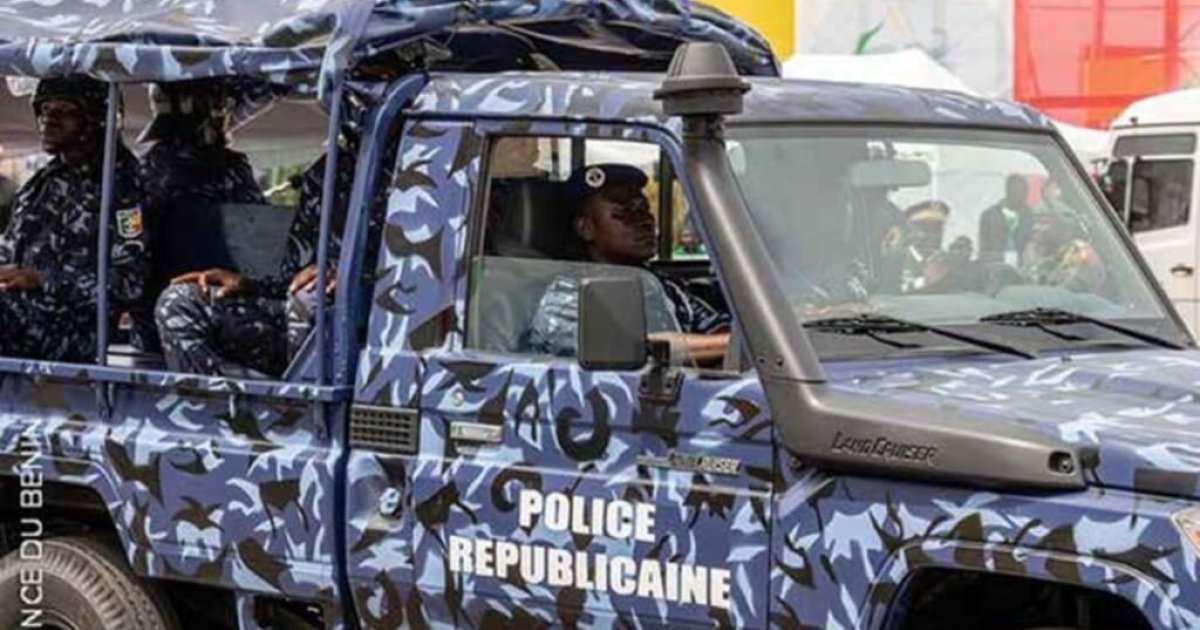
His remarks also touched upon the strained diplomatic ties between Niamey and Cotonou. This comes as Patrice Talon prepares to leave office, making way for his successor, Romuald Wadagni, whose inauguration is scheduled for May 24.
“Patrice Talon has stepped down, but he was never the primary issue. The true problem is Macron,” the Nigerien General stated. He further claimed that Talon was essentially a tool for French interests, alleging that he allowed France to establish a presence on Beninese soil to launch potential strikes against Niger.
When questioned about his expectations for Romuald Wadagni, the Interior Minister insisted on receiving “guarantees of goodwill.” He demanded that Bénin explicitly distance itself from French interests and ensure that Cotonou does not permit French forces to use its territory as a base for aggression against neighboring states.
Patrice Talon has stepped down, but he was never the primary issue. The true problem is Macron.
The background. This criticism from a senior member of the Nigerien junta is part of a series of verbal confrontations. Relations between Bénin and Niger have spiraled downward since General Abdourahamane Tiani took control following the military coup on July 26, 2023.
Earlier this year, in the wake of an attack on the Niamey international airport and Base 101—where Russian Africa Corps personnel are currently based—Abdourahamane Tiani used sharp rhetoric. He warned the “sponsors” of these operations, specifically naming Emmanuel Macron, Patrice Talon, and Alassane Ouattara, suggesting that after their “barking,” they should prepare for Niger to “roar.” He accused France, Côte d’Ivoire, and Bénin of supporting the attack, which was claimed by the Islamic State.
Why this matters for Niger politics. While General Mohamed Toumba’s warnings follow a familiar pattern, they carry extra weight given the timing. Niamey news today is focused on the transition in Cotonou, as Romuald Wadagni prepares to take the presidency.
Wadagni, who secured 94% of the vote in the April 12 election, has signaled a desire for reconciliation. In a recent interview, he expressed confidence in the possibility of dialogue, noting that West Africa Niger and its neighbors face identical hurdles such as security threats, economic hardship, and youth unemployment. He emphasized that regional cooperation is the only path to collective prosperity.
Despite Wadagni’s claim that military chiefs from Bénin, Niger, and Burkina Faso maintain regular contact to improve security cooperation, the leadership in Niamey appears far less convinced of this optimistic outlook. This Niger news English summary highlights the deep-seated mistrust that continues to define the relationship between the two nations.