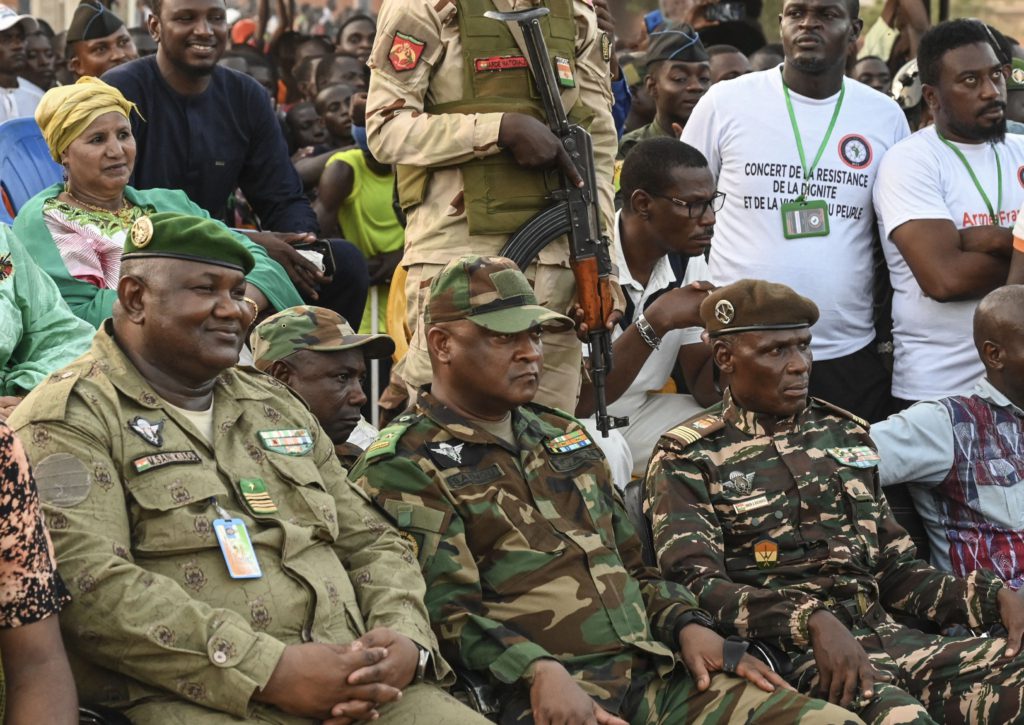
Since the military takeover on July 26, 2023, Nigerien authorities have arbitrarily detained dozens of former government officials and suppressed critical media along with peaceful opposition, as reported by Human Rights Watch and Amnesty International. These authorities must immediately release individuals held for politically motivated reasons and ensure that all due process guarantees are honored.
On July 26, General Abdourahmane Tiani and other Nigerien army officers, acting under the self-proclaimed National Council for the Safeguard of the Homeland (CNSP), overthrew the government of President Mohamed Bazoum. Following the coup, President Bazoum, his wife, and son have been held at the presidential palace in Niamey, the capital, while other officials have also faced arrest. The authorities have subjected journalists, youth, and perceived political opponents, as well as those expressing critical views, to threats, harassment, intimidation, and arbitrary detention.
“The arbitrary arrests and assaults on freedom of expression by the authorities are pushing Niger onto a perilous path regarding human rights,” stated Ilaria Allegrozzi, senior Sahel researcher at Human Rights Watch.
“Authorities should cease arbitrary detentions, uphold human rights, and safeguard press freedom.”
In response to the coup, the Economic Community of West African States (ECOWAS) closed borders between Niger and its member states on July 30, suspended commercial and financial transactions, and threatened military intervention if the CNSP did not release and reinstate Bazoum. On August 10, ECOWAS imposed sanctions, including travel bans and asset freezes, on the coup leaders and the country. The African Union suspended Niger from participation in its bodies, institutions, and activities on August 22, but expressed caution regarding a potential West African military intervention, advocating a peaceful approach for a “return to constitutional order.”
On October 11, Nigerien authorities gave the United Nations Resident Coordinator, Louise Aubin, 72 hours to leave the country. They accused UN Secretary-General António Guterres of “sabotage” for excluding Niger from the UN General Assembly in September.
Since the coup, several former government officials have been arbitrarily arrested, including Sani Mahamadou Issoufou, former Minister of Petroleum; Hamadou Adamou Souley, former Minister of Interior; Kalla Moutari, former Minister of Defense; and Ahmad Jidoud, former Minister of Finance. In September, these individuals were transferred to prisons in Filingué Say, Kollo (Tillaberi region), and Niamey, and charged with undermining state security before a military tribunal, despite being civilians, in violation of due process guarantees. Amnesty International and Human Rights Watch classify these detentions as arbitrary and politically motivated.
Human Rights Watch has voiced concerns over the welfare of Mohamed Bazoum and his family. Both Human Rights Watch and Amnesty International assert that authorities must ensure their safety and respect their human rights. On August 13, the authorities announced their intention to prosecute Bazoum for “high treason” and endangering national security, though he has yet to appear before a judge. On September 18, Mohamed Bazoum filed a petition with the ECOWAS Court of Justice in Abuja, Nigeria, citing human rights violations against him and his family during his detention. He also sought immediate reinstatement as Niger’s president. On October 3, Salem Mohamed Bazoum, the son of the deposed president, challenged the legality of his detention before the Niamey High Court. The court ordered his release on October 6; however, the CNSP has not yet implemented this decision. In an October 20 press release, Bazoum’s lawyers stated that he, his wife, and son were being held incommunicado, refuting military leaders’ claims that he attempted to escape.
Members of media organizations and journalists have informed Human Rights Watch and Amnesty International that since the coup, they have experienced increased pressure in their work, along with intimidation, including threats of violence and surveillance from government agents and other individuals.
Following the coup, local and international journalists faced threats, online verbal harassment, and physical assaults. On August 3, the CNSP indefinitely suspended international news channels Radio France Internationale and France 24.
“Self-censorship has become a survival tactic for many of us, especially those who have distanced themselves from the new authorities’ views and actions,” a Nigerien journalist told Human Rights Watch. “Journalists prefer not to discuss sensitive issues like human rights.”
On September 30, men identifying themselves as security forces arrested Samira Sabou, a blogger and journalist, at her mother’s home in Niamey. “Men in civilian clothes, claiming to be security forces, came to arrest Samira,” her husband explained to Amnesty International. “They put a hood over her head and took her away.” Samira Sabou’s whereabouts remained unknown for seven days. Niamey judicial police initially denied her arrest, but on October 7, she was transferred to the Niamey criminal investigation department, where her lawyer and husband visited her. On October 11, she was charged with “producing and disseminating data likely to disturb public order” and released pending trial.
Samira Sabou has been arrested previously for her journalistic activities. In 2022, she received a one-month suspended sentence for her reporting on drug trafficking in Niger, and in 2020, she was arbitrarily detained for 48 days on cybercrime charges.
Authorities have silenced dissenting voices. In an August 22 decree, Tiani, Niger’s military leader, announced the unexplained dismissal of six academics and state officials. The day before, those dismissed, along with other academics, had signed a petition distancing themselves from an August 1 statement by the National Union of Teachers and Researchers that supported the CNSP. On October 3, Samira Ibrahim, a social media user known as “Precious Mimi,” was sentenced to six months suspended prison time and a fine of 300,000 CFA francs (US$480) for “producing data likely to disturb public order.” She was charged for a Facebook post referencing Algeria’s refusal to recognize the new Nigerien government.
After the coup, CNSP supporters, sometimes organized into self-defense committees, committed acts of violence against members of Bazoum’s party, the Nigerien Party for Democracy and Socialism (PNDS-Tarayya), and others. This violence may have been fueled by political tensions related to a potential ECOWAS military intervention.
On July 27, government supporters ransacked and set fire to the PNDS headquarters in Niamey. They also burned dozens of vehicles and physically assaulted several party members gathered at the headquarters. “A young man hit me with a stick, while another grabbed my breasts,” a woman recounted. Witnesses stated that security forces failed to take adequate measures to prevent the violence.
In August, young members of self-defense groups supporting the coup sexually assaulted several women during illegal patrols at major roundabouts in Niamey, according to police and the Nigerien Women’s Rights League. At least four victims filed complaints with the Nigerien police against their attackers, but no one has been charged for these offenses to date.
The CNSP suspended Niger’s constitution but pledged to uphold the rule of law, “pluralist democracy,” and the rights and freedoms enshrined in the 1948 Universal Declaration of Human Rights and the 1981 African Charter on Human and Peoples’ Rights. The International Covenant on Civil and Political Rights, to which Niger is a party, guarantees the right to freedom of expression and prohibits arbitrary arrest or detention.
“Niger is at a critical juncture,” declared Ousmane Diallo, Sahel researcher at Amnesty International’s West and Central Africa regional office.
“Freedom of expression, dissent, and press freedom are essential for the enjoyment of other rights and for government accountability. The transitional military authorities must act decisively to halt the escalating threats, harassment, intimidation, arrests, and violence against Nigerien journalists, media organizations, and opponents, and take effective measures to respect, protect, promote, and implement the rights of all in the country.”
Ousmane Diallo, Sahel researcher at Amnesty International’s West and Central Africa regional office
You may also like
Senegal local elections: the fallout of Diomaye Faye’s silence and what comes next
Dioura aftermath: the debate Bamako cannot silence as JNIM’s narrative takes hold
Niger’s citizenship purge: outcry grows as Tiani’s decrees leave opponents stateless
Moukoko takes over as Libreville prosecutor general: reactions, debate and what comes next
Benin–Spain cultural alliance: what the reaction tells us about what comes next