
The Nigerian military’s recent decision to split Operation Garkoi into two new tactical headquarters—Operation Akarasse along the Algerian border and Operation Klafoki along the Chadian frontier—has ignited intense debate among security analysts and governance observers across the Sahel.
The official narrative frames this restructuring as a bid to enhance efficiency and coordination, yet critics argue it masks a costly bureaucratic manoeuvre that reveals deeper systemic failures. Beyond the surface-level justification, voices within civil society and military circles question whether this move is truly about security—or merely a political expedient to expand the ranks of high-ranking officers with little strategic justification.
Financial extravagance amid public hardship
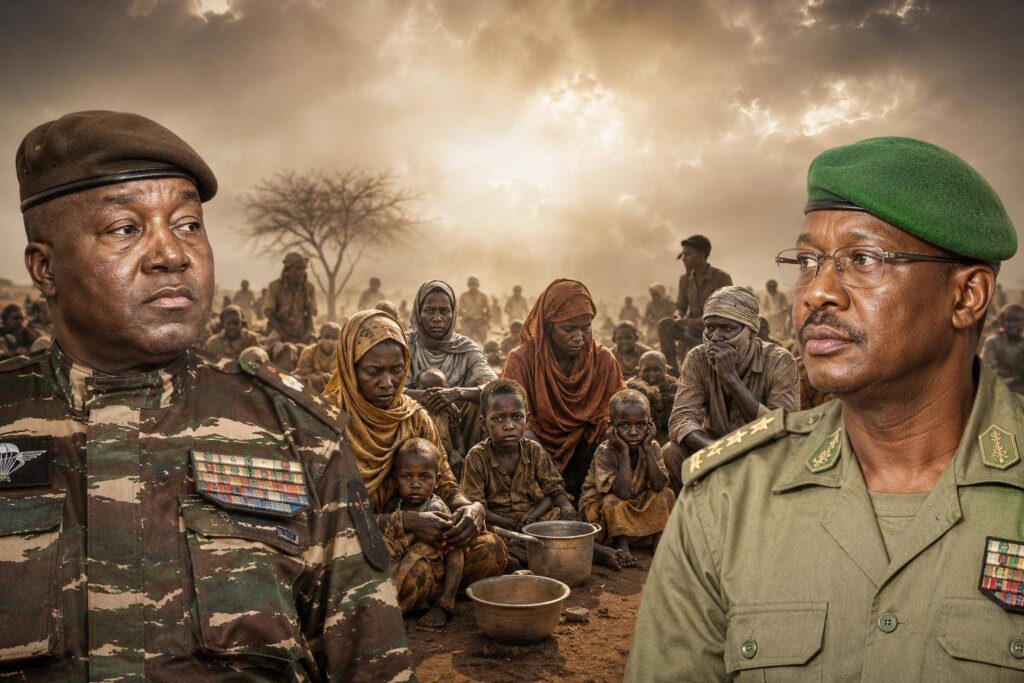
The creation of two parallel command structures demands the recruitment of new senior officers, detachment leaders, and an entire support hierarchy. What many view as an unnecessary duplication of resources comes at a time when Niger faces unprecedented socio-economic strain. While the state allocates funds to establish lavish headquarters in Bilma and Arlit, essential public services crumble under the weight of neglect. The plight of thousands of contract teachers, left unpaid for months and driven to desperation, serves as a stark reminder of the misplaced priorities plaguing the nation. Public outrage grows as the military elite secures new perks and privileges while ordinary Nigeriens struggle to survive on the brink of poverty.
Military overstretch: a sign of growing vulnerability
The decision to establish two distinct operational fronts speaks volumes about the military’s current predicament. If security were effectively maintained, a centralized command would suffice. Instead, the army’s fragmentation into two simultaneous, high-pressure zones—Algeria to the north and Chad to the east—betrays a reality the government hesitates to acknowledge: the armed forces are stretched to their limits. The rise in attacks by Al-Qaeda, Islamic State, and Boko Haram has intensified, pushing the military into a reactive posture. The creation of Operation Akarasse and Operation Klafoki is less a strategic triumph than an admission of defeat—a forced retreat in the face of an expanding and emboldened insurgency.
This new military configuration, while costly for taxpayers and demoralizing for a nation already grappling with hunger and instability, underscores a troubling truth: Niger’s security landscape is deteriorating. The government’s latest move, far from solving the crisis, highlights a leadership struggling to address both the immediate threat of terrorism and the long-term erosion of public trust.