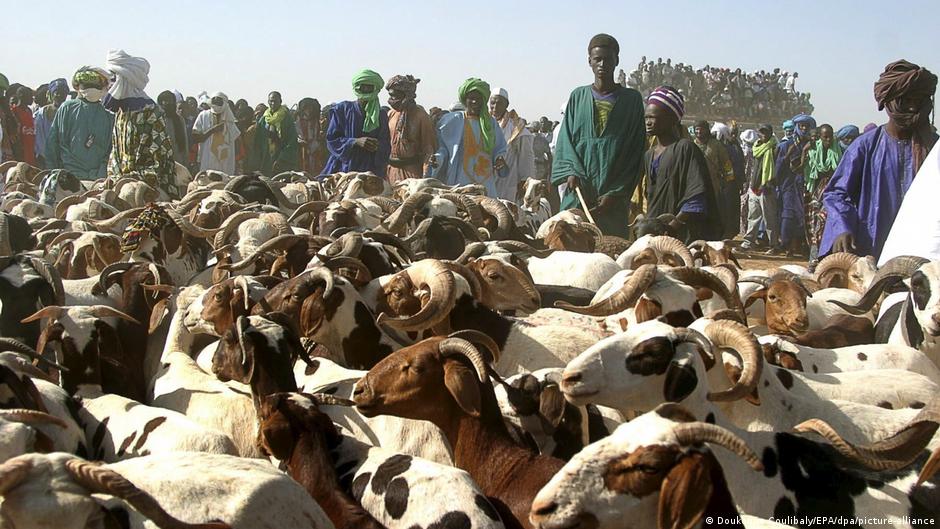
As the Tabaski festival approaches, Bamako’s markets are brimming with sheep, a sight that would have been impossible just weeks ago. The animals, once scarce due to a blockade, now line boulevards and football fields across the capital. This resurgence in supply follows a coordinated effort by Mali’s armed forces to secure livestock convoys heading into the city.
While the military’s escort operations have ensured the arrival of many animals, some convoys remain vulnerable. Unprotected trucks have been targeted by armed groups, leading to devastating losses. Djihadist fighters, linked to Al-Qaïda-affiliated JNIM, have set ablaze several vehicles transporting sheep, further disrupting supply chains and driving up prices.
Dangerous roads fueling price surges
The Ségou-Bamako route, part of the national road network stretching over 200 kilometers, has become a battleground. Since late April, JNIM militants have enforced what they term a “blockade on Bamako,” torching both commercial and private vehicles. This aggressive tactic has paralyzed trade, leaving consumers to grapple with inflated costs.
Military strikes and patrols intensify
In response, Malian defense forces have escalated their countermeasures. Aerial strikes and daily patrols now target militant positions along the Ségou-Bamako corridor. Military escorts accompany livestock convoys, aiming to break the blockade and restore safe passage. Despite these efforts, risks persist. A shepherd from Ségou recounted his harrowing journey:
“Near Zambougou, armed men hurled projectiles at our trailer carrying sheep. The driver, fearing for passengers and livestock, stopped abruptly. Within minutes, the vehicle and its contents were engulfed in flames. We walked for miles to Konobougou, only to continue the next day under military escort toward Bamako.”
Skyrocketing prices strain families
The blockade’s impact is starkly visible in market prices. Transport costs for sheep have tripled, rising from 2,000 to 5,000 or even 6,000 West African francs. Families now face steep bills for Tabaski. One resident in Bamako’s Sans Fil district shared his frustration:
“Last year, a sheep cost 125,000 francs. This year, the same animal fetches 175,000 francs here. Elsewhere in Bamako, prices reach 200,000 to 250,000 francs. The blockade has driven these prices beyond reach. We pray for peace.”
Government steps in with discounted sales
To ease the burden on citizens, the government has announced a promotional sale of sheep, set to launch tomorrow. Designated sites across Bamako—including Sogoniko municipal grounds, the hippodrome, Torokorobougou, Sahaba field in Lafiabougou, and the former AS Real field in Badialan I—will offer sheep at reduced rates. Officials hope these measures will provide affordable options for families preparing to celebrate Tabaski.