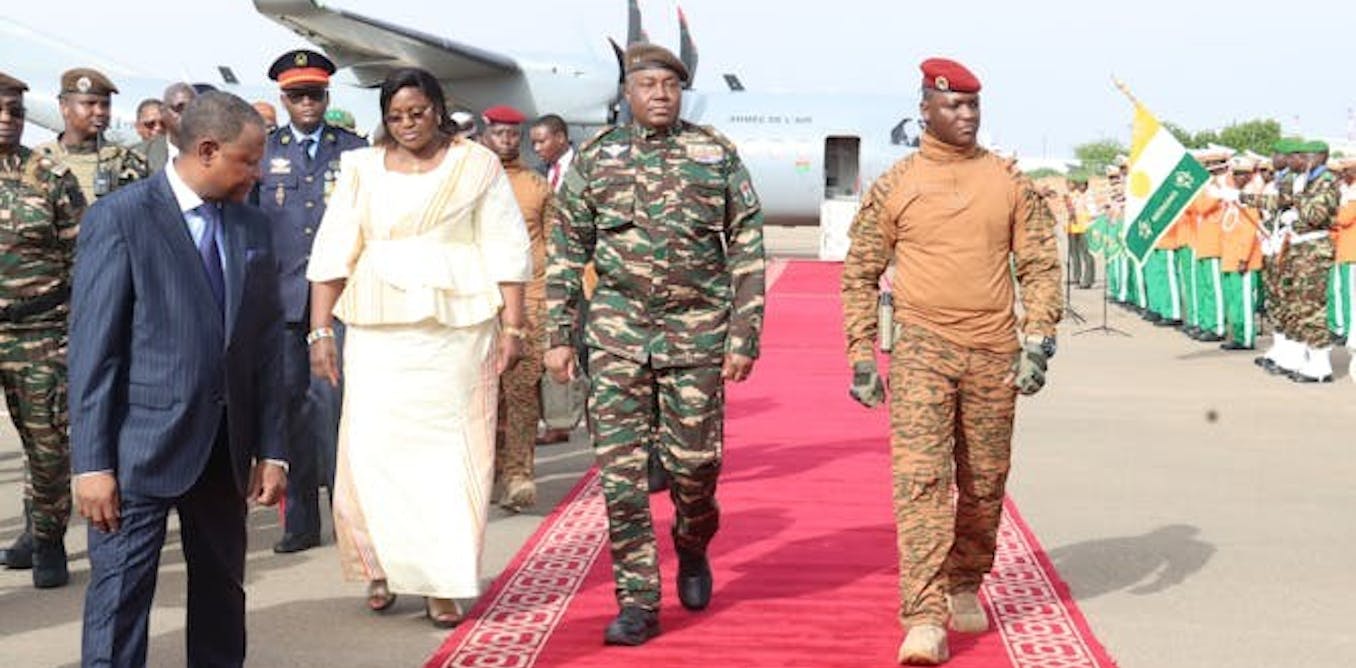
The end of January 2026 marked a definitive shift in Burkina Faso’s political landscape. On January 29, Captain Ibrahim Traoré’s government officially dissolved all political parties, including those that had backed his September 2022 coup. This move followed their prior suspension, but the junta framed it as part of a broader state restructuring aimed at curbing social divisions.
In reality, the measure eliminates the remaining avenues for independent civic participation and consolidates Traoré’s power. Party assets have since been seized by the state.
While the junta initially relied on enthusiastic civilian backing, this latest decision starkly contrasts with its earlier rhetoric of popular mobilization and revolutionary renewal. Yet, this pattern is far from unprecedented in the Sahel and beyond.
Across West Africa, military coup supporters are learning the hard way: initial enthusiasm rarely translates into lasting political influence. Coups that begin with popular support often end with the junta sidelining or openly repressing the very groups that helped stabilize its grip on power—a trend spanning decades.
Having spent nearly a decade studying military coups in Africa—particularly the recent surge in West African takeovers—I’ve observed a recurring dynamic: once in power, juntas have little incentive to share authority.
Civilian groups serve a purpose in a coup’s early days. They provide crowds, legitimacy, and the illusion of mass-driven frustration fueling the takeover. But their usefulness fades quickly. These groups bring their own leaders, agendas, and expectations for the transition. They may criticize delays or mobilize supporters—an independence juntas fear. Early civilian enthusiasm should never be mistaken for a lasting mandate or proof of an inclusive transition.
The recent ban on political parties in Burkina Faso is just the latest reminder: external support may spark or stabilize a coup, but it rarely secures long-term influence.
why civilian backing rarely leads to lasting power
Contrary to common perceptions, military coups in West Africa often attract substantial civilian support—sometimes actively encouraged. Civilian groups, including opposition parties, civil society, and religious figures, may celebrate the intervention, providing the new regime with visible legitimacy and a ready-made support base.
Yet, a familiar pattern emerges. As civilian allies push for continued influence in the post-coup order, juntas frequently marginalize, sideline, or even repress them. This cycle repeats across eras and regions, transcending ideological and social divides.
A stark example unfolded in Sudan after the 1969 coup. The Communist Party initially aligned with the Free Officers led by Colonel Jaafar Nimeiri, offering crucial political support. Within seven months, Nimeiri began excluding communists, removing key figures from government. By 1971, he had brutally crushed the party, demonstrating how quickly alliances can sour.
A similar fate befell Egypt’s Tamarod movement after backing General Abdel Fattah el-Sisi’s 2013 coup. Their influence evaporated as civic space shrank under military rule.
regrets of Sahel coup supporters
Today, many civilian groups in the Sahel who once championed military takeovers share the same disillusionment.
In Mali, the June 5 Movement – Rally of Patriotic Forces (M5-RFP), a coalition of opposition parties, religious leaders, and activists led by imam Mahmoud Dicko, initially hailed the August 2020 coup led by Colonel Assimi Goïta. The movement had spent months protesting then-president Ibrahim Boubacar Keïta and saw the military intervention as a path to steer the transition.
But hopes were short-lived. The junta excluded M5-RFP leaders from key transition roles. When Goïta staged a second coup in May 2021—overthrowing the civilian transitional government and consolidating military control—the movement’s influence dwindled further. What began as a tactical alliance ended in marginalization.
The 2021 coup in Guinea followed a parallel trajectory. Opposition leaders initially welcomed General Mamady Doumbouya’s takeover, even urging the Economic Community of West African States (ECOWAS) to avoid sanctions and legitimize the coup as necessary.
Yet, like in Mali, the junta sidelined civilian allies, blocking meaningful representation. Within a year, party members were arrested for opposing their exclusion from the transition.
Viewed in this context, Burkina Faso’s recent party dissolution fits a well-established mold: early civilian support does not guarantee ongoing access or influence once military leaders entrench their power.