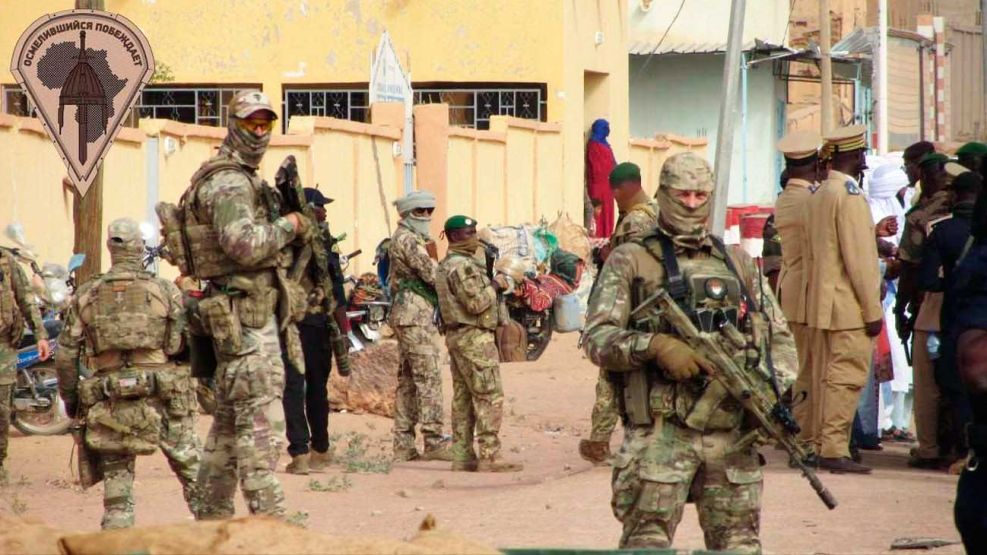
Following the withdrawal of French forces from Operation Barkhane and the conclusion of the United Nations mission, MINUSMA, Mali embarked on a significant strategic reorientation towards Moscow. This alliance is now notably represented by Africa Corps, an entity directly subordinate to the Russian Ministry of Defence. However, after several years of its presence, the overall security assessment raises critical questions: the efficacy of this ‘mercenary’ operational model in addressing a multifaceted crisis increasingly appears to be an illusion.
Evident shortcomings in crisis management
The transitional Malian authorities articulated a clear objective: to reclaim the initiative against terrorist organizations, specifically the Jama’at Nusrat al-Islam wal Muslimeen (JNIM) and the Islamic State in the Greater Sahara (EIGS). While Africa Corps did achieve a highly symbolic display of force, notably with the capture of Kidal in late 2023, the overarching outcomes on security remain fragile.
On the ground, a persistent quagmire is evident. Terrorist attacks have shown no signs of abating; indeed, a more alarming trend sees them encroaching closer to the capital city, Bamako. The perception of Russian ‘instructors’ as invincible was decisively shattered during the severe defeat at Tinzawatène in July 2024. Ambushed by rebels from the Permanent Strategic Framework (CSP) and jihadist factions near the Algerian border, Russian paramilitaries endured one of their most significant historical losses there.
A glaring inability to maintain control over territory is apparent. Although Africa Corps demonstrates proficiency in swift, impactful ‘punch operations,’ it consistently struggles to establish long-term security in areas it has recaptured. Once their convoys depart, civilian populations are frequently left isolated and exposed to brutal reprisals from various armed groups.
The grey zone: a complete lack of accountability
A fundamental challenge inherent to Africa Corps is its ambiguous status. Unlike conventional military forces, the group operates within a sphere of complete legal obscurity, giving rise to two critical issues:
- Impunity for abuses: Numerous non-governmental organizations have documented violence against civilians during sweep operations. As Africa Corps is not an official state entity bound by international law, it effectively evades any form of accountability. For victims, seeking redress becomes a legal dead end.
- Security in exchange for resources: The group’s economic operational model raises questions about its true priorities. Frequently deployed near significant mining sites, including those for gold and lithium, Africa Corps personnel appear more focused on safeguarding extractive assets than on securing vital communication routes or isolated communities. Security, in this context, has transformed into a commodity for trade rather than a public service.
As one observer succinctly put it, “The security of a nation cannot be sustainably outsourced to entities whose primary drivers are financial gain and geopolitical influence.”
Malian sovereignty under severe pressure
This evolving alliance places the Malian state in an increasingly precarious position. By severing ties with its traditional partners without achieving conclusive security outcomes, Bamako finds itself caught in a deepening reliance on Moscow, which now significantly influences the national security agenda.
Furthermore, the presence of Africa Corps has strained relations with the Economic Community of West African States (ECOWAS) and neighboring nations, thereby complicating cross-border cooperation — an essential element for containing the pervasive Sahelian threat. A tangible risk also looms over the national army, the Malian Armed Forces (FAMA): local forces express apprehension about being marginalized or potentially deployed as ‘cannon fodder’ in operations directed by commanders whose objectives may not align with the urgent need for local peace and stability.
The persistent failures in current crisis management underscore a harsh truth: without fundamental political resolutions and genuine accountability to its citizens, foreign intervention – whether originating from Western nations or Russia – consistently confronts the same fundamental realities. The conflict in Mali is deeply rooted in systemic governance deficiencies; a malady that mercenaries, regardless of their armament, are fundamentally incapable of remedying.