Mali is currently grappling with a severe political and security situation. For the past month, Mountaga Tall, a distinguished lawyer, former minister, and outspoken advocate for democracy, has been held in clandestine detention by State Security, completely outside legal frameworks. His son, along with numerous other pro-democracy activists, military personnel, and religious figures, has suffered a similar fate. These arbitrary abductions escalated following the widespread attacks on April 25, attributed to jihadist groups like Jnim and independentist forces from the FLA. Mamadou Ismaïla Konaté, a prominent attorney, former Malian Minister of Justice, and a vocal critic of the military government, which has ruled for six years without elections, recently shared his insights. He addressed the predicament of Mountaga Tall, the alleged manipulation of counter-terrorism efforts, and the perceived subservience of the Malian judiciary. Konaté also reiterated his strong opposition to jihadist terrorism, highlighted the transitional regime’s accountability, and clarified why he chose not to join the Coalition des forces pour la République (CFR), the opposition alliance led by Imam Dicko.

Mountaga Tall, a prominent lawyer, has been held incommunicado by State Security for a month, detained in an undisclosed location. His family, legal counsel, and the International Conference of Bar Associations have repeatedly called for his release or judicial presentation, emphasizing the need to uphold the rule of law. When questioned about the transitional authorities’ willingness to heed these urgent appeals, Konaté expressed deep skepticism.
Konaté stressed that despite his personal doubts, these authorities must ultimately adhere to reason and legal principles. He underscored that no individual should be deprived of liberty outside the bounds of law. Even acknowledging that Mali may not currently operate as a full state of law, he highlighted that a state’s commitment to rule of law is often measured by its treatment of opponents, critics, and legal professionals. He found it unacceptable that a citizen, especially a political figure and lawyer, had been denied visits from doctors, lawyers, and even the head of the Bar Association. Furthermore, Konaté noted the escalating situation where, following a strong statement from the Bar Association leader, military authorities responded by abducting the leader’s own son, an act he deemed intolerable.
Indeed, following Mountaga Tall’s detention, his son and several other political opponents, military personnel, and religious leaders have faced similar fates. While military justice is reportedly investigating suspicions of complicity with armed groups during the April 25 attacks, no official connection has been made between these investigations and the abductions. However, the implicit strategy of the authorities, amplified by their supporters, is to justify these practices as part of the counter-terrorism effort. This narrative, it seems, resonates with a segment of the Malian population.
Konaté firmly countered this, explaining that the fight against terrorism cannot justify legal insecurity. He asserted that a military camp is not a judicial body. Legitimate detention, he argued, must be demonstrable, whereas arbitrary actions are concealed – and Mali is currently experiencing a climate of total arbitrariness. He warned that while it is Mountaga Tall today, many others could face the same fate tomorrow. Therefore, even amidst counter-terrorism efforts, upholding the legal framework and ensuring justice from beginning to end remains crucial.
Beyond this particular case, the Malian justice system has notably sentenced former Prime Minister Moussa Mara to a year in prison for a tweet expressing hope that “day” would succeed “night.” Simultaneously, supporters of the Transition openly call for lynching pro-democracy activists or burning shops owned by Mauritanians. This raises critical questions about whether Malian justice has been co-opted or simply submitted to the transitional authorities.
Konaté unequivocally stated that this justice system, tasked with preserving public order and security, now appears to be subservient. He emphasized that justice must recognize it serves the state, the nation, and its people, not any particular regime, military or otherwise. Judges, he insisted, must never lose sight of this fundamental principle.
When asked if judges truly have a choice, or if they too operate under fear, Konaté acknowledged the possibility of fear. However, he pointed out that the law provides judges with the option to recuse themselves. He argued that, under the guise of fear, judges are currently allowing themselves to play a detrimental role, not only for themselves but for the very concept of justice. He urged them to remember that while today is now, justice will ultimately prevail.
Following the April 25 attacks, the death of Minister Sadio Camara, and the capture of Kidal, some observers believed the military authorities in Mali were weakened. However, the regime does not appear to be faltering significantly.
“It is indeed faltering!” Konaté declared. He stressed that terrorism has no place in society, representing the very negation of the social contract, law, and civil peace. However, he added, it has become increasingly difficult to ignore the responsibility of a power that seized control by force and maintains itself through force and terror. The growing dangers to the country and its citizens, he concluded, cannot be separated from the decisions made by those who have governed for six years.
As a known opponent of the Malian transitional authorities, Konaté was asked why he had not joined the CFR (Coalition des forces pour la République), the opposition coalition led by Imam Dicko.
He explained his reasoning: Mali is caught between two extremes – the “képi” (military cap) representing the forceful seizure of power and its authoritarian exercise, and the “chéchia” (traditional cap), which evokes the events of 2012. He reminded listeners that 2012 saw hands and feet amputated in the northern regions of Mali.
Confirming that this occurred during the occupation by jihadist groups, Konaté stated that the memory of these amputations remains vivid for many. While he acknowledges the importance of national unity and dialogue to restore national cohesion, he believes certain absolute prerequisites must be met. One cannot simply emerge from a warzone, armed, and then sit at a negotiating table, erasing all past events. Just as he vigorously opposes the military regime for violating all rights and freedoms, he cannot endorse acts of terror or terrorists themselves. An absolute prerequisite, he insisted, is confronting the events of 2012 and addressing the destructive alliance between the FLA and Jnim. There must be a foundational commitment to the absolute principles and values that, for him, constitute the Republic, democracy, and justice.
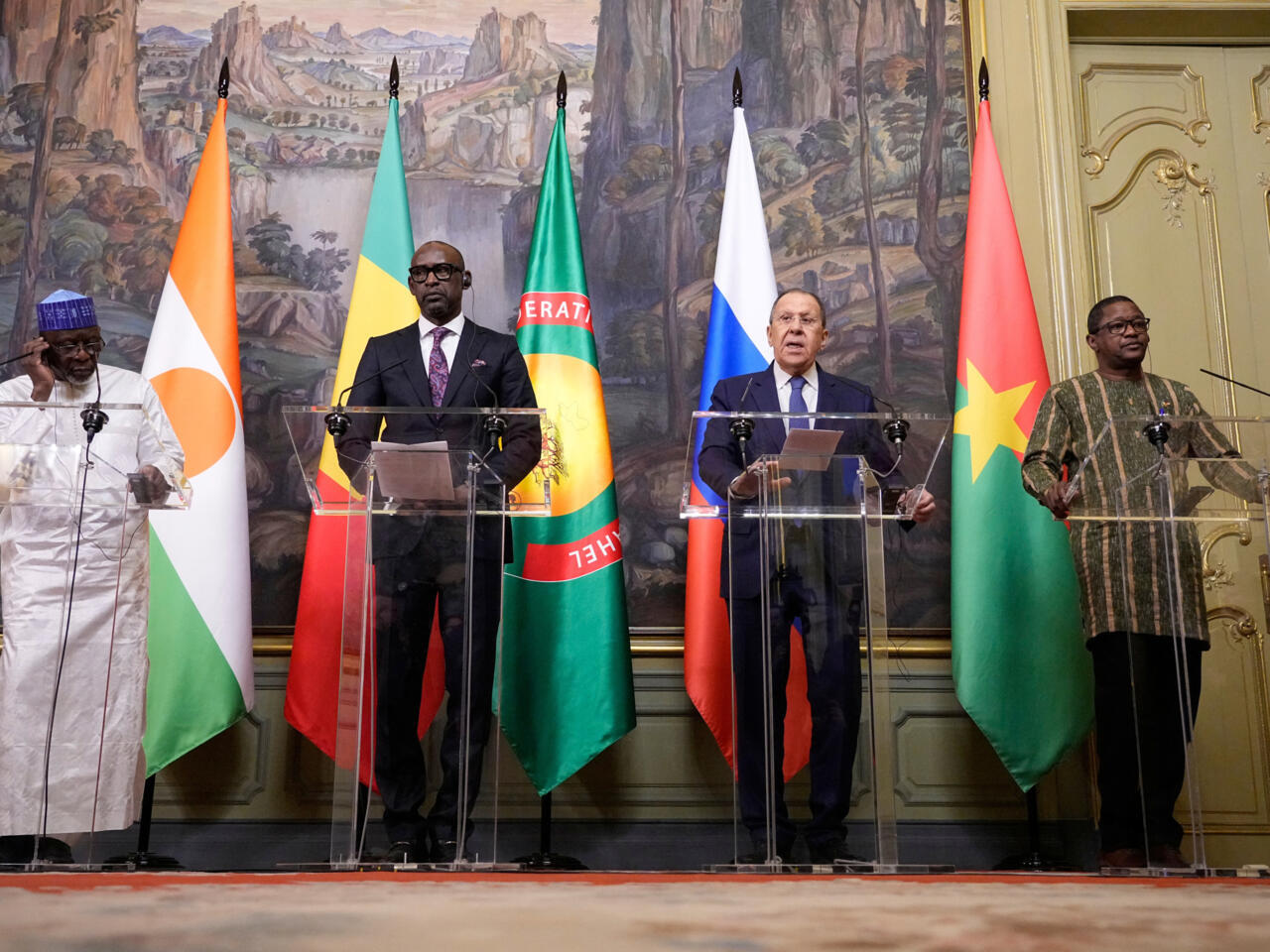
The regimes of the Alliance of Sahel States (AES) – Mali, Niger, and Burkina Faso – consistently assert that opposing them is tantamount to opposing national sovereignty, siding with enemies of the nation, external interference, and media warfare. As a Malian, Konaté was asked for his perspective.
“No one can strip me of my identity as a Malian, a patriot, and a committed citizen,” Konaté responded. He argued that what truly bothers these regimes, which themselves originated from illegality and fraud, is being reminded of legal principles and their own past promises. The true anti-patriots, he concluded, are those who starve their citizens, corrupt liberties, and annihilate justice.