Mali facing a critical crossroads between military rule and jihadist advance
As the Malian military leadership clings to power amid growing desperation, and armed groups escalate their campaign for sharia law, civilians face an agonizing dilemma.

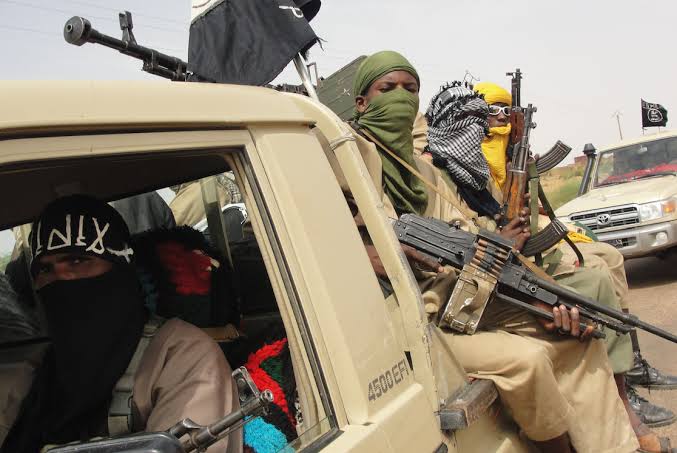
The return of the Group for the Support of Islam and Muslims (JNIM), an Al-Qaida-affiliated coalition, alongside the Azawad Liberation Front (FLA), following coordinated attacks on April 25, has intensified pressure on the military junta led by General Assimi Goïta. After briefly vanishing from public view, Goïta reassured the nation in a speech on April 29, declaring “the situation is under control.” Yet, his words ring hollow as the FLA reasserts control over Kidal and the JNIM tightens its grip around Bamako. The general’s insistence on military readiness contrasts sharply with six years of stalled progress, leaving Mali trapped in a defensive posture against forces dictating the national timeline.
An inescapable impasse: junta versus sharia
The stakes have never been higher. The JNIM, now openly targeting the National Committee for the Salvation of the People (CNSP), has made its intentions clear: once in power, enforcing sharia law will be a top priority. In areas under their control, civilians already endure harsh Islamic rulings, underscoring the group’s uncompromising vision.
Some opposition figures, desperate to unseat the junta, speculate that a tactical alliance with the JNIM could soften its demands, envisioning a diluted version of Islamic law. Yet, the group’s rhetoric offers no reassurance of moderation. With the military regime’s repression deepening—evidenced by recent arrests and the high-profile abduction of prominent lawyer Mountaga Tall on May 2—Mali’s future appears increasingly bleak. Critics warn that the junta’s crackdowns on dissent are accelerating the nation’s collapse.
The junta’s failed promises
Having seized power through a coup, the CNSP has systematically dismantled political opposition, silencing dissent through arrests and exile. Yet, history abhors a vacuum, and the void left by the regime’s repression has empowered extremist factions. The JNIM’s latest communiqué, calling for a unified front to topple the junta, mirrors the military’s own hollow promises of a “new Mali.” But what would that entail under jihadist rule? Neither the junta nor the JNIM provides a path back to constitutional order, leaving Mali mired in a cycle of violence and uncertainty.
The human cost of stagnation
The junta’s reliance on repression—from arbitrary detentions to enforced disappearances—has eroded trust in its leadership. Mountaga Tall’s abduction, allegedly by state security agents, is a stark reminder of the regime’s descent into authoritarianism. Observers note a disturbing pattern: the more the junta tightens its grip, the more it fuels the very instability it claims to combat.
The JNIM’s blockade of Bamako, crippling the economy, and the junta’s defiant refusal to acknowledge defeat paint a grim picture. With no credible path forward, Mali’s civilians face an impossible choice: a failing military regime or a theocratic alternative. The clock is ticking, and the nation’s fate hangs in the balance.